
DPR Commission XI Asserts Digitalisation Must Not Be Used as a Tool for Unilateral Redundancies
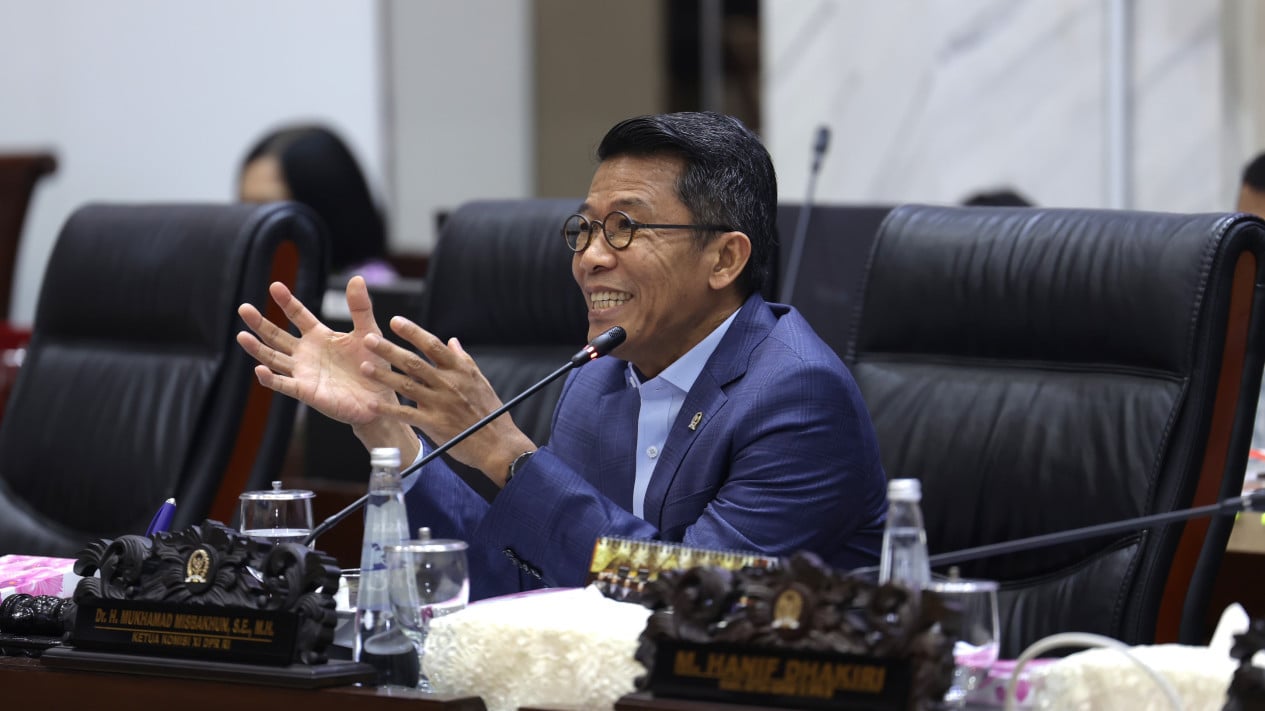
The Indonesian House of Representatives (DPR) Commission XI has emphasised that the implementation of technology within the financial sector must not disregard fairness for workers or create cost burdens for the public. Commission XI has requested the Financial Services Authority (OJK) to evaluate the governance of the banking industry to ensure that digital transformation is not utilised as a pretext for unilateral dismissals.
This statement was made during a Public Hearing (RDPU) led by the Chairman of Commission XI, Mukhamad Misb_akhun, at the Parliament Complex in Senayan, Jakarta, on Tuesday (22/9). The hearing was convened to directly listen to grievances from the PT Bank Maybank Indonesia Workers’ Union (SPBMI) and the Indonesian Workers’ Union Association (ASPI).
Chairman Mukhamad Misbakhun highlighted the strategic role of the financial sector in national economic growth, which is currently facing the waves of digitalisation and the adoption of Artificial Intelligence (AI). He assessed that the primary issue regarding this transformation lies in governance and the readiness of the technological roadmap, to prevent socio-economic impacts that harm both workers and consumers.
“The financial sector is the highest contributor to growth within our economic structure. The use of technology is an inevitability, but the problem lies in who prepares that technological roadmap. This is not just about the impact on the workforce, but also about the imposition of transaction and banking administration costs borne by the public,” Misbakhun asserted.
Regarding the specific complaints from Maybank employees, Misbakhun ensured that the commission would forward these aspirations to the OJK, specifically to the banking supervision and consumer protection divisions. “Regarding Maybank and its workers’ union, we will communicate this with the OJK. We are pushing for the OJK Banking and OJK consumer complaint divisions to listen directly to the aspirations of this workers’ union,” added the Golkar Party legislator.
Echoing this sentiment, Commission XI member Charles Meikyansah requested that banks do not use digitalisation as an excuse to act arbitrarily towards long-serving employees. “Digitalisation and AI are inevitable, but we must not allow a ‘use and discard’ principle for those who have worked for 10 to 20 years. The welfare, justice, and certainty of the fate of workers’ families in the banking industry are fundamental matters that we will continue to remind our partner banks of,” said the NasDem Party politician.
Meanwhile, Commission XI member Anis Byarwati noted that input from workers enriches the oversight perspective of the commission. She argued that banking evaluations should not rely solely on business profitability achievements.
“The presentations from our colleagues in the workers’ unions help us view the financial industry more holistically. The financial industry must not only pursue profit but must also consider the human resource aspect. Internal input regarding worker protection serves as significant material for our supervisory function,” stated the PKS Party politician.
The labour dispute began with a presentation by SPBMI, which revealed the alleged misuse of the Performance Improvement Plan (PIP) scheme by the management of PT Bank Maybank Indonesia Tbk. This policy, reportedly issued unilaterally without reference to the Collective Labour Agreement (PKB), is viewed as a tool for intimidation and a method for efficiency and union busting. Meanwhile, ASPI highlighted the impact of workforce reductions due to AI and proposed the formation of a National Tripartite Cooperation Institution specifically for the financial sector.