
DPR Commission VIII: Free Nutritious Meal Programme Must Continue to Boost Livestock Farmers' Economic Ecosystem
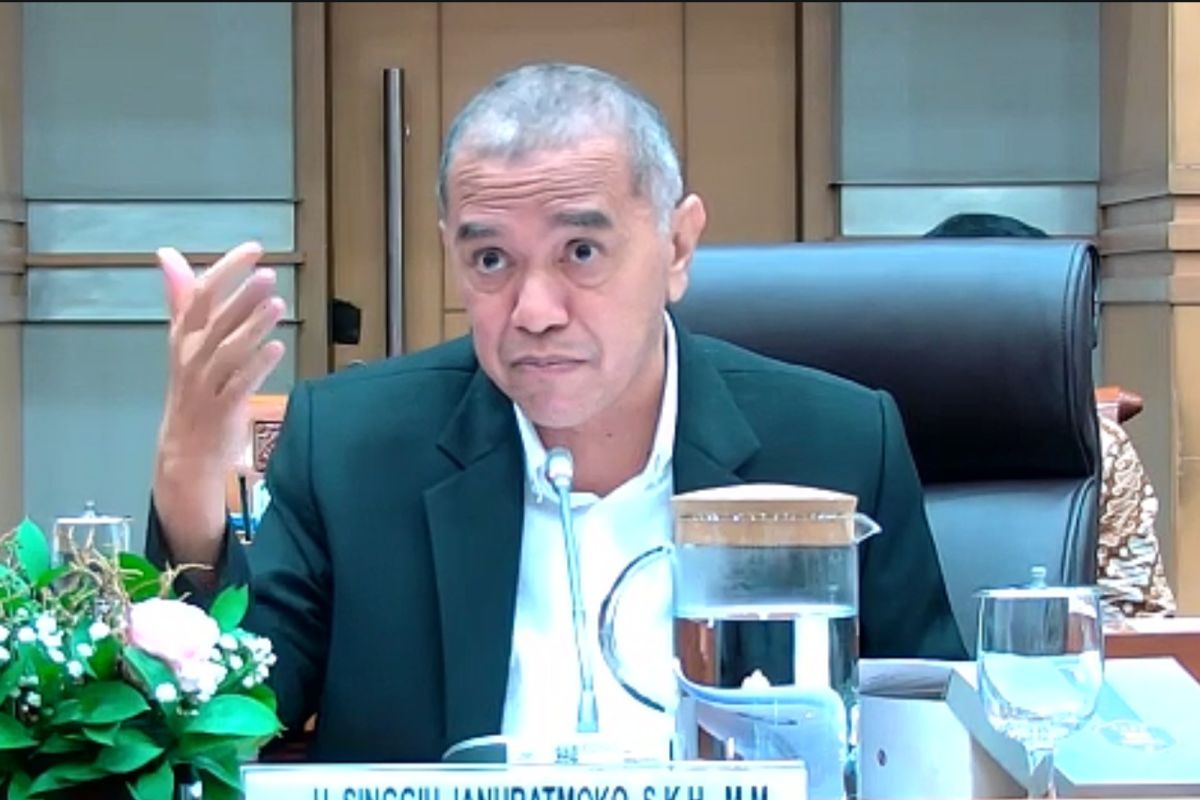
The Deputy Chairman of Commission VIII of the Indonesian House of Representatives (DPR RI), Singgih Januratmoko, stated that the Free Nutritious Meal (MBG) programme must continue as it has a positive impact on the community’s economic ecosystem, including among livestock farmers.
He noted that the continuity of the MBG programme creates a more certain market for local livestock products, particularly chicken meat and eggs, due to the relatively measurable demand generated by the government programme.
“If the MBG kitchens source eggs and chicken from nearby farmers, the benefits extend beyond children receiving nutritious food; farmers gain a market, MSMEs gain employment, distribution is stimulated, and regional economies grow,” he said in a statement received in Jakarta on Thursday.
He explained that one of the primary issues faced by farmers is the price fluctuation of chicken and eggs. When production is abundant while market absorption is limited, prices at the farmer level can drop.
“If the absorption of chicken and egg products increases consistently through the MBOG, it can serve as an instrument to maintain the balance between supply and demand,” he added.
According to Singgih, the economic benefits of the MBG programme will be even greater if the supply chain provides space for smallholder farmers and MSMEs.
The government has been urged to ensure that the procurement of food ingredients for MBG kitchens is not concentrated solely on large corporations. Local farmers, cooperatives, Village-Owned Enterprises (BUMDes), and MSMEs must be given the opportunity to be part of the supply chain.
He assessed that a region-based procurement pattern could provide dual benefits. In addition to shortening the distribution chain, such an approach would ensure that the circulation of money from the MBG programme remains within the local regions.
“We must ensure that a programme as large as the MBG does not leave smallholder farmers as mere spectators. There must be a design so that raw materials, such as eggs and chicken, can be absorbed from local farmers as much as possible,” said Singgih.