
DPR Commission VII Urges Strengthening of National Standardisation Ecosystem
Balikpatan, East Kalimantan (ANTARA) - The Indonesian House of Representatives (DPR) Commission VII is pushing for the strengthening of the national standardisation ecosystem to increase the competitiveness of domestic products while simultaneously expanding market access for small and medium-sized enterprises (SMEs).
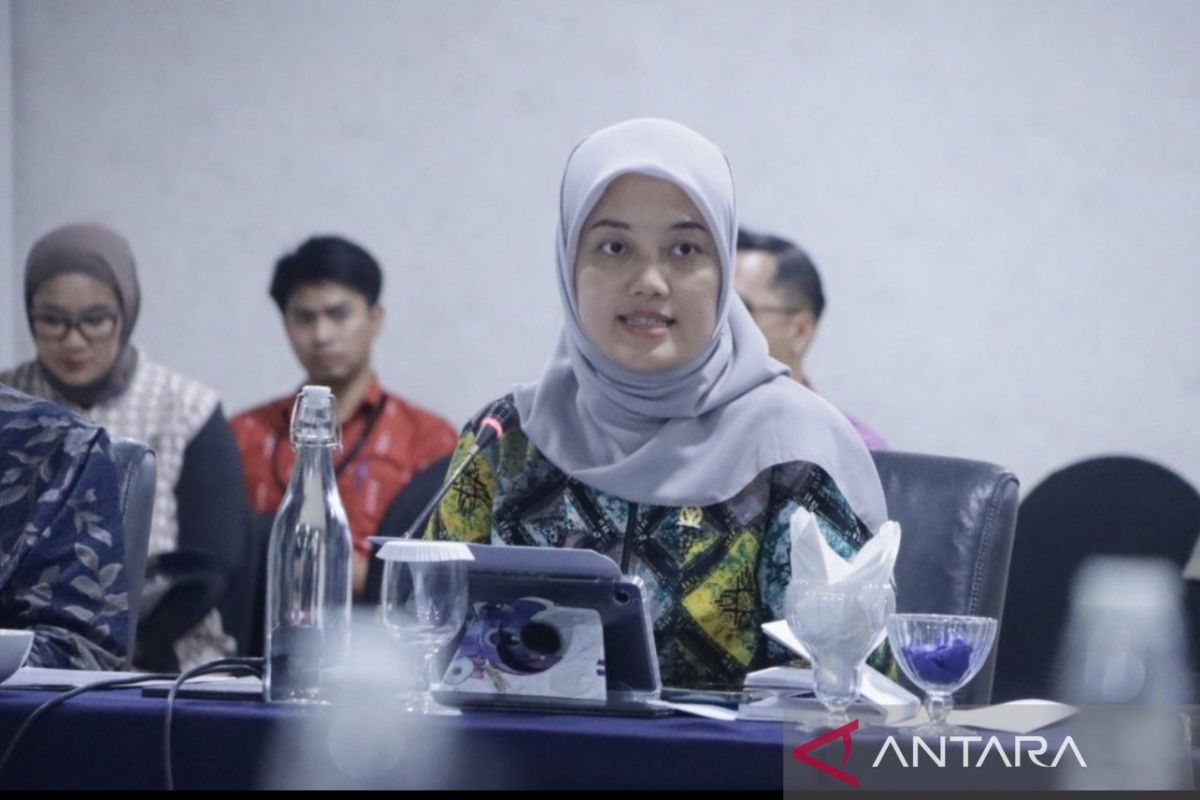
Chusnunia Chalim, Chairperson of the Specific Working Visit Team of Commission VII DPR RI, stated that strengthening standardisation is not merely about product quality, but also serves as an instrument for consumer protection and strengthening the position of Indonesian products in both regional and global competition.
“Discipline in national standardisation is the key to our success in maintaining quantity, quality, and consumer protection. If we are unable to control it, we could become an entry point for products that do not meet standards,” Chusnunia said during a focus group discussion (FGD) themed “Mapping the Readiness of Conformity Assessment Activities” in Balikpapan, East Kalimantan, on Friday.
The FGD was part of the Commission VII DPR RI’s Specific Working Visit to East Kalimantan Province.
Chusnunia explained that strengthening standardisation requires the involvement of various parties, ranging from the National Standardisation Agency (BSN), conformity assessment bodies (LPK), testing laboratories, local governments, to business actors.
“One of the issues of concern is the uneven distribution of laboratories and LPKs, meaning that access to testing and certification services remains a challenge for regional industries,” she noted.
She mentioned several crucial aspects that require attention, including the capacity of testing laboratory infrastructure, the supervision of illegal products, the acceleration of Domestic Component Level (TKDN) verification, and the ease of standardisation services for regional industries.
Chuslamia emphasised that standardisation must serve as an instrument to enhance competitiveness, rather than becoming a burden for the community and local business actors.
Meanwhile, the Assistant for Economy and Development Administration of the East Kalimantan Provincial Secretariat, Ujang Rachmad, stated that East Kalimantan’s geographical conditions present one of the challenges in implementing certification and meeting standards.
The distance between regions and limited access to testing facilities mean that the standardisation process requires more integrated support and assistance.
“In East Kalimantan, there are geographical issues related to laboratories that pose challenges in the context of certification. We believe that assistance for small and medium industries (IKM) in standardisation needs to be carried out in an integrated manner,” Ujang explained.
He added that the East Kalimantan Provincial Government has endeavoured to provide assistance and facilitation to small and medium industries (IKM), including in the certification process. However, stronger collaboration is needed between central, provincial, and regency/city governments.
On the same occasion, the Head of the East Kalimantan Provincial Department of Industry, Trade, Cooperatives, Small and Medium Enterprises, Heni Purwaningsih, expressed her commitment to supporting SNI (Indonesian National Standard) and TKDN certification.
Assistance for TKDN certification is ongoing, while the strengthening of SNI is directed towards the development of IKMs that utilise local raw materials. This takes into account the characteristics of East Kalimantan’s industry, which is still dominated by the non-manufacturing sector.
Heni explained that East Kalimantan possesses regional laboratories at the Goods Quality Testing and Certification Office (BPSMB) that can support testing and calibration activities, including for export-oriented MSMEs.
“However, obstacles remain, such as the limited scope of certification, business actors’ understanding of the benefits of SNI, and the sub-optimal integration of assistance across different levels of government,” said Heni.
Through this specific working visit, Commission VII of the DPR RI, together with BSN, PT Sucofindo, and local governments, is expected to map readiness and formulate steps to strengthen conformity assessment services to build an inclusive standardisation ecosystem.
Source: jawawa.id (https://jawawa.id/newsitem/dpr-commission-vii-urges-strengthening-of-national-standardisation-ecosystem-1789743422)
Originally published by Antara (Indonesian) (https://www.antaranews.com/berita/5748053/komisi-vii-dpr-dorong-penguatan-ekosistem-standardisasi-nasional), translated from Indonesian