
DPR Commission V Member Calls for Decommissioning of Village Assistants
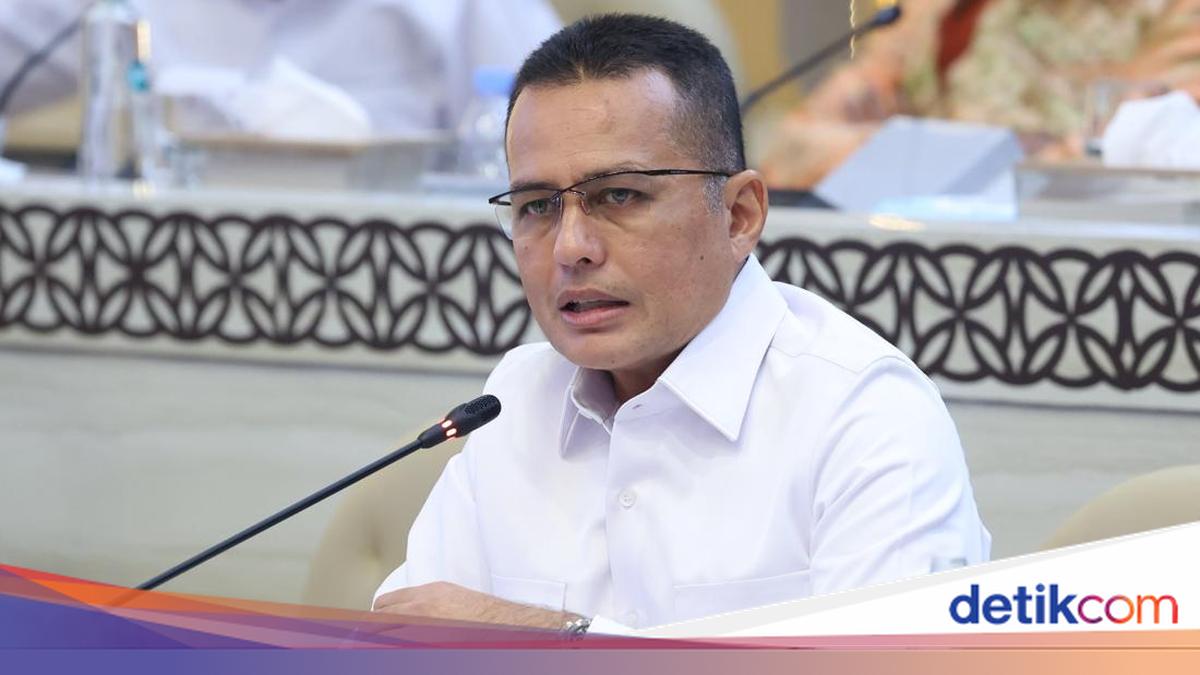
Musa Rajekshah, a member of Commission V of the Indonesian House of Representatives (DPR RI), has proposed an evaluation of the budget allocation for the Ministry of Village and Regional Development (Kemendes PDT). He highlighted that up to 70 per cent of the budget is dominated by the payment of honorariums for tens of thousands of village assistants, yet this is not balanced by programme effectiveness that is directly felt by the community.
Commonly known as Ijeck, he believes that paying the salaries of village assistants is futile if their presence in the field is not accompanied by the execution of clear coaching programmes and village economic enhancement.
“We have 25,380 village assistants, and the budget absorption for them reaches up to 70% (for the 2027 budget). But the question is, what are the benefits and which programmes are actually running for the people? If the budget is exhausted merely on assistants’ honorariums without concrete programmes felt by citizens, it is useless and futile. My suggestion is that this must be evaluated,” Musa stated in a written statement on Thursday (3/9/2026).
He conveyed this during a Working Meeting of Commission V of the DPR RI with officials from the Ministry of Village and Regional Development and the Ministry of Transmigration at the Nusantara Building, Senayan, Jakarta, via a release to Parlementaria on Wednesday (2/9).
The legislator from North Sumatra’s 1st electoral district presented data showing that while the government has recorded an increase in ‘independent village’ status by up to 27 per cent, the reality on the ground shows rural poverty still affects 12 million people, accompanied by high inequality between independent and disadvantaged villages.
“If programmes do not reach the people or are not beneficial, state funds are simply wasted. Rather than wasting the budget and failing to support President Prabowo Subianto’s ‘Asta Cita’ vision to build the economy from the villages, it is better to evaluate this budget allocation or redirect it to other programmes that directly touch the community,” he said.
In addition to the issue of village assistants, Musa also noted that rural programmes have not been optimal in curbing the rate of urbanisation. Efforts to create rural employment and modernise the agricultural sector have not yet materialised, meaning young people are not being encouraged to become millennial farmers and continue to choose migration to cities.
“The ultimate goal of rural programmes should be to open up jobs and create millennial farmers through modern agriculture. However, on the ground, young people continue to urbanise and our agricultural mechanisation remains largely manual. This proves that existing programmes are not yet effective,” he noted.
Turning to the transmigration sector, Musa urged the government to immediately resolve land status certainties for transmigrants. He argued that unclear land status, particularly land indicated to be within forest areas, prevents both local and central governments from allocating regional (APBD) or state (APBN) budgets for the construction of road infrastructure and public facilities in those areas.
“Transmigration communities suffer when left in limbo due to unclear land status. If the land is problematic, APBD or other budgets cannot be used to repair roads. We request legal certainty regarding land status so that basic facilities and human resources in transmigration areas can be developed in line with the national food security agenda,” he said.
In closing, Musa encouraged the creation of integrated programmes across ministries, ranging from the Ministry of Villages to the Ministry of Cooperatives and the Ministry of Transmigration.
“The effectiveness of state budget usage must be measured by the final outcome, namely the improvement of human resource quality, job creation, and the availability of proper infrastructure, so that state funds are not exhausted merely on operational burdens but truly bring progress to rural communities,” he concluded.
Source: jawawa.id (https://jawawa.id/newsitem/dpr-commission-v-member-calls-for-decommissioning-of-village-assistants-1788422549)
Originally published by detikcom (https://news.detik.com/berita/d-8646591/anggota-komisi-v-dpr-minta-pendamping-desa-diefektifkan), translated from Indonesian