
DPR Commission V Highlights Systemic Failures Behind Anggrek Train and KRL Collision
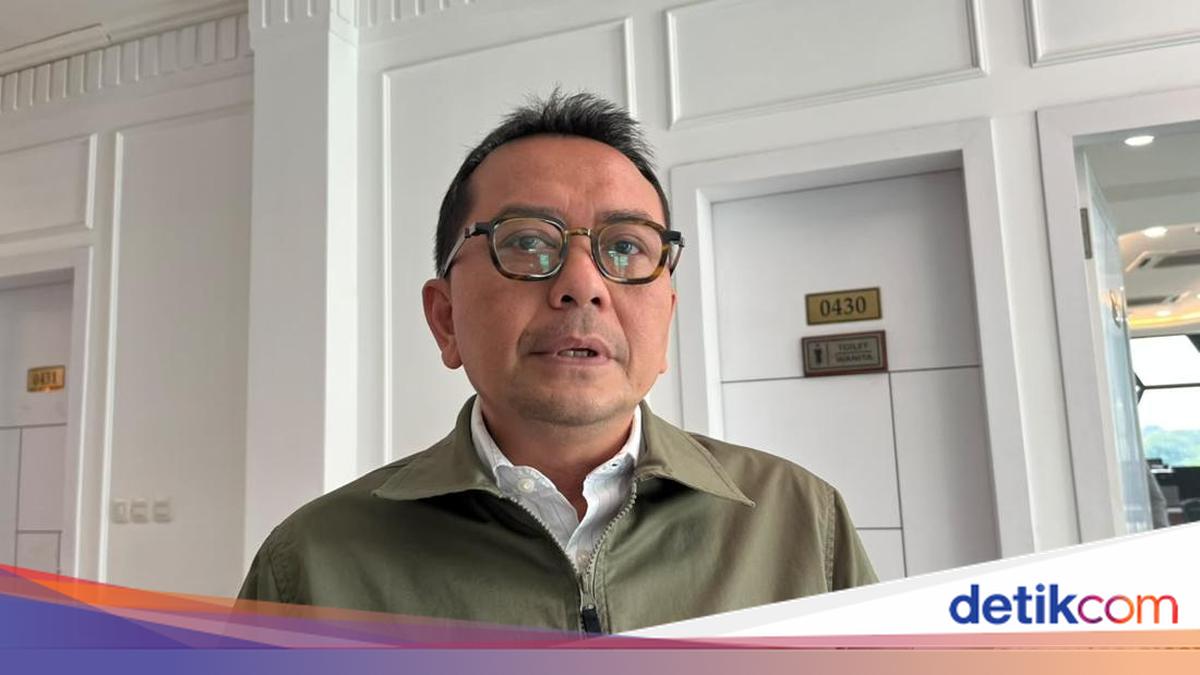
The Deputy Chairman of Commission V of the DPR, Syaiful Huda, has responded to the findings of the National Transportation Safety Committee (KNKT) regarding the collision between the Argo Bromo Anggrek train and a KRL Commuterline train in Bekasi Timur. Huda stated that the findings indicate the accident was not solely caused by individual error or human error.
“We assess that the KNKT findings show this accident was not merely human error, but rather a systemic failure,” Hoded told reporters on Wednesday (30/09/2026).
He urged a thorough evaluation, which he believes should encompass communication systems, driver training curricula, and the physical fitness of the trains. “We encourage the Ministry of Transportation, as the regulator, and PT KAI along with PT KCI, as the operators, to conduct a comprehensive evaluation covering communication systems, driver training curricula, and the supervision of the physical condition of trains, including locomotives and the locomotive windshields, which affect visual quality at night,” he said.
The PKB politician also requested the Directorate General of Railways (DJKA) of the Ministry of Transportation to conduct safety audits across all operational areas (Daop) and regional divisions (Divre). “We request the DJKA to perform safety audits in all Operational Areas and Regional Divisions to ensure that improvements are implemented nationally, rather than just addressing the specific accident site,” he explained.
He further emphasised the need to simplify communication channels at the Train Control Centre (PPKP) to prevent noise pollution and to improve the integration of emergency information between divisions, such as between the Southern and Eastern PPKP.
Huda also addressed the designation of the Argo Bromo Anggrek driver as a suspect. He argued that legal proceedings must consider the entire safety system within the railway industry. “We believe it is unjust if this error is placed solely on the driver of the Anggrek train,” he said.
He explained that drivers make decisions based on the information received while operating the train. Therefore, he noted that aspects of training and driver competence must be part of the evaluation. “When a driver has never been provided with training for emergency braking scenarios at high speeds on curved tracks, the failure to stop the train in time is a consequence of the lack of competence that the company should have provided,” he added.
“We hope that law enforcement and operational evaluations will reach the command chain above them,” he added.
Previously, the National Transportation Safety Committee (KNKT) released the investigation results of the fatal accident involving the Anggrek train (formerly Argo Bromo Anggreka) and the KRL at Bekasi Timur Station, which resulted in 16 deaths. The KNKT outlined several findings and contributing factors, including microphone issues and scratches on the locomotive windshield, as contributors to the accident.
In this report, the KNKT outlined conclusions divided into two main points: findings and contributing factors. There were 60 specific findings by the KNKT regarding this accident.
These findings include discrepancies between actual train movements and the Train Journey Schedule (Gapeka). The KNKT found that KRL 5568A departed from Bekasi Station 8 minutes and 32 seconds late, while the Anggrek train (KA 4B) departed 3 minutes and 17 seconds earlier than scheduled in the GAPEKA.
There were also discrepancies in the time references used by various communication radio types at the Jakarta Daop 1 Train Control Centre, locomotive loggers, signalling system loggers, train CCTV, and the Jakarta Daop 1 Train Control Centre CCTV.
Furthermore, the KNKT noted issues with communication channels. The KNKT stated that information regarding KRL 5568A being delayed at Bekasi Timur Station—due to a crowd of residents following a separate collision between a KRL and an electric taxi—was not conveyed to the Southern PPKP officers. This occurred because the Southern PPKP was busy handling the aftermath of the KRL-taxi collision.
The KNKT stated that the driver of KRL 5568A contacted the Southern PPKP via individual calls rather than through emergency calls. The KNKT also noted that the presence of several operating systems and communication equipment at the Southern PPKP caused noise pollution.
Additionally, the KNKT stated that the Anggrek locomotive used a polycarbonate windshield which was found to have numerous wiper scratches and swirl marks on the surface. The KNKT stated that this condition caused light sources from lamps to appear more diffused, with significant light scattering into the locomotive cabin.
The KNKT also found that the Anggrek driver had never received training for emergency braking scenarios. The KNKT further noted that there were no procedures in place for emergency braking at high speeds on curved tracks.