
DPR Commission IX Suggests AI to Diagnose Illnesses in Doctor-Scarce Regions
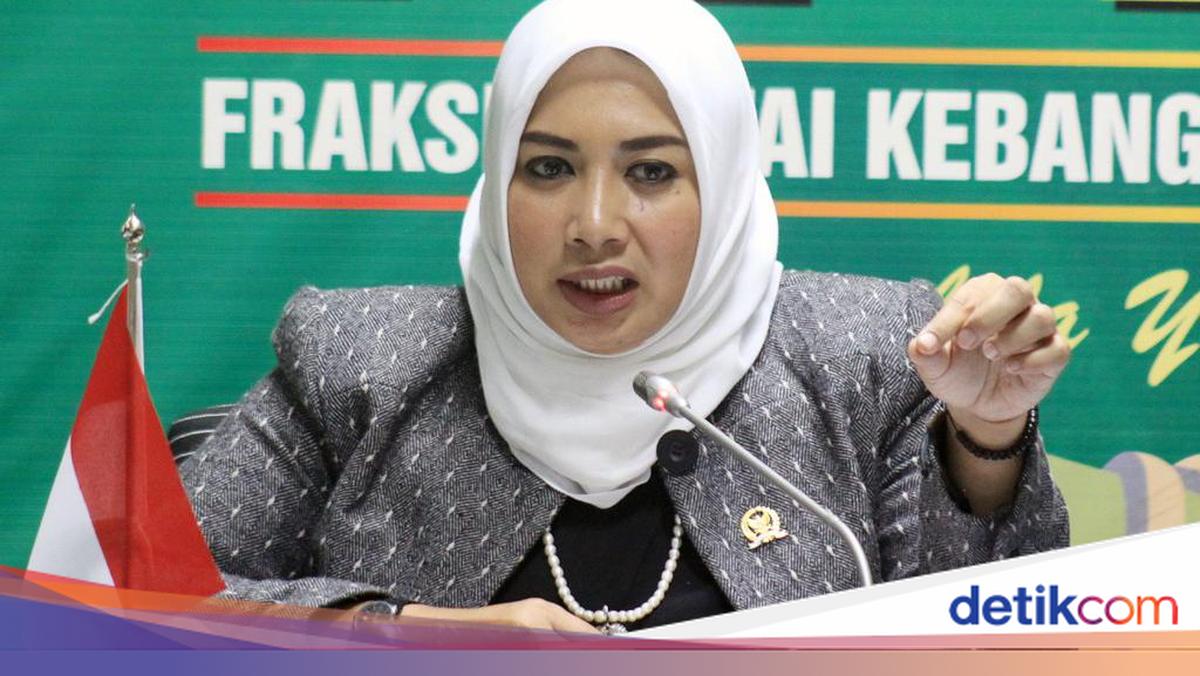
Wakil Ketua Komisi IX DPR Nihayatul Wafiroh has proposed the use of artificial intelligence (AI) to support healthcare services in regions still experiencing a shortage of doctors. She believes the technology can serve as a temporary solution to bridge the gap in medical personnel in certain areas.
Nihayatul made the suggestion during a working meeting between Commission IX and the Ministry of Health at the parliament complex in Senayan, Jakarta, on Thursday. She noted that various sectors are already utilising AI.
“The shortage of doctors, we are now being helped quite a bit by AI, Sir. I am not a medical person, but I imagine that now we see many sectors being assisted by AI,” Nihayatul said. “Is it possible, Sir, that in certain areas where there might be medical personnel and so on, we could be assisted by AI to at least help our patients analyse diseases? Just to bridge the gap, Sir,” she continued.
She expressed concern that there are still regions without any doctors, noting that medical education requires a lengthy process. “If the Minister mentioned earlier that there are areas where reports indicate no doctors at all, this is truly concerning,” she said.
Nihayatul pointed out that medical graduates must still undergo further stages such as internships and other educational programmes before they can serve fully, and the public cannot be expected to wait that long. “Medical education is not like other fields of study where after graduation you can immediately start working. For medicine, it takes more time, internships and so on, it takes time. The public cannot wait until they graduate,” she said.
She acknowledged that long-term solutions such as funding education for local students are important but require considerable time. “Even if the proposal from fellow members to finance local students is an excellent solution, it still takes time. In the meantime, what can we do? And not everyone is willing to be transferred to those areas,” she explained.
Nihayatul stated that the current development of AI technology has already assisted many sectors, and therefore she suggested its use in the health sector. “Is it possible with existing technology to replace the physical presence of doctors with something else? Even though it certainly won’t be optimal, but perhaps for certain diseases,” she said.
She also referred to the success of remote surgery technology previously carried out by the Ministry of Health. According to her, a similar concept could be developed for remote health examinations in areas without doctors. “The Minister previously performed remote surgery, which was extraordinary. If that can be done, remote examinations in areas without doctors could also be a solution,” she said.
Earlier, Health Minister Budi Gunadi Sadikin stated that Indonesia still lacks doctors. He mentioned that many community health centres in the regions do not have doctors. “There are many community health centres without doctors,” Budi said. He also reported that in Mamberamo Raya, Papua, there are no specialist doctors at all, and the community health centres there lack dentists. “We recently received the Regent of Mamberamo Raya, and there is not a single specialist doctor there. Zero dentists in the community health centres. Out of perhaps 17, 12 do not have doctors,” he revealed.