
DPR Commission IX Questions Health Minister Over 112 Million Malnourished Citizens Claim
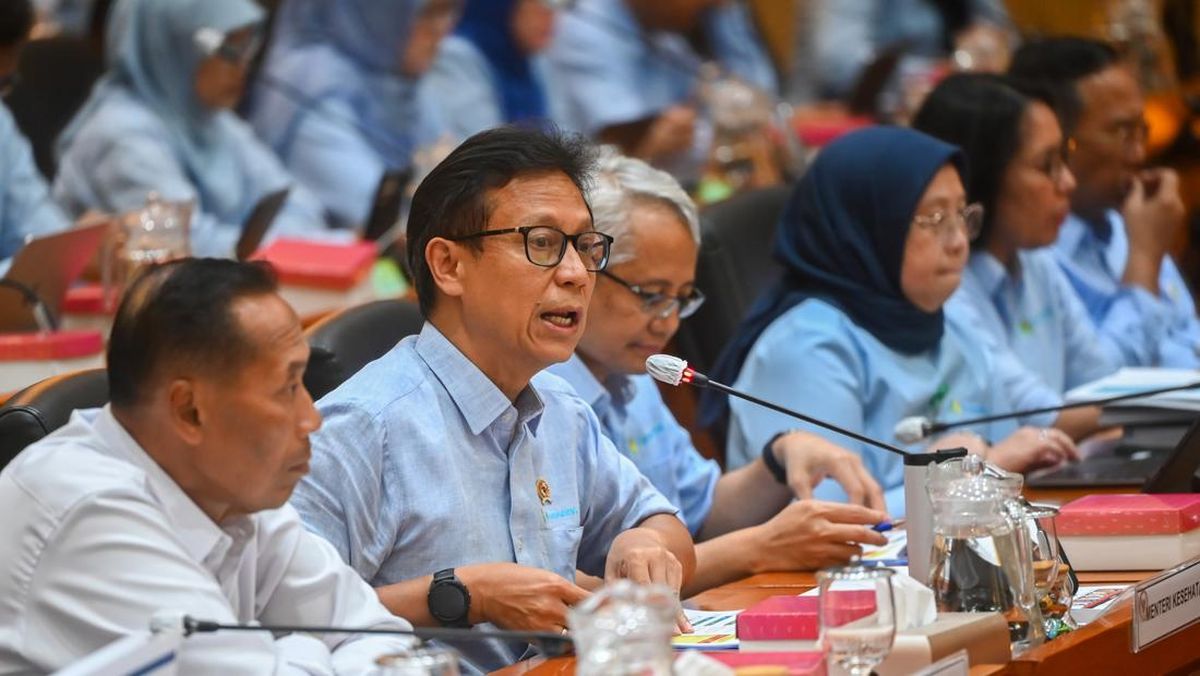
The Vice Chairman of Commission IX of the Indonesian House of Representatives (DPR RI), Charles Honorsson, has questioned statements made by Health Minister Budi Gunadi Sadikin regarding the claim that approximately 112 million Indonesians are malnourished.
‘We question the Health Minister’s statement that about 112 million Indonesians still suffer from malnutrition if that figure is based on Susenas data,’ Charles stated on Friday. He emphasised that the Ministry of Health needs to transparently explain the indicators and methodology used to reach such a conclusion. He noted that Susenas is fundamentally a socio-economic household survey, rather than a survey specifically designed to measure the nutritional status of the population directly.
He pointed out that Indonesia already possesses instruments specifically designed to measure public nutritional status, namely the Indonesian Health Survey (SKI) and the Indonesian Nutritional Status Survey (SSGI), which have long served as the primary references for the Ministry of Health. ‘Therefore, if the government wishes to formulate or evaluate national nutrition improvement policies, the primary reference should use indicators derived from those surveys, rather than using indicators that do not directly measure nutritional status,’ he said, adding that public policy must be built upon accurate indicators.
He further noted that this clarity is essential to define the objectives of the Free Nutritious Meal (MBG) Programme. If the primary goal of the MBG is to improve public nutritional status, then success must be measured using valid nutritional indicators, such as reductions in stunting, wasting, underweight, and anaemia, as measured through SKI and SSGI. ‘A programme of this magnitude cannot be evaluated based solely on assumptions or indicators that do not directly measure nutritional status,’ he remarked.
Conversely, he suggested that if the government intends to implement a universal school meal programme, it should communicate to the public that the primary goal is providing food to all children, rather than solely improving nutritional status. ‘The public has the right to know the true purpose of the MBG Programme. The programme’s objectives should not shift to follow changing narratives,’ he added.
Previously, Health Minister Budi Gunadi Sadikin revealed that approximately 112 million Indonesians still suffer from malnutrition. Consequently, the government plans to gradually open 13,000 Nutritional Fulfilment Service Units (SPPG)—essentially Free Nutritious Meal (MBG) kitchens—prioritising regions with high stunting rates. Budi explained that the figure is derived from the bottom four deciles of the 2024 National Socio-Economic Survey (Susenas) data. According to him, each decile represents approximately 28 million people, meaning the bottom four deciles encompass the 112 million people targeted for nutritional intervention.