
DPR Commission IX Agrees to Bring Labour Protection Bill to Plenary Session
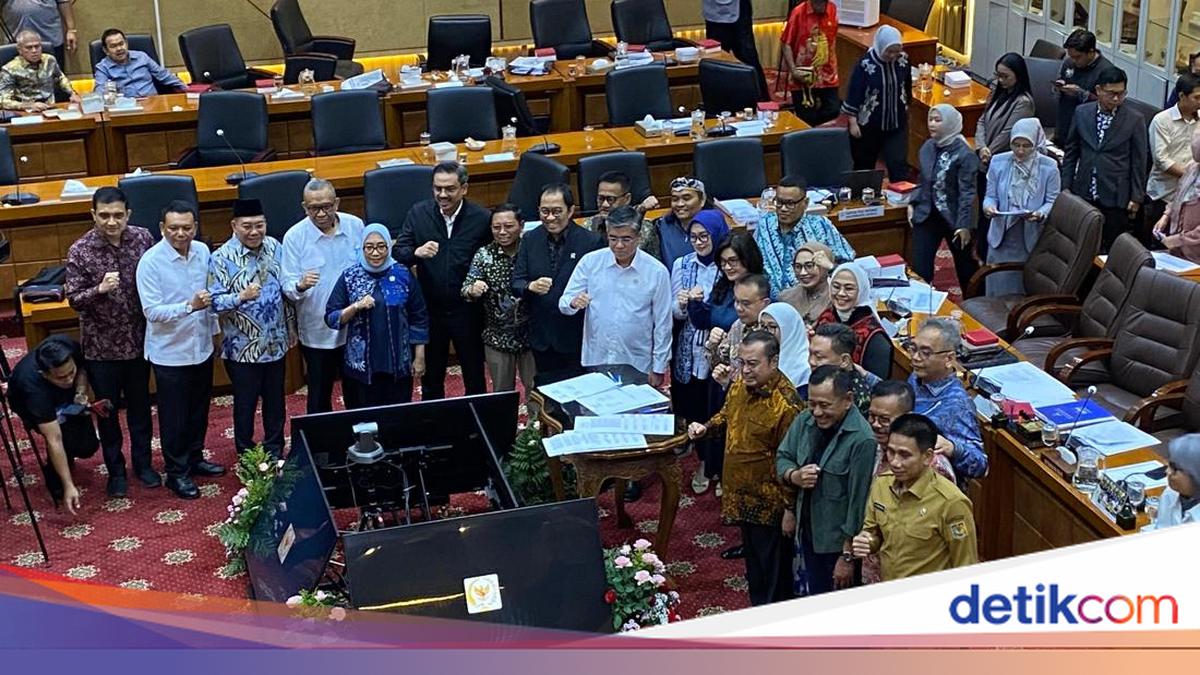
DPR Commission IX, in collaboration with the government, has agreed to proceed with the Labour Protection Bill to the plenary session for ratification into law. This decision was reached during the Level I decision-making working meeting regarding the Labour Bill.
The meeting took as held in the Commission IX DPR room, Parliament Complex, Senayan, Jakarta, on Monday (5/10/2026). The session was presided over by Deputy Speaker of the DPR Sufmi Dasco Ahmad, accompanied by the Chair of Commission IX DPR Felly Estelita Runtuwene and other Vice Chairs, including Putih Sari, Yahya Zaini, Charles Honoris, and Nihayatul Wafiroh.
Also in attendance were Minister of Manpower Yassierli, Minister of Women Empowerment and Child Protection Arifah Fauzi, Minister of MSMEs Maman Abdurrahman, Deputy Minister of State Secretariat Bambang Eko Suhariyanto, Deputy Minister of Manpower Afriansyah Noor, and Deputy Minister of Industry Faisol Reza.
The Chair of the Working Group (Panja) for the Labour Protection Bill, Putih Sari, initially presented the key points of the amendments discussed intensively by Commission IX. She emphasised the urgency of revising the Labour Protection Bill.
“The formation of a new Labour Law is also driven by the current condition where labour regulations are scattered across various laws and regulations, including Law Number 13 of 2003 concerning Manpower, which has undergone several amendments. Therefore, consolidation and harmonisation of regulations into a single, more understandable law is required to provide certainty for workers, employers, entrepreneurs, and the government,” Putih Sari stated during the meeting.
Putih Sari noted that the Bill focuses on providing legal certainty for both employees and employers. The Bill also emphasises the need to anticipate changes in the working world and digital transformation.
“In order to provide stronger protection for workers, ensure legal certainty for workers and employers, encourage the creation and expansion of job opportunities, increase labour competence and productivity, and realise a fair and decent wage system,” she said.
“It also aims to strengthen harmonious and just industrial relations, anticipate changes in the working world and digital transformation, strengthen labour supervision and law enforcement, and create a balance between worker protection, business sustainability, economic growth, and national competitiveness,” she added.
Putih Sari stated that the Bill consists of 2pend 23 chapters and 313 articles. Following this, each faction presented its final opinion regarding the Labour Protection Bill.
On behalf of the government, Minister of Manpower Yassierli expressed appreciation for the discussions conducted by Commission IX DPR. Yassierli stated that the government approves the Bill being brought to the plenary level for ratification into law.
“Can Commission IX DPR and the government agree to bring the Labour Protection Bill forward to Level II discussions?” asked Dasco, to which the members of the House responded with approval.
The details of the 23 chapters of the Labour Protection Bill are as follows:
Chapter I: General Provisions
Chapter II: Foundations, Principles, and Objectives
Chapter III: Equal Opportunity and Treatment
Chapter IV: Manpower Planning and Labour Information
Chapter V: Productivity Enhancement
Chapter VI: Job Training and Apprenticeships
Chapter VII: Manpower Placement
Chapter VIII: Expansion of Job Opportunities
Chapter IX: Informal Sector Manpower
Chapter X: Use of Foreign Manpower
Chapter XI: Employment Relations
Chapter XII: Specific Employment Relations
Chapter XIII: Protection, Wages, and Welfare
Chapter XIV: Industrial Relations
Chapter XV: Termination of Employment
Chapter XVI: Severance Pay Reserve Fund
Chapter XVII: Development
Chapter XVIII: Supervision
Chapter XIX: Investigation
Chapter XX: Criminal Provisions
Chapter XXI: Miscellaneous Provisions
Chapter XXII: Transitional Provisions
and Chapter XXIII: Closing Provisions.