
DPR Commission III Continues Asset Forfeiture Bill Discussions with UGM and Unair Academics
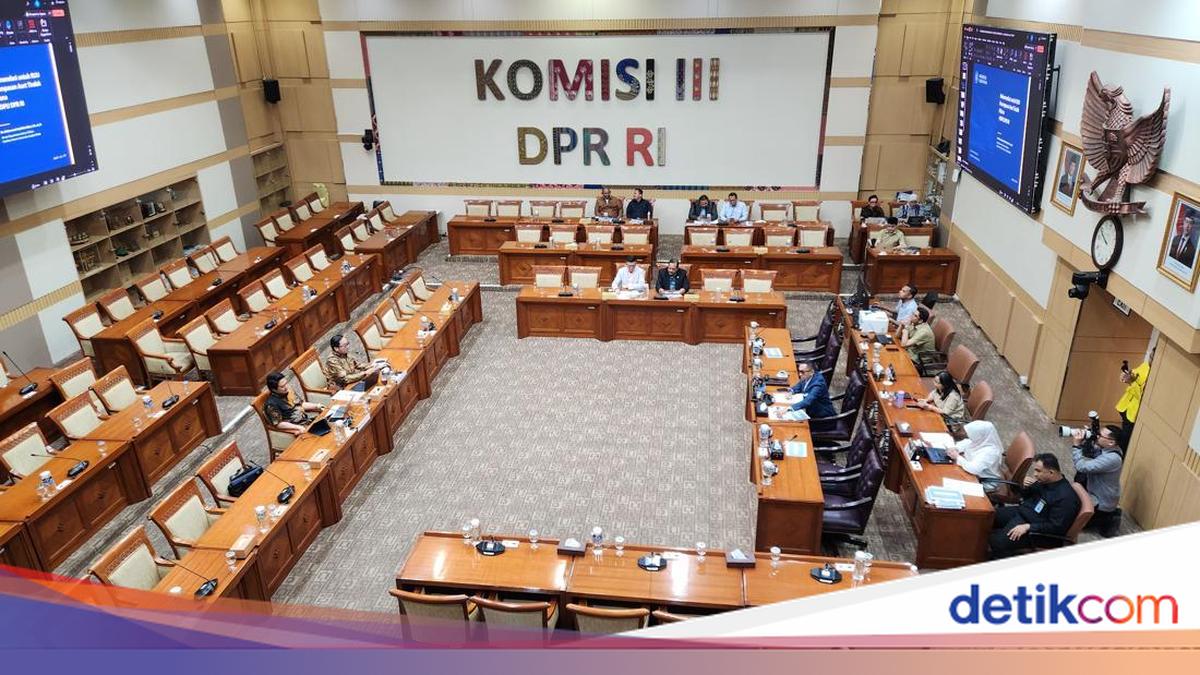
The Indonesian House of Representatives (DPR) Commission III held a Public Hearing (RDPU) with academics from Gadjah Mada University (UGM) and Airlangga University (Unair). The hearing aimed to discuss and provide input regarding the Asset Forfeiture Bill.
The meeting was held in the Commission III meeting room, Jakarta, on Monday (5/10/2026), chaired by the Vice Chairman of Commission III, Ahmad Sahroni. Muhammad Fatahillah, an academic from the UGM Faculty of Law, proposed that regulations should include the restitution of victims’ rights, citing the First Travel case as an example.
“There are many victims who do not receive their rights, even though assets have been seized and forfeited to the state. This can serve as a sociological basis. I will provide the First Travel case as an example,” said Fatahillah.
Fatahillah believes that such issues need to be regulated within the asset forfeiture mechanism. He argued that the regulations must clearly manage how seized and forfeited assets are handled until they are eventually returned to the rightful parties.
“The Asset Forfeiture Bill should provide a timeline for the forfeiture process so that the confiscated assets are not lost or damaged and can be returned to the victims,” he added.
Meanwhile, Taufik Rahman, an academic from the Airlangga University Faculty of Law, proposed that third parties who acquire assets from criminal acts, but do so without knowledge and in good faith, must be legally protected. However, he emphasised the need to clarify that such third parties are truly acting in good faith and are unaware that the assets are the proceeds of crime.
“Third parties who obtain or possess assets in good faith, without knowing or reasonably suspecting the connection between the assets and criminal activity, must be provided with legal protection and cannot be subject to asset forfeiture solely because the assets were once under the control of a criminal,” he stated.
“Therefore, there is a possibility that certain assets may be held by a third party who is acting in good faith,” he noted.
Additionally, Taufik proposed that notification must be provided to all parties related to seized assets. He argued that relevant parties should also have access to legal aid and the opportunity to be heard.
“Anyone with a legal interest in an asset has the right to receive notification, submit claims, present evidence, obtain legal assistance, be heard, and pursue legal remedies against forfeiture decisions,” he concluded.