
DPR Commission II Proposes 20% of Regional Revenue for Local Leaders to Curb Corruption
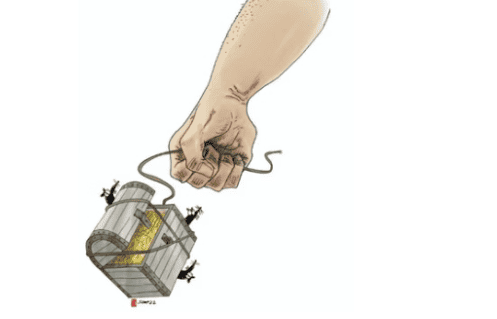
The House of Representatives (DPR) Commission II has proposed that regional heads receive a financial entitlement of 20 per cent from locally-generated revenue (PAD), as an effort to provide more proportional income while suppressing the potential for corruption.
Commission II Chairman Muhammad Rifqinizamy Karsayuda stated that the proposal follows aspirations from the Association of Deputy Regional Heads regarding the financial rights of regional leaders. He said the commission recommends the government revise several laws and regulations, particularly those concerning the financial rights of regional heads and deputy regional heads.
"We are now asking the government, because the basis is a Government Regulation, to await the government’s proposal. Ideally, it is around 20 per cent, to be shared with the deputy regional head," Rifqinizamy said at the Parliament Complex in Senayan, Jakarta, on Thursday.
Rifqinizamy noted an extreme imbalance between high political costs and the official income received by regional heads while in office. "It is illogical for a regional head’s salary to be only around 5 to 6 million rupiah, while the political costs are high. Therefore, we must provide rational and proportional financial rights," he said.
He proposed an incentive clustering scheme where the financial rights of regional heads are directly correlated with a percentage of PAD. The proposed ideal maximum is around 20 per cent of PAD to be shared with the deputy regional head, taking into account each region’s fiscal capacity.
"One of our proposals is that they receive a certain percentage of locally-generated revenue. So, their ability to increase PAD should correlate with their financial rights," he said. "And if this is properly regulated through legislation, our hope is that abuse of authority, including corruption, can be minimised."
Rifqinizamy stressed that the commission is working to ensure regulations can prevent corruption by regional heads, partly through managing their financial rights. He added that corruption driven by greed is a separate matter, and the commission’s task is to ensure regulations and governance run well to minimise such occurrences.