
DPR Commission II Chair Criticises Election Rerun System, Suggests Disqualification Instead
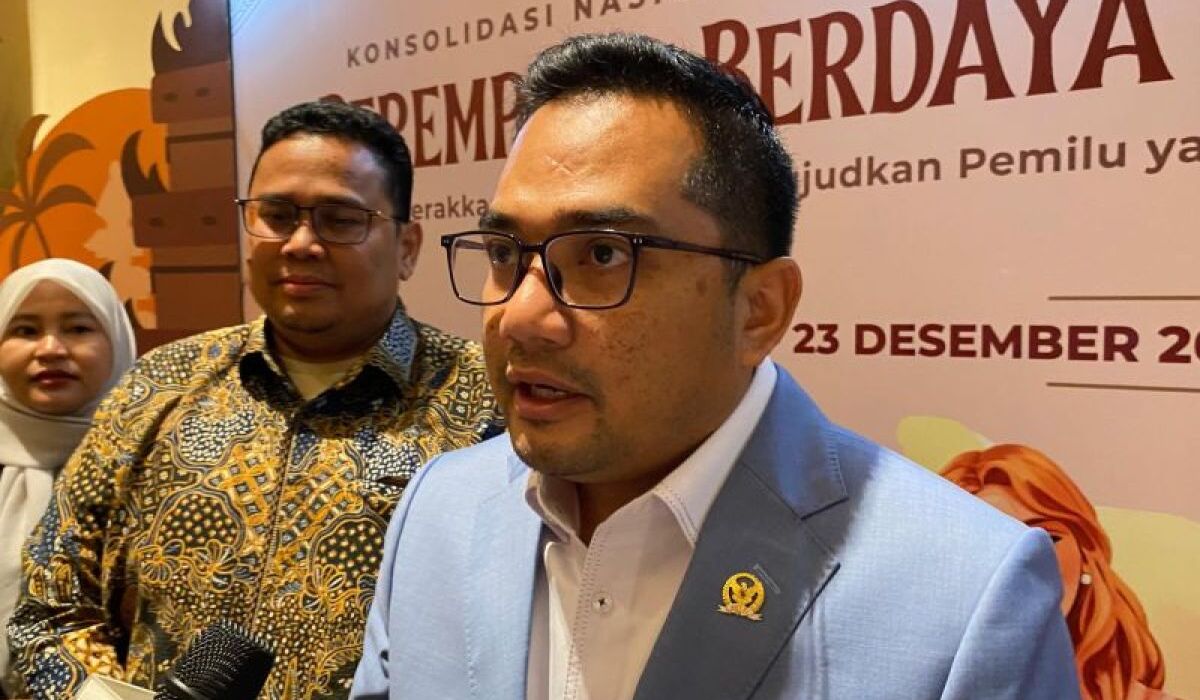
The Chair of Commission II of the Indonesian House of Representatives (DPR RI), M. Rifqinizamy Karsayuda, has questioned the effectiveness of re-running elections (PSU) as a solution to structured, systematic, and massive (TSM) electoral violations. According to him, experiences in several regions show that re-runs have the potential to trigger new violations, burden regional budgets, and hinder public services.
Rifqi stated that the enforcement of electoral law cannot be viewed solely from a legal perspective. He believes that every decision must also consider the resulting political, social, and fiscal impacts.
“In several hearings regarding election evaluations, I have often conveyed that the legal handling of elections cannot stand alone through a purely legal lens. Legal handling must consider many variables,” Rifqi said at the Bawaslu RI Office in Jakarta on Monday.
He cited Constitutional Court (MK) rulings that ordered re-runs after TSM violations were proven. While the aim is to restore voter sovereignty, he believes the mechanism often creates new problems on the ground.
“If the intention of a re-run is to clean up the corruption in a regular election, the re-run itself might actually add more corruption. A re-run will not be an effective cure for TSM violations. Instead, a re-run could present TSM squared or TSM cubed,” he remarked.
He assessed that participants who previously did not commit violations might be driven to engage in similar practices to maintain their political positions during the re-run.
As another example, Rifqi mentioned the North Barito regional election dispute, which began with a slim margin of votes in two polling stations but resulted in a re-run with an expanding scope, eventually ending in the disqualification of a candidate.
In addition to the potential for new violations, he also highlighted the massive budgetary burden borne by local governments due to the implementation of re-runs.
Rifqi noted that the Pangkalpinang City Government experienced this after a single candidate lost to an empty box, necessitating a re-run.
“When a re-run occurs, the regional budget (APBD) is not prepared. Consequently, it is not just development allocations that are sacrificed. Civil servants, especially contract workers (PPPK), may not receive their salaries, and employee allowances are emptied just to meet legal requirements,” he said.
He even stated that the parties most affected by re-runs are not the election organisers, but rather the local governments and the community.
“The organisers and those receiving grants are happy. The ones who suffer are the regional heads and the DPRD, and the people are disadvantaged because development can stall for an entire budget year,” he added.
On this basis, Rifqi proposed that the mechanism for addressing TSM violations be evaluated. He believes that if violations are proven, the sanction of candidate disqualification should be considered without always resulting in a re-run.
“If it is proven that TSM has occurred, just disqualify them. If everyone is proven to have committed TSM, disqualify everyone and appoint an acting official. But for the regulations, ensure that acting officials do not serve for too long,” he said.
Furthermore, Rifqi stated that evaluating the sanction mechanism is part of the effort to build a more integrated electoral justice system. Such a system, he argued, would not only harmonise election criminal regulations with the new Criminal Code (KUHP) and Criminal Procedure Code (KUHAP) but also ensure that all dispute resolution mechanisms operate more effectively.
“We are not only highlighting the harmonisation of election criminal handling in the Election Law with the new KUHP and KUHAP. We are also inviting all parties to prepare an integrated electoral justice system to ultimately improve the quality of our elections and democracy in the future,” he said.
He added that one of the remaining tasks is to discuss whether Indonesia requires the establishment of a specialised electoral court to resolve various election disputes and violations in a more unified manner.
“Lastly, it remains a task for all of us to determine whether we need a specialised electoral court within the future electoral justice system. This is a discussion we must formulate,” he concluded.