
DPR Commission I Views 'Bitcoin Toll' in Strait of Hormuz as Adding to Global Economic Burden
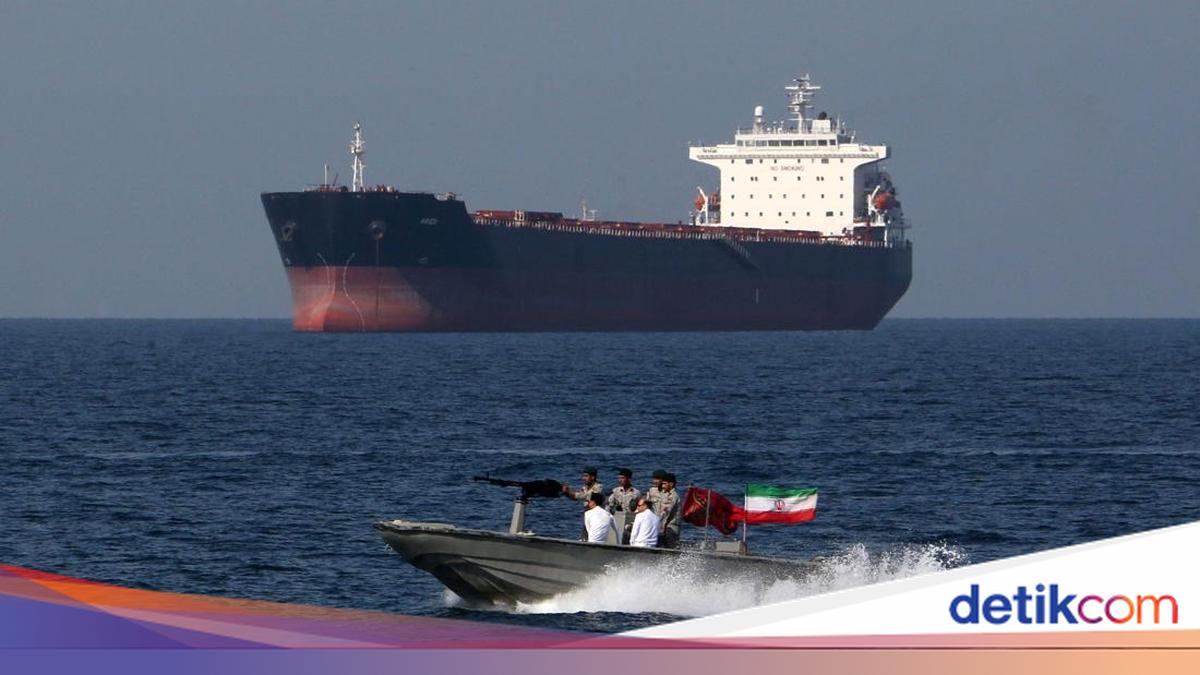
Deputy Chairman of Commission I of the Indonesian House of Representatives (DPR RI), Dave Laksono, has responded to Iran’s government mandating ships transiting the Strait of Hormuz to pay a “toll fee” in the form of crypto assets. Dave views this policy as adding to the global economic burden.
“I see Iran’s policy of imposing levies in digital assets on ships passing through the Strait of Hormuz as a step that creates new uncertainty for the stability of international trade routes,” Dave began his statement on Saturday (10/4/2026).
He noted that the Strait of Hormuz is one of the world’s vital energy routes. This Golkar legislator assesses that the unilateral policy has the potential to become a global economic burden.
“The Strait of Hormuz is one of the world’s vital energy routes, so any unilateral policy has the potential to add to the global economic burden and create broader geopolitical tensions,” he said.
Dave also highlighted two Pertamina-owned ships that are still detained in the Strait of Hormuz. He called on the Foreign Ministry to communicate intensively to ensure Indonesia is not disadvantaged.
“Regarding the presence of two Pertamina tankers currently detained, I emphasise that the safety of the crew and operational certainty must be the primary concern. The government, through the Foreign Ministry, needs to immediately conduct intensive communication with the relevant authorities to prevent discrimination or treatment that harms Indonesia’s national interests,” he said.
Dave stated that the Foreign Ministry must intensify diplomacy through a negotiation approach. He also hopes Indonesia can play a role in easing the conflict in the Middle East.
“We urge the government, particularly the Foreign Ministry, to intensify diplomatic efforts and a negotiation approach with the relevant parties. This step is important to protect Indonesia’s interests while ensuring trade routes continue smoothly without detrimental obstacles,” Dave said.
“Optimism must still be maintained that through active diplomacy, multilateral cooperation, and commitment to peace, Indonesia can play a constructive role in easing tensions and ensuring trade routes remain safe and functional for global and national interests,” he added.
It is known that Iran has begun requiring ships transiting the Strait of Hormuz to pay a “toll fee” in crypto assets. The crypto tariff amount is equivalent to US$1 or Rp17,122 per barrel of oil cargo on the ship during a two-week ceasefire with the United States (US).
Spokesman for the Iranian Oil, Gas, and Petrochemical Products Exporters Union, Hamid Hosseini, explained that this step is one of Tehran’s strategies to avoid international sanctions by utilising financial systems beyond US reach.
In its implementation, ships wishing to cross the Strait of Hormuz must first email the Iranian authorities about the cargo they are carrying. After that, they will be charged the appropriate fee, and only after payment is received can they pass.
“Once the email arrives and Iran completes its assessment, ships are given a few seconds to pay with bitcoin to ensure they cannot be tracked or seized due to sanctions,” Hosseini told the Financial Times, quoted Friday (10/4/2026).