
DPR Budget Committee Warns Government Over El Nino Threat and Energy Crisis Looming Over 2027 State Budget
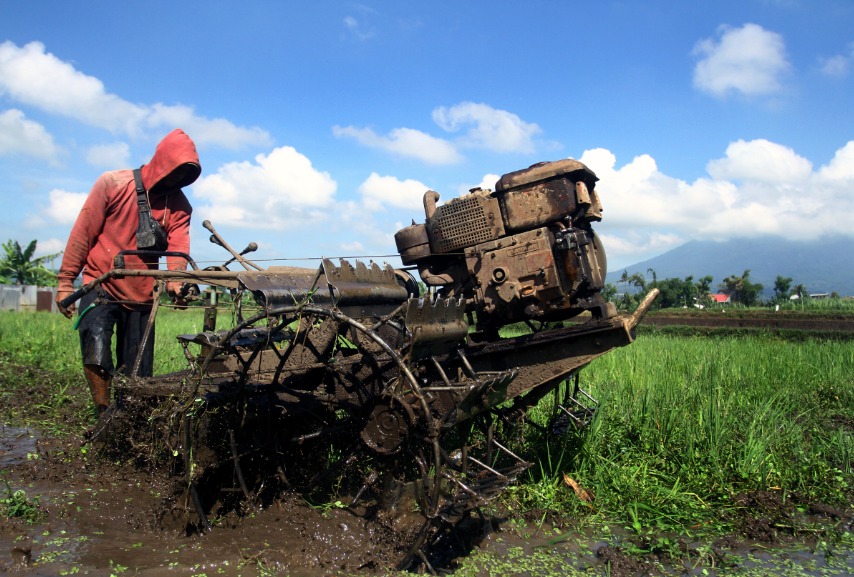
The Chairman of the House of Representatives’ Budget Committee (Banggar), Said Abdullah, has warned the government against becoming complacent in pursuing economic growth targets during the preparation of the 2027 State Budget (APBN). He noted that several structural challenges, such as the threat of extreme El Niño, energy security, the quality of human resources, and the direction of national industrialisation, must receive serious attention to ensure the development agenda does not lose momentum.
This warning was delivered by Said during a working meeting between the Budget Committee and the government regarding the discussion of the 2027 Macroeconomic Framework and Fiscal Policy Principles (KEM-PPKF).
One of Said’s primary concerns is the potential for an extreme El Niño, as previously warned by the Meteorology, Climatology, and Geophysics Agency (BMKG). This weather phenomenon is assessed to be capable of disrupting the government’s strategic programmes, particularly in the food and water resource sectors.
“This situation could threaten food and water sovereignty programmes. Therefore, mitigation must be implemented as early as possible,” Said stated in his remarks on Wednesday.
According to him, the government needs to prepare anticipatory measures immediately so that the impacts of climate change do not hinder established development targets. In addition to climate factors, global geopolitical uncertainty is also seen as having the potential to exert pressure on the national economy.
“This is to ensure that our domestic food and energy policies become increasingly resilient to external shocks,” he added.
In the energy sector, Said assessed that Indonesia still faces fundamental issues regarding its dependence on fuel (BBM) imports, despite being one of the world’s largest coal exporters. Consequently, energy sector reforms and the improvement of subsidy schemes are deemed necessary to be finalised promptly.
“We export coal to support the world, yet our domestic energy consumption relies on fuel imports,” he said.
Beyond food and energy issues, Said also highlighted the challenges of the demographic bonus, which is expected to conclude by 2041. He warned that this opportunity could transform into a burden if there is no significant improvement in the quality of education and workforce skills.
“We must not allow this nation to grow older while remaining poor and poorly educated,” he emphasised.
Said revealed that of the approximately 147.9 million people currently employed, more than half—around 52 per cent—still possess only primary or lower secondary school education. This condition is considered a major task for the government to expand access to higher education while simultaneously improving the quality of human resources.
In his view, investment in education is a vital prerequisite for Indonesia to compete with neighbouring countries such as Vietnam, Malaysia, and Thailand, which continue to enhance their economic competitiveness.
Furthermore, Said requested that the government clarify the direction of national downstreaming and industrialisation. He assessed that the industrial sector’s contribution to Gross Domestic Product (GDP), which currently hovers around 19 per cent, indicates that Indonesia has not yet fully transformed into an industrial nation.
“What industry are we aiming for? Because we cannot achieve everything simultaneously; there must be priorities,” he said.
He emphasised that the chosen industrial sectors must be capable of creating quality jobs, expanding economic activities, and addressing the needs of future industries to ensure sustainable economic growth.
Said expressed hope that these various inputs would serve as considerations for the government in drafting the 2027 Draft State Budget (RAPBN), so that economic growth targets can be achieved while maintaining national economic stability and the country’s fiscal health.
Source: jawawa.id (https://jawawa.id/newsitem/dpr-budget-committee-warns-government-over-el-nino-threat-and-energy-crisis-looming-over-2027-state-budget-1781070732)
Originally published by Media Indonesia (https://mediaindonesia.com/ekonomi/898927/banggar-dpr-ingatkan-pemerintah-soal-ancaman-el-nino-dan-krisis-energi-bayangi-apbn-2027), translated from Indonesian