
DPR Budget Committee: Indonesia’s Capital Market Remains a Promising Investment
Jakarta (ANTARA) – The Budget Committee of Indonesia’s House of Representatives (Banggar DPR) said the country’s capital market remained a promising investment destination despite a wave of share selling last October.
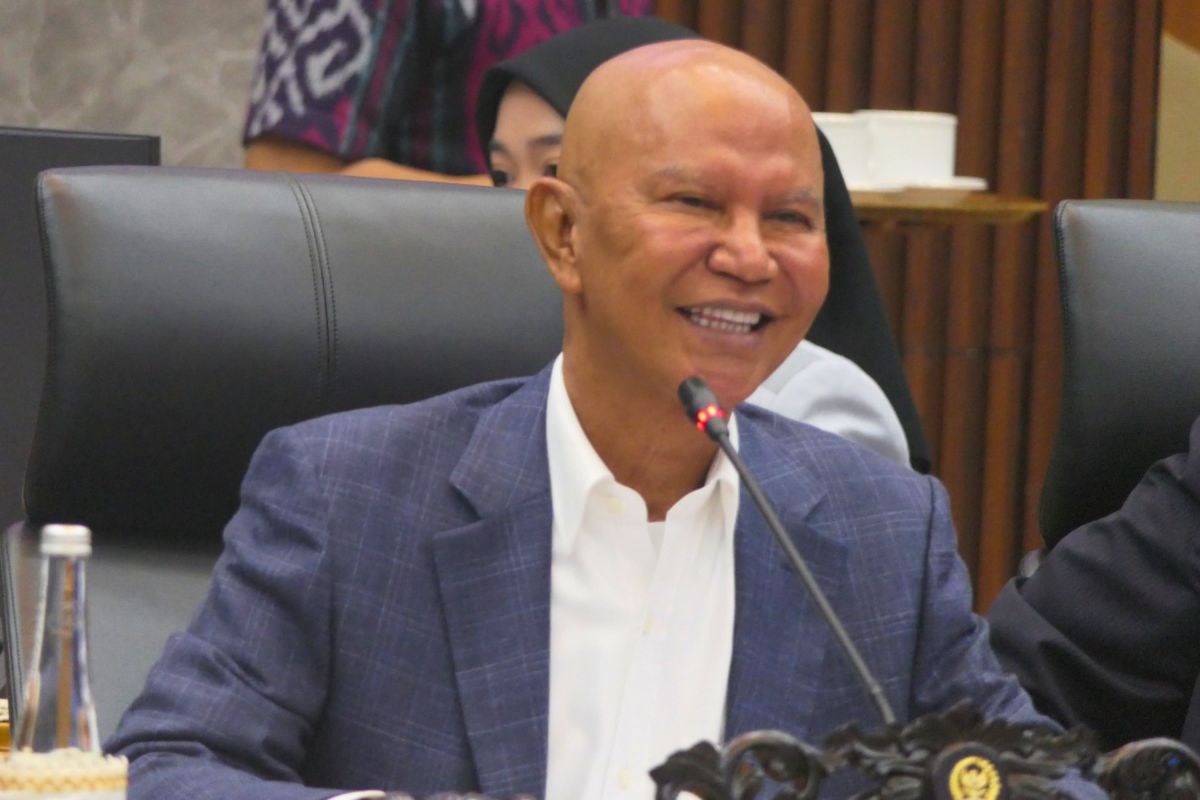
“There is a trend of growth in individual investors on the Indonesia Stock Exchange (BEI),” Banggar DPR chairman Said Abdullah said in a statement in Jakarta on Monday.
The total number of capital market investors reached 33.5 million Single Investor Identification (SID) numbers in October 2026, a 65 per cent increase compared with the end of 2025.
The number of mutual fund investors registered on S-Invest stood at 32.19 million SID, up 68 per cent from the end of 2025. Meanwhile, the number of stock and bond investors registered on C-BEST reached 10.36 million SID, a 21 per cent increase, while government securities (SBN) investors numbered 1.64 million, up 17 per cent.
Compared with September 2026, when the number of capital market investors stood at 32.1 million SID, this meant 1.4 million new investors had been willing to seize investment opportunities and take on the associated risks while the BEI was being “hit” by a storm in October 2026, Said said.
He said investors’ willingness to enter the market was not without consideration or a result of poor financial literacy, particularly given that turmoil in the capital market had become headline news across various media outlets.
More encouragingly, he added, most BEI investors were young people: more than 70 per cent were under 40. The gender balance was almost equal, while 62 per cent were entrepreneurs, civil servants, teachers and private-sector employees.
“This group reflects part of Indonesia’s middle class and is also a force for the country’s economic future,” he said.
Said acknowledged, however, that the influx of new investors would not yet be enough to replace foreign investors, who had tended to sell.
Data from the Indonesian Central Securities Depository (KSEI) for September 2026 showed that foreign investors accounted for just 0.15 per cent of investors, but held 34 per cent of total assets in C-BEST and 2.45 per cent of assets in S-Invest.
This meant foreign investors were few in number but wielded substantial investment capital, he said.
Even so, Said said the growth in domestic participation in Indonesia’s capital market offered hope and provided a buffer for the BEI, both now and in the future.
He cautioned that Indonesia still needed to address issues highlighted by several index providers whose benchmarks are used by foreign investors.
“Restoring foreign interest in our exchange must be the focus of the BEI and the Financial Services Authority (OJK),” Said said.
He said foreign investors’ confidence in the BEI was not merely a matter of developing the capital market, but also reflected broader confidence in Indonesia’s macroeconomic fundamentals.
Restoring that confidence would also help improve sentiment towards investment in government securities and support the rupiah against the US dollar, thereby strengthening the government’s fiscal position, the Budget Committee chairman said.
He said the BEI and the OJK had agreed to and implemented most of the recommendations made by global index providers. However, all parties had the right to monitor the quality of capital market reforms carried out by both self-regulatory organisations (SROs) and the OJK.
If capital market reforms were implemented fairly, as all parties hoped, the BEI should no longer face the threat of exclusion.
“More than that, it should receive recognition, at the very least with its rating returning to positive territory, even if it remains in the emerging market category,” he said.
Source: jawawa.id (https://jawawa.id/newsitem/dpr-budget-committee-indonesias-capital-market-remains-a-promising-investment-1794210708)
Originally published by Antara (Indonesian) (https://www.antaranews.com/berita/5841199/banggar-dpr-pasar-modal-ri-masih-jadi-investasi-menjanjikan), translated from Indonesian