
DPR: Asset Forfeiture Bill in Several Countries Targets More Than Just Corruptors
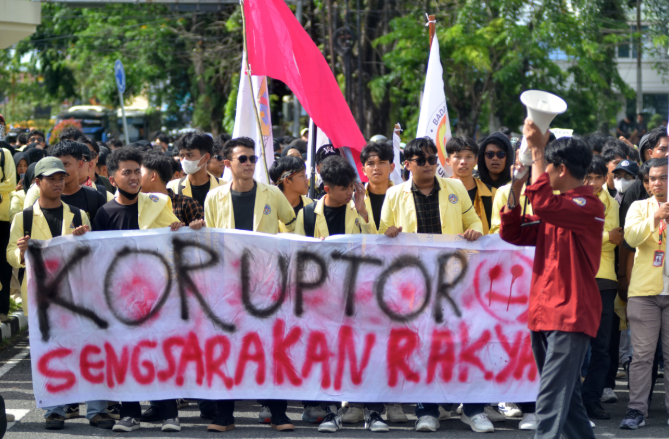
The Chairman of Commission III of the Indonesian House of Representatives (DPR RI), Habiburokhman, stated that the Asset Forfeiture Bill in several countries is not only aimed at handling corruption, but also various other crimes that cause significant losses to the state and society.
“In other countries, the scope of Asset Forfeiture laws is not limited to corruption. This is because there are several other criminal acts that substantially harm the state and the wider public,” Habiburokhman said in a statement on Thursday (3/9).
He cited the United States, which implements a civil forfeiture mechanism. Through this regime, law enforcement can seize assets related to various criminal activities, such as narcotics, money laundering, smuggling, and securities manipulation in the capital market.
He noted that the United Kingdom also possesses the Proceeds of Crime Act 2002 (POCA), strengthened by Unexplained Wealth Orders (UWO). This regulation covers asset forfeiture related to serious crime, tax violations, and organised fraud.
“The scope targets the forfeiture of assets from serious crimes, tax smuggling, and organised fraud without requiring a prior criminal conviction,” he said.
Similarly, Australia regulates asset forfeiture through the Proceeds of Crime Act 2002. These rules encompass organised crime, drug trafficking, customs crimes, and large-scale financial crimes.
Habiburokhman stated that Commission III of the DPR has received significant input to expand the scope of the Asset Forfeiture Bill in Indonesia.
He assessed that several criminal acts urgently requiring inclusion in a non-conviction based asset forfeiture (NCB) regime include narcotics, terrorism, investment fraud, environmental crimes, taxation, and crimes within the insurance sector.
“The spectrum of losses caused by these crimes is clearly no less destructive,” he remarked.
According to Habibcrokhman, asset forfeiture in narcotics and terrorism cases can be used to sever the operational chains of crime.
“Logistical assets and the flow of funds that support criminal networks can be targeted to hinder the continuity of their activities. This is the most effective way to cripple the regeneration of their criminal operations,” he explained.
In cases of fraud within the financial and insurance sectors, the asset forfeiture mechanism is expected to help accelerate the recovery of victims’ rights, which have faced various obstacles.
Nevertheless, Habiburokhman emphasised the importance of the integrity of law enforcement officers in implementing these rules. He noted that the authority for asset forfeiture must include oversight mechanisms to prevent abuse.
He also reaffirmed the primary principle of the regulation: ensuring that criminals cannot enjoy the proceeds of their crimes.
“In principle, no criminal should be allowed to profit from unlawful acts; crime does not pay,” he asserted.
Furthermore, Habiburokhman ensured that Commission III of the DPR is committed to completing the Asset Forfeiture Bill with a comprehensive scope. The regulation is expected to focus not only on recovering state losses due to corruption but also on addressing losses to the public caused by various other criminal acts.
“Commission III of the DPR RI is committed to ensuring the Asset Forfeiture Bill becomes a complete, progressive, and proportional legal umbrella to recover state losses while comprehensively restoring public losses,” he said.