
DPR Asserts PIHU Law Not Intended to Criminalise Independent Umrah Pilgrims
By way of a contrario interpretation, the article in question is not intended to criminalise independent umrah pilgrims who invite, coordinate, or accompany family and relatives on their pilgrimage journey.
Jakarta (ANTARA) — The House of Representatives (DPR RI) has affirmed that the provisions of Law Number 8 of 2019 on the Administration of Hajj and Umrah (UU PIHU) are not intended to criminalise pilgrims performing umrah independently.
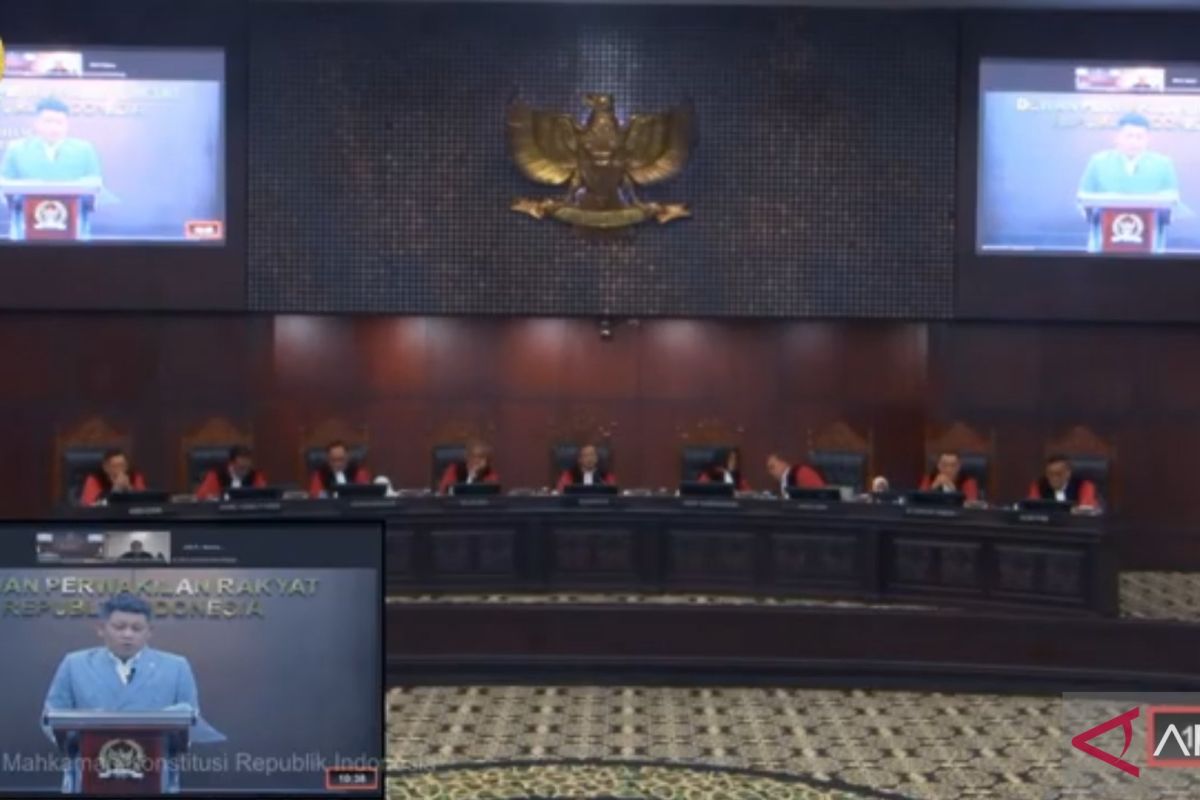
Speaking at a judicial review hearing on the UU PIHU at the Constitutional Court on Tuesday, DPR counsel Abdullah explained that Article 115 is aimed only at parties acting as Hajj and Umrah Travel Organisers (PPIU) without an official licence.
“By way of a contrario interpretation, the article in question is not intended to criminalise independent umrah pilgrims who invite, coordinate, or accompany family and relatives on their pilgrimage journey,” Abdullah said in remarks delivered online.
According to him, Articles 115 and 122 of the UU PIHU do not conflict with Article 28D paragraph (1), Article 28E paragraph (1), Article 28E paragraph (4), Article 28I paragraph (1), and Article 29 paragraph (2) of the 1945 Constitution.
“These provisions are in fact a manifestation of the state’s responsibility to protect citizens practising their faith, as mandated by the constitution,” he said.
Abdullah also noted that the recognition of independent umrah worship in Article 86 paragraph (1) letter b of the UU PIHU strengthens the guarantee of freedom of worship while also responding to changes in Saudi Arabian government policy.
During the hearing, Constitutional Judge Enny Nurbaningsih asked the DPR to submit the academic text and the minutes of deliberations on the amendment of the UU PIHU.
Enny also asked the DPR and the government to explain the change in terminology from “individual” (perseorangan) to “independent” (mandiri), including an explanation of the service providers that constitute one of the requirements for independent umrah.
“Who exactly are these service providers? That can be explained later, Mr Abdullah — from the debates, the service providers are ready, including those from the government. Why? Because they are accessed through the ministry’s information system,” Enny said.
“This should be elaborated later in the government’s testimony. What does acting as a PPIU actually mean?” said Justice Asrul.
The judicial review hearing on the UU PIHU will resume on Wednesday (5/8) at 10.00 Western Indonesia Time, with the agenda of hearing the government’s testimony.
The judicial review petition was filed by Febriansyah Ramadhan, a lecturer at the Faculty of Law of the National Education University of Bali, in case Number 239/PUU-XXIV/2026.
The petitioner argues that Articles 115 and 122 of the UU PIHU have the potential to create legal uncertainty, as they could be used as grounds to prosecute members of the public who invite family members to perform umrah independently.
Source: jawawa.id (https://jawawa.id/newsitem/dpr-asserts-pihu-law-not-intended-to-criminalise-independent-umrah-pilgrims-1785264659)
Originally published by Antara (Indonesian) (https://www.antaranews.com/berita/5670183/dpr-tegaskan-uu-pihu-tak-untuk-mengkriminalkan-jamaah-umrah-mandiri), translated from Indonesian