
DPR and Government Respond to Conditional Unconstitutionality of Military Courts Law
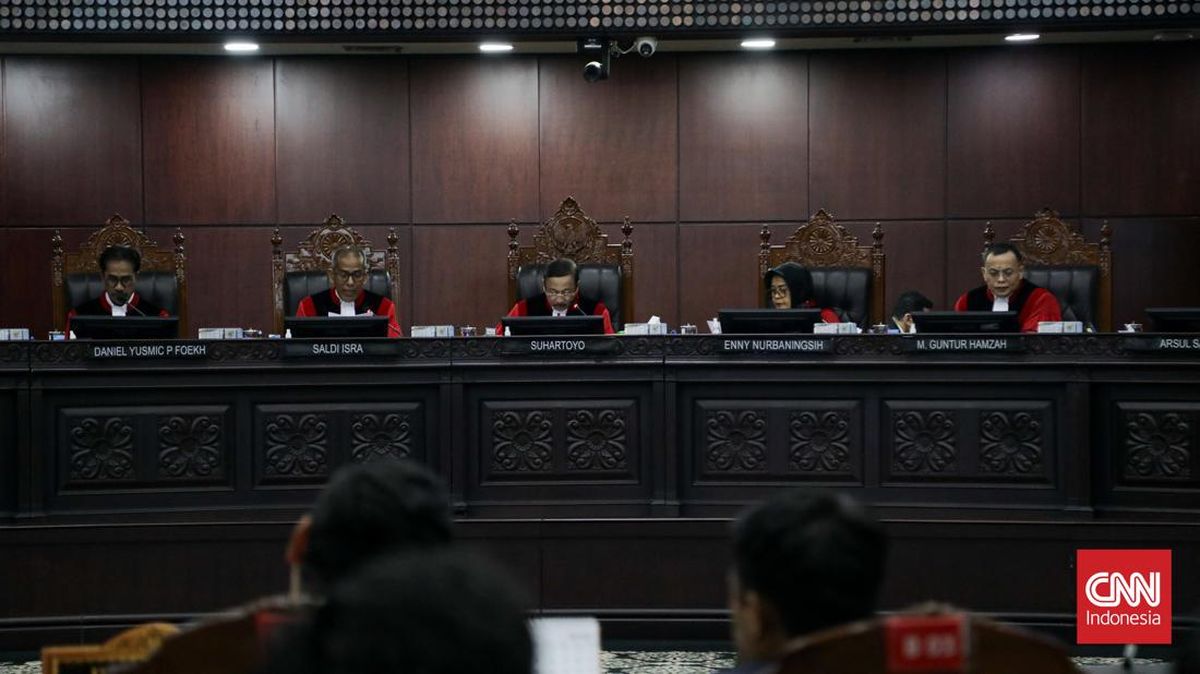
The DPR and the government have responded to the Constitutional Court’s (MK) ruling that Law No. 31/1997 on Military Courts will be unconstitutional if it is not revised within two years.
In Decision No. 260/PUU-XXIII/2025, delivered on Thursday (15 October), the MK granted in full a petition for a judicial review of Law No. 31/1997 on Military Courts.
The court ruled that the law contravenes the 1945 Constitution and is conditionally non-binding unless amendments are made within no more than two years of the ruling. If the government and the DPR fail to amend it within that period, the Military Courts Law will be deemed unconstitutional and will have no binding legal force.
DPR’s response
The DPR’s Commission I said it respected the MK’s ruling ordering a revision of the Military Courts Law. Commission member Amelia Anggraini said the decision was important in affirming an equal judicial system for Indonesian National Armed Forces (TNI) personnel who commit ordinary criminal offences.
Amelia said the ruling should strengthen the rule of law and equality before the law for all citizens.
“Personally, I view the MK’s ruling positively. It underscores the importance of fair and equal law enforcement, including for TNI personnel who commit ordinary criminal offences,” Amelia said when contacted on Thursday (15 October).
The NasDem Party politician said the MK’s instruction to revise the Military Courts Law must be taken seriously by the government and the DPR. She said the revision should be comprehensive and involve various parties, including the TNI, law enforcement agencies, academics and civil society.
Amelia said the amendments must also ensure that the revised regulations establish law enforcement mechanisms that are clear, transparent and accountable.
“The investigation, prosecution, trial and enforcement of judgments must have clear divisions of authority and procedures that do not cause conflicts between institutions,” she said.
Meanwhile, DPR Commission I Deputy Chair Dave Laksono said revising the Military Courts Law would help improve the national legal system. He said the process should be conducted carefully, taking into account the need to maintain the TNI’s professionalism and readiness.
“In my view, every legal development, including relevant Constitutional Court rulings, needs to be considered as part of efforts to improve regulations,” Dave said.
Government’s response
The government, through the Ministry of Law, said it would review the MK’s ruling on the Military Courts Law.
Ministry Secretary-General Nico Afinta said the ministry was still examining the ruling to understand fully what needed to be followed up.
“Regarding the MK’s ruling, the Ministry of Law may review it. For now, we are first examining the contents of the ruling,” Nico said at the Ministry of Law’s Pengayoman Building in Jakarta on Friday (16 October), as quoted by Antara.
Nico said that once the review was complete, the ministry would coordinate further to determine the next steps.
He said discussions on amendments to the law would involve the government and the DPR as the law-making bodies.
“Once the Ministry of Law has received it, we will of course coordinate further on the outcome of the ruling. It will be discussed by the government together with the DPR,” he said.
The MK previously granted in full the petition for a judicial review of Law No. 31/1997 on Military Courts on Thursday (15 October). In its ruling, Decision No. 260/PUU-XXIII/2025, the court gave lawmakers no more than two years to amend the law.
The court said the period was sufficient to allow lawmakers to undertake a fundamental review and incorporate the changes addressed in its deliberations into the amended Law No. 31/1997.
In its legal reasoning, the MK stressed the need for amendments to clearly define military and ordinary criminal offences, and to establish the jurisdiction of military and civilian courts in cases involving TNI personnel.
The changes should also provide for the full integration of military courts into the unified judicial system, regulate military courts in combat, and make any necessary adjustments to court procedures.
The MK also highlighted the need for a mechanism to resolve disagreements over the appropriate court when jurisdictional disputes arise between military and civilian courts.
“If lawmakers do not make changes within a maximum of two years, Law No. 31/1997 will automatically contravene the 1945 Constitution and will have no binding legal force,” MK Justice Enny Nurbaningsih said while reading the relevant part of the ruling.
Source: jawawa.id (https://jawawa.id/newsitem/dpr-and-government-respond-to-conditional-unconstitutionality-of-military-courts-law-1792155142)
Originally published by CNN Indonesia (https://www.cnnindonesia.com/nasional/20261016140548-32-1416169/dpr-pemerintah-respons-uu-peradilan-militer-inkonstitusional-bersyarat), translated from Indonesian