
DPR and Government Agree on New Retirement Age for Police Officers
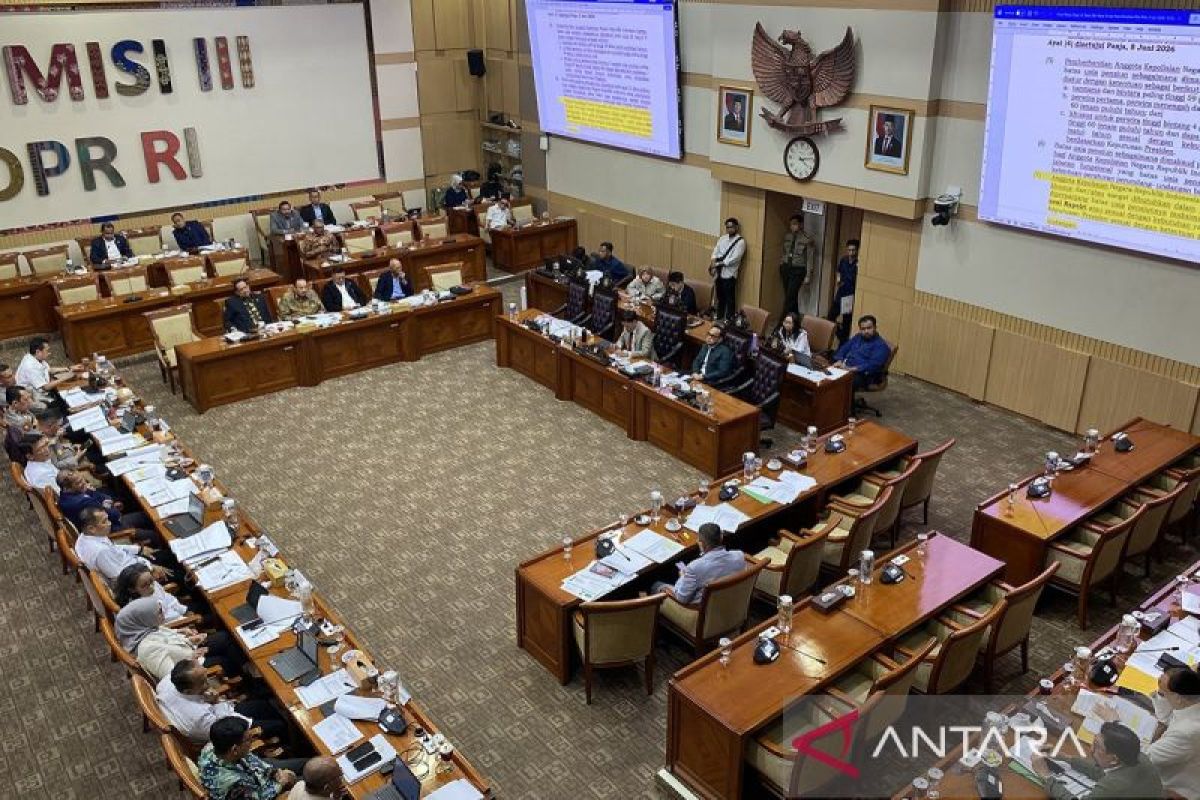
The Commission III of the DPR and the government have agreed on the Draft Law (RUU) regarding the Amendment to Law Number 2 of 2002 concerning the Indonesian National Police (Polri), which establishes retirement age limits of 59 and 60 years.
Deputy Minister of Law Edward Omar Sharif Hiariej stated that the retirement age of 59 applies to personnel with the ranks of enlisted (tamtama) and non-commissioned officers (bintara), while the 60-year limit applies to first, middle, and high-ranking officers. Specifically for four-star generals, the maximum retirement age is 60, which can be extended by a maximum of one year based on presidential decree, according to the Deputy Minister during a working committee meeting at the DPR Building on Monday.
This regulation regarding the retirement age of Polri members is included in the list of problems (DIM) for the Polri Bill, specifically regarding the honorable discharge of members from their positions. The government explained that the distinction in retirement ages based on rank is intended to maintain personnel motivation and prevent imbalances in years of service.
“If everyone were set at 60, it would lead to demotivation. Enlisted and non-commissioned officers might feel there is no need to pursue further education for officer ranks if the retirement age is the same,” Eddy explained. He added that if all personnel retired at 60, the service period for lower ranks could reach 42 years, whereas officers with higher educational requirements would have shorter service periods, creating an imbalance.
Furthermore, the government is following the graduation of retirement ages applied to other Civil Servants (ASN). The Deputy Minister noted that the differentiation also serves to encourage healthy competition within the force. Regarding the decision not to raise the age to 63, the government cited the need for internal regeneration within the police force, considering workload and field conditions.
During the session, legislators debated the proposal. The Chairman of Commission III, Habiburokhman, initially suggested unifying the retirement age at 60 for all ranks. However, the Deputy Minister argued that a uniform age of 60 could lead to ‘zero growth’ and stagnation in recruitment, as well as budgetary issues. Following this explanation, the legislators agreed to follow the government’s proposal. Under the existing Law Number 2 of 2002, the retirement age for Polri members is a maximum of 58, with extensions to 60 only for those with specialised skills.