
DPR and Government Agree on Indonesia International Financial Centre Bill, Plenary Session Next
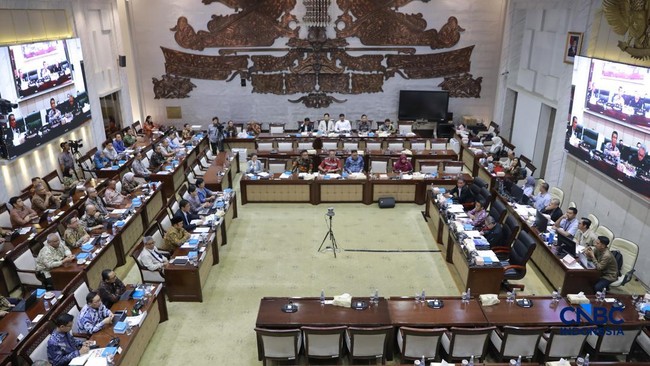
Jakarta - The government and the House of Representatives (DPR) in Commission XI have agreed on the Bill concerning the Indonesia International Financial Centre (RUU PFII), which was drafted by the Working Committee (Panja) since 6 July 2026. Chairman of Commission XI DPR Mukhamad Misbakhun stated that following the bill’s approval at the commission level, the next stage is its ratification in the nearest DPR Plenary Session. The RUU PFII is planned to be submitted for approval in the plenary session scheduled for 21 July 2026. “It will then be brought to the second-level discussion in the DPR plenary session, which God willing, will be held tomorrow,” Misbakhun said while banging the gavel in the Commission XI meeting room, Monday. The meeting was attended by Finance Minister Purbaya Yudhi Sadewa and his staff, as well as representatives from the Ministry of Law, the Ministry of State Secretariat, and the Ministry of Investment and Downstreaming or the Investment Coordinating Board (BKPM). The details of the RUU PFII draft agreed upon at the Commission XI level and read out by the Chairman of the Working Committee, who is also Deputy Chairman of Commission XI from the Gerindra Faction, Mohamad Hekal, are as follows: Chapter 1 contains general provisions regulating the definitions and principles of the PFII’s implementation. Chapter 2 covers the establishment, status, and objectives of the PFII. Chapter 3 regulates business activities within the PFII, including financial sector activities, financial sector support, and other sector activities. Chapter 4 concerns institutional matters, consisting of six parts: general provisions regarding the delegation of PFII management authority from the President to the Governor of the PFII and the formation of the PFII advisory board; the PFII Board, covering its status, organs, appointment and dismissal, duties and authorities, including the formation of committees; the PFII Management Agency (LP PFII), covering its status, organs, duties, authorities, initial capital, work plan, asset management profit and loss, and bankruptcy; the PFII Financial Services Authority (LPJK PFII), covering its status, organs, duties, authorities, and initial capital; accountability, namely the submission of PFII implementation accountability reports to the President and reports on the implementation of PFII duties and functions to the DPR; and further provisions regarding the institutional framework of the PFII Board, LP PFII, and LPJK PFII to be regulated in a presidential regulation. Chapter 5 regulates the PFII Arbitration Institution as an alternative dispute resolution mechanism within the PFII. Chapter 6 concerns the PFII Court, consisting of six parts: the status and position of the PFII Court as a special court; its authority to examine, adjudicate, and decide cases within the PFII; the composition of the PFII Court; the authority of the Chief Judge; procedural law for the PFII Court; and the court’s budget sourced from the LP PFII. Chapter 7 regulates support from the central and regional governments for the implementation of the PFII. Chapter 8 covers tax facilities and other special facilities, consisting of nine parts: general provisions on tax facilities for certain parties and other forms of facilities provided; income tax facilities, including forms and eligible subjects and criteria; VAT and/or Sales Tax on Luxury Goods facilities, including forms and eligible subjects and criteria; customs facilities, including forms and eligible subjects, terms, and conditions; tax treatment of inheritance, stipulating that inheritance tax does not apply in the PFII; tax treatment of initial capital funding for the PFII; reporting and administrative rights and obligations for business actors, financial sector experts, and other parties conducting activities in the PFII; sanctions related to tax facilities; and other special facilities for business actors, experts, or other parties in the PFII area. Chapter 9 regulates the specificities of the PFII, including the use of language, licensing, foreign exchange transactions, and financial transactions within the PFII. Chapter 10 contains closing provisions regarding exceptions to the application of other laws and regulations, the mandate to issue implementing regulations for the PFII Law, and the placement of the law in the State Gazette of the Republic of Indonesia.