
DPR and BI Governor Faced with Criticism Over Rupiah Depreciation and Impact on Middle Class
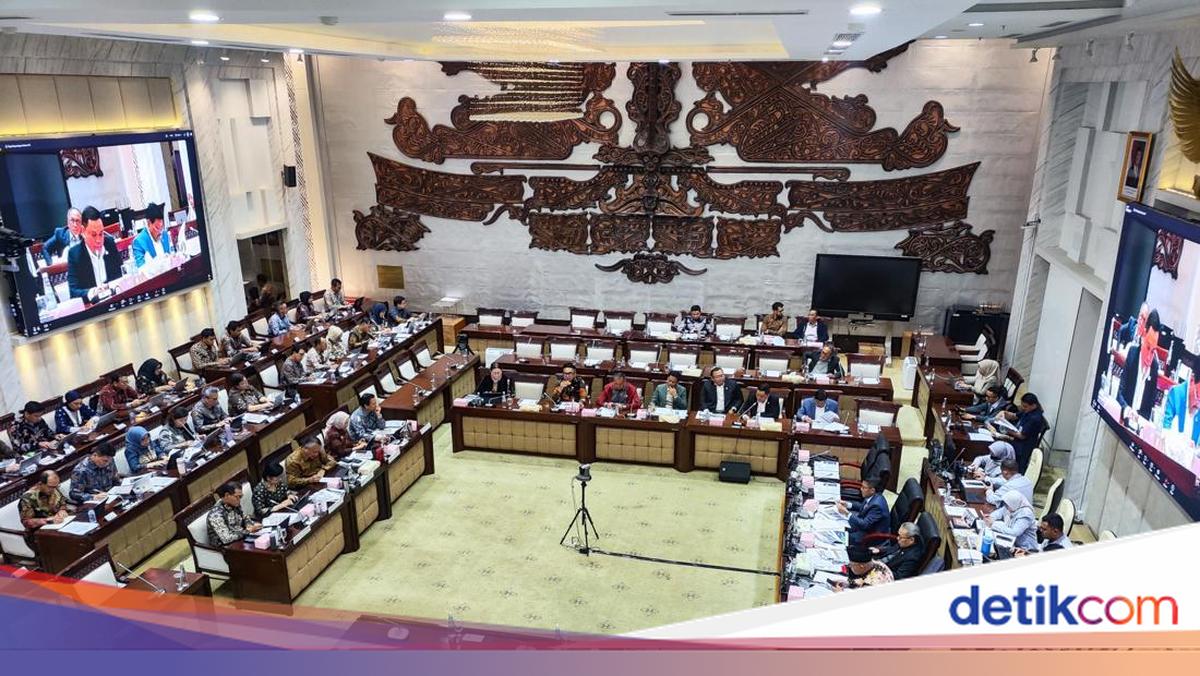
Commission XI of the Indonesian House of Representatives (DPR) held a working meeting with Bank Indonesia (BI) Governor Perry Warjiyo and several deputies. During the session, members of Commission XI voiced widespread criticism regarding the condition of the Rupiah, which has been plunging against the US Dollar.
The meeting was held at the DPR RI building in Senayan, Jakarta, on Monday (18/5/2026), and was chaired by the Chairman of Commission XI, Mukhamad Misbakhun. One of the criticisms came from Golkar Party member Muhidin M. Said, who noted that the conflict between Iran and the United States is complicating the Rupiah’s situation. He highlighted that the exchange rate had opened at approximately Rp17,590 and had already risen to the Rp17,600 level, describing the situation as very difficult.
Said emphasised that the public is waiting for Bank Indonesia to take steps to prevent further depreciation, noting that the middle class is already beginning to feel the impact. He stressed that the middle class plays a vital role in the economy and must be protected from being eroded by currency instability.
Further criticism was levelled by PDIP member Harris Turino, who challenged Bank Indonesia’s assertion that the Rupiah remains relatively stable compared to other nations. Turino pointed out that the reality for the public is rising import prices, increased industrial costs, and heightened pressure on food and energy, all of which are weakening economic perception. He questioned why, despite BI utilising all available instruments, the Rupiah continues to depreciate, and reminded the central bank of its responsibility to maintain currency stability.
Commission XI member Amin AK also raised concerns, asking for clarification on which of BI’s seven strategic steps to normalise the exchange rate have been fully implemented and which are still in progress. He noted that the current exchange rate, while perhaps undervalued, is not yet at the desired level.
Deputy Chairman of Commission XI, Hanif Dakiri, argued that BI’s achievement indicators do not align with the reality on the ground. He noted that while BI reports stability, the public perceives a sharp weakening of the Rupiah, leading to expensive basic necessities and sluggish real economic growth. Dakiri warned against a disconnect between macro-level data and micro-level reality, stating, “We must not let this institution appear good on paper while the public feels the burden.”
Finally, member Primus Yustisio highlighted an anomaly where the national economy grew by 5.61%, yet the Rupiah hit record lows against the Dollar. He noted that while global indices have rebounded since the recent geopolitical tensions, the local currency continues to struggle.