
DPR Accelerates Labour Bill, Employers Express Concerns
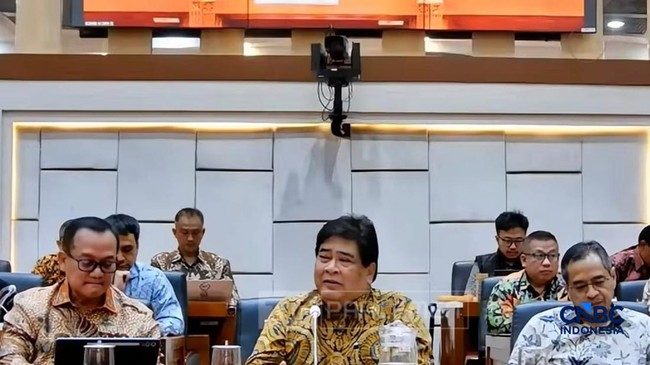
The discussion regarding the Draft Labour Law (RUU Ketenagakerjaan) is being accelerated with the aim of completion by October 2026. The business community has cautioned that the new regulations must not become an obstacle to Indonesia’s targeted economic growth of 8%.
Bob Azam, Chairman of the Labour Division of the Indonesian Employers Association (Apindo), stated that the drafting of the Labour Bill must be directed towards becoming a ‘prime mover’ for the economy, rather than a ‘derailer’ that obstructs growth. “The most important thing is how this law can serve as a prime mover for our economy. It should not be the opposite, where it becomes a derailer that prevents the 8% economic growth we hope for,” Bob told CNBC Indonesia on Wednesday (2/9/2026).
According to him, achieving an 8% growth target cannot rely solely on domestic potential. Indonesia requires foreign investment, meaning labour regulations must be able to maintain Indonesia’s competitiveness compared to other ASEAN nations. “To reach 8%, we cannot rely only on domestic potential. We need foreign investment to flow in,” he added.
Bob believes that Indonesia’s labour regulations should be drafted by considering practices prevalent in other ASEAN countries. He noted that regulations that are too divergent or deemed uncompetitive could potentially lead investors to choose other nations. “To ensure foreign investment enters, we must create laws that are not unusual compared to ASEAN neighbours; the important thing is that we are on par within ASEAN. This is what we have communicated to the government and the DPR,” Bob explained.
He assessed that another challenge is the highly diverse nature of Indonesian industries. He argued that labour regulations cannot be created using a ‘one size fits all’ approach for all sectors. “There is no such thing as a ‘one size fits all’ regulation. We must provide room for each sector to adjust to their specific conditions,” he said.
Bob cited the difference in work characteristics between the plantation sector and the hospitality sector as an example. Plantation workers require rest period arrangements that suit their working conditions, whereas the hospitality sector has high labour demands during weekends and public holidays. “In essence, we want to create regulations that provide business certainty and labour protection. But we must not shoot ourselves in the foot,” Bob emphasised.
Previously, labour unions have been pushing for the Labour Protection Bill to be passed no later than October 2026. This deadline relates to the mandate of the Constitutional Court Decision Number 168/PUU-XXI/2023, which requires the separation of the labour cluster from the Job Creation Law. Said Iqbal, President of the Confederation of Indonesian Trade Unions (KSPI), stated that the Bill must still be passed by October 2026, but warned that the timeline should not result in the sacrifice of worker protection substance.