
DPR Accelerates Discussion of Oil and Gas Bill, Key Points Revealed
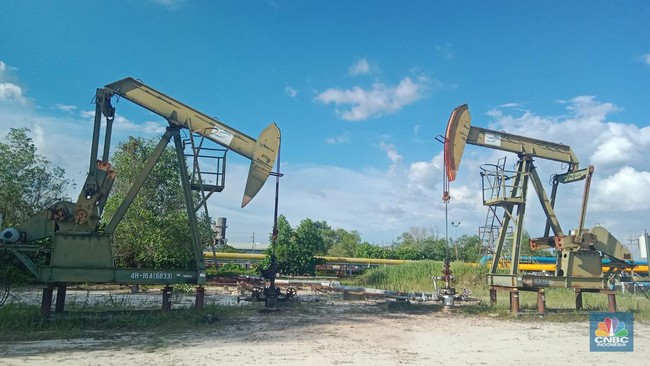
The Indonesian House of Representatives (DPR RI) is currently accelerating the discussion process for the Draft Law (RUU) intended to replace Law No. 22 of 2001 concerning Oil and Gas. The DPR aims to finalise the enactment of this new law at least before the current parliamentary session concludes around October 2026.
Member of Commission XII of the DPR, Eddy Soeparno, explained that this acceleration is a response to the mandate from the Constitutional Court (MK), which invalidated several articles in the old regulations back in 2012. He noted that legal certainty in the upstream oil and gas sector is crucial for maintaining Indonesia’s economic stability amidst global geopolitical uncertainty.
“It is very important that we revise the Oil and Gas Law, especially given the current conditions where geopolitics make our oil and gas needs vital for strengthening energy security,” said Eddy, who also serves as Vice Chairman of the MPR RI, to CNBC Indonesia.
Key points proposed in the Oil and Gas Bill include:
Formation of a Special Business Entity (BUK): This new body will replace the Special Office for Upstream Oil and Gas Business Activities (SKK Migas), serving both as a regulator and an operator.
Direct Responsibility to the President: The BUK is proposed to operate under the coordination of the President of Indonesia to reduce bureaucracy.
Single Working Area Holder: The BUK will be the entity holding all oil and gas working areas (WK) in Indonesia.
Establishment of a Petroleum Fund: A dedicated fund for oil and gas development to be allocated for research and technology activities.
National Oil and Gas Master Plan: The preparation of a roadmap for national oil and gas development.
Furthermore, Eddy emphasised that the formation of the BUK Migas is essential to accelerate the development of oil and gas fields. The BUK will manage upstream activities independently or through cooperation with other parties, including PT Pertamina (Persero). “The BUK ultimately has two important tasks: first, to increase our oil and gas lifting, and second, to strengthen our energy security. It will engage in business activities, so it will not only act as a regulator but also as an operator,” he explained.
In line with this, the Vice Chairman of Commission XII, Bambang Haryuno, explained that the basis of the Oil and Gas Bill is also to align national oil and gas governance with the spirit of the 1945 Constitution, following the 2012 Constitutional Court ruling. As is known, one of the MK rulings in 2012 dissolved the Upstream Oil and Gas Business Activities Implementation Body (BP Migas), leading to the temporary formation of SKK Migas until a permanent legal entity is established through the revision of the Oil and Gas Law.
“The goal is clearly to implement the MK ruling. The key point is that control and management must be controlled by the state. Law 22 of 2001 separated control from management. In this Bill, they are unified in accordance with the MK ruling,” said Bambang. Through this policy synchronisation, the government is expected to be able to increase national oil and gas production (lifting).
The decision to adopt the revision of Law No. 22 of 2001 as a new Draft Law was made during the DPR Plenary Session held at the Nusantara Building, Parliament Complex, Senayan, Jakarta, on Tuesday (18/8/2026). The session was attended by DPR leaders, including Speaker Puan Maharani and four Deputy Speakers.
Previously, the DPR Legislative Body (Baleg) approved the harmonisation of the Oil and Gas Bill. The Working Group Chairman, Sturman Panjaitan, stated that the Bill was agreed upon as a replacement law, with technical improvements made to 39 items in the draft.
Source: jawawa.id (https://jawawa.id/newsitem/dpr-accelerates-discussion-of-oil-and-gas-bill-key-points-revealed-1788155718)
Originally published by CNBC Indonesia (https://www.cnbcindonesia.com/news/20260831113549-4-763586/dpr-ngebut-bahas-ruu-migas-ini-poin-poin-pentingnya), translated from Indonesian