
DPR: 2026 Hajj Evaluation Must Be a Momentum for Service System Improvement
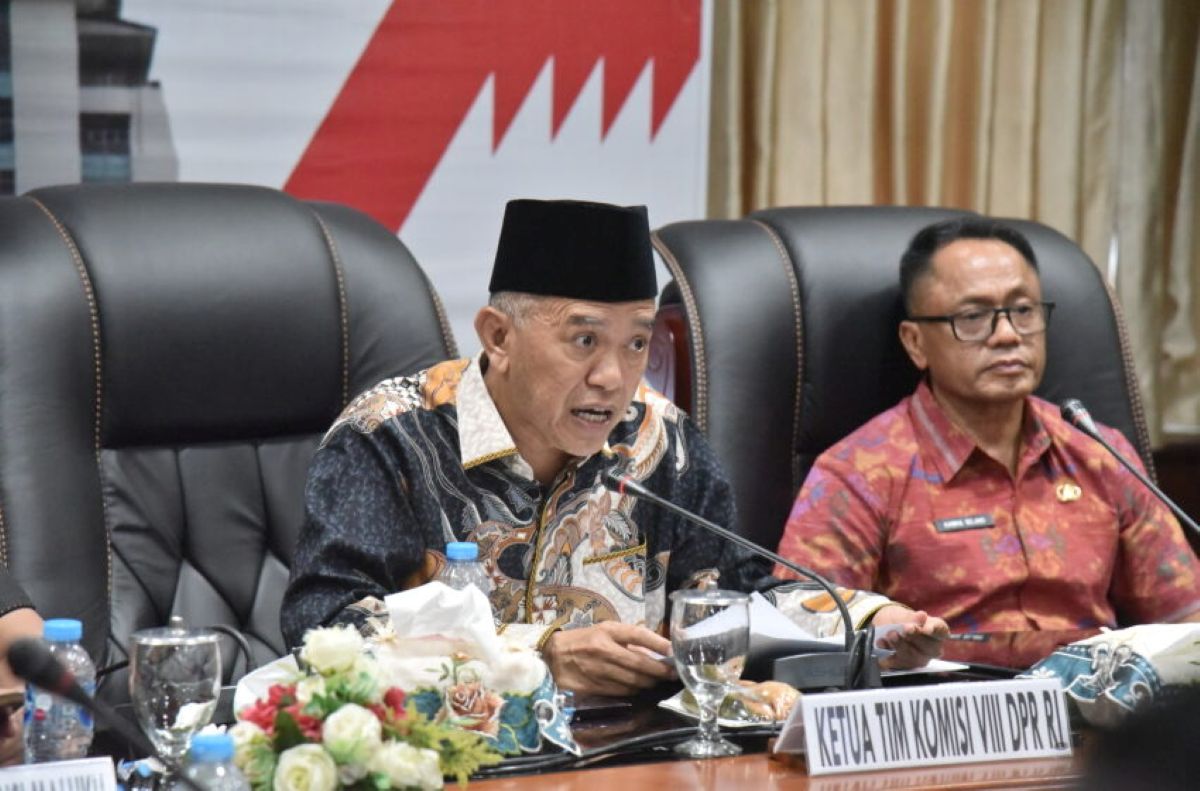
The evaluation of the 2026 Hajj pilgrimage is considered necessary to be utilised as momentum to perfect the service system thoroughly. Although this year’s Hajj implementation generally ran smoothly, a number of strategic aspects are still deemed to require improvement so that service quality continues to increase. Deputy Chairman of Commission VIII of the Indonesian House of Representatives, Singgih Januratmoko, appreciated the 2026 Hajj organisation, which was considered successful. However, he emphasised that post-Hajj evaluation must become part of a culture of continuous improvement, given that the challenges of organising the pilgrimage continue to evolve each year. “I appreciate the 2026 Hajj implementation, which generally went well. However, this success should not make us complacent. In fact, post-Hajj evaluation must become a culture of continuous improvement, because Hajj services always face increasingly complex challenges from year to year,” said Singgih in a written statement received on Thursday (2/7). According to him, the three evaluation focuses conveyed by the Ministry of Hajj and Umrah of Saudi Arabia, namely governance in Mina, istitha’ah requirements, and Hajj flight delays, are strategic issues that require joint attention between the Government of Saudi Arabia and pilgrim-sending countries, including Indonesia. Singgih assessed that the Mina area remains the biggest challenge in organising the Hajj pilgrimage. The limited capacity of the area, which must accommodate millions of pilgrims simultaneously, demands a more modern and technology-based management system for mobility, tent placement, logistics distribution, and pilgrim flow arrangements. “Mina is the epicentre of Hajj services. As long as the capacity of this area remains limited while the number of global pilgrims continues to increase, more adaptive governance innovations are needed. Indonesia needs to continue fighting for additional service capacity, optimising tent placement, and strengthening the digital data-based pilgrim movement management system,” he stressed. He added that the experience of organising the Hajj in recent years shows that the success of services in Mina does not only depend on the readiness of officers but is also influenced by quota policies, scheduling of pilgrim movements, and coordination between syarikah. Regarding the istitha’ah requirements, Singgih assessed that these provisions must be understood as a form of protection for the safety of pilgrims, not merely an administrative requirement. Therefore, the implementation of health istitha’ah must be carried out objectively, transparently, and based on accountable medical standards. “The Hajj pilgrimage is a very strenuous physical act of worship. Therefore, the implementation of istitha’ah must truly be an instrument of protection for pilgrims, not just an administrative formality,” he explained. Meanwhile, regarding Hajj flight delays, Singgih requested that the evaluation be carried out comprehensively, starting from fleet readiness, flight schedule management, coordination at embarkation points, ground handling services, to mitigation systems when operational disruptions occur. “Flight delays are not merely a technical airline issue. The impact can affect worship schedules, the physical condition of pilgrims, and even the readiness of officers in Saudi Arabia. Therefore, the evaluation must be carried out comprehensively so that in the future there is a better mitigation system when unforeseen conditions occur,” he said. According to Singgih, Indonesia’s Hajj organisation has shown positive developments. However, the increase in public expectations regarding service quality demands continuous improvement. “It is not enough to just say that the Hajj implementation was successful. What is far more important is ensuring that every shortcoming, no matter how small, can be corrected so that service quality continues to improve from year to year. The evaluation of the 2026 Hajj implementation is not just about identifying problems, but must also deliver system improvements in the form of Indonesian Hajj governance that is professional, adaptive, safety-oriented, and capable of becoming one of the best Hajj service models in the world,” concluded Singgih.