
DPP GAN Invites Students to Be Critical Partners in National Economic Oversight
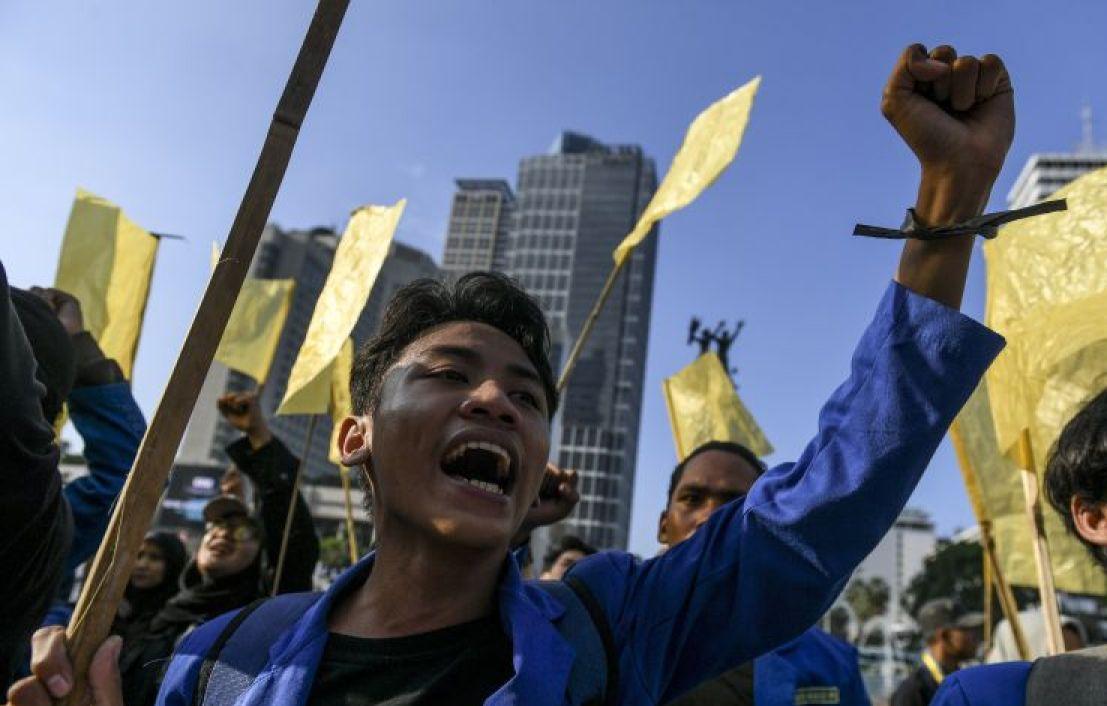
The chairman of the Central Executive Board (DPP) of Garuda Astacita Nusantara, Muhammad Burhanuddin, has expressed high hopes for the emergence of a national movement that can strengthen Indonesia’s economic sovereignty through collaboration between the government, students, and civil society. He stated that the nation’s current development challenges, particularly those related to the management of natural resources and the distribution of economic benefits, require the active involvement of all elements of society to ensure that Indonesia’s wealth is truly utilised for the greatest possible welfare of the people. Burhanuddin believes that the spirit of resistance against economic practices detrimental to the public interest must be understood as an effort to strengthen fair state governance.
In his view, strategic sectors such as mining, energy, and plantations play a crucial role in supporting national development, and their management must therefore be transparent, accountable, and oriented towards the broader public interest. “Indonesia possesses enormous natural resources. The challenge lies not in the availability of these resources, but in ensuring their management provides maximum benefit for the people. Therefore, strengthening governance, public oversight, and the courage to make improvements are very important,” Burhanuddin said in a press release received on Monday (15/6).
He noted that students hold a strategic position in this process. Indonesia’s history shows that students have always been an important part of the nation’s journey, from the struggle for independence and the reform movement to various efforts to strengthen democracy and oversee public policy. He expressed hope that the younger generation will not merely be spectators in the development process, but will become critical partners capable of providing ideas, input, and oversight of government policies. Burhanuddin emphasised that students’ critical attitudes should be directed towards nation-building, rather than merely strengthening political polarisation. For him, constructive criticism is an essential part of a healthy democracy. Students can act as guardians of the values of social justice, transparency, and accountability in the management of national resources.
In the context of President Prabowo Subianto’s administration, Burhanuddin hopes that development agendas emphasising national sovereignty, economic resilience, and people’s welfare can be realised through concrete and sustainable policies. He assessed that efforts to improve governance in the mining, energy, and plantation sectors must be part of a grand strategy to reduce economic inequality while simultaneously strengthening Indonesia’s position amidst increasingly complex global competition. “We need development that not only generates economic growth but also delivers justice. Indonesia’s natural wealth must become a source of prosperity for the people, creating jobs, improving the quality of life, and strengthening national self-reliance,” he said.
Furthermore, Burhanuddin stressed the importance of fair and consistent law enforcement against practices that harm the state. He argued that public trust in the government will grow stronger when the people witness the courage to take action against violations, regardless of economic, political, or power backgrounds. For DPP Garuda Astacita Nusantara, Indonesia’s future is determined not only by the government but also by the ability of all elements of the nation to work together in realising the ideals of social justice and shared prosperity. He therefore invited students, youth, academics, and the wider community to continue safeguarding national development with a critical, participatory, and constructive spirit.
“A sovereign, just, and prosperous Indonesia is not born from the work of a single group alone. It is born from the mutual cooperation of all the nation’s children who share a commitment to safeguarding the interests of the people and the future of Indonesia,” Burhanuddin concluded. He asserted that the aspiration to create a sovereign, just, and prosperous Indonesia cannot be placed solely on the government’s shoulders. “Synergy and mutual cooperation are needed from all elements of the nation, from students, youth, and academics to community leaders, business actors, and civil society organisations, to jointly oversee national development so that it remains aligned with the people’s interests,” he explained. He also called on all Indonesians to support President Prabowo Subianto’s administration in realising the national development agenda towards a Golden Indonesia 2045. “With unity, collaboration, and the active participation of all the nation’s children, it is hoped that Indonesia will become an increasingly advanced, sovereign, just, and prosperous country, so that the fruits of development can be felt equally by all Indonesians from Sabang to Merauke,” he affirmed.