
DPKP: Rice Production in South Bangka Achieves Surplus
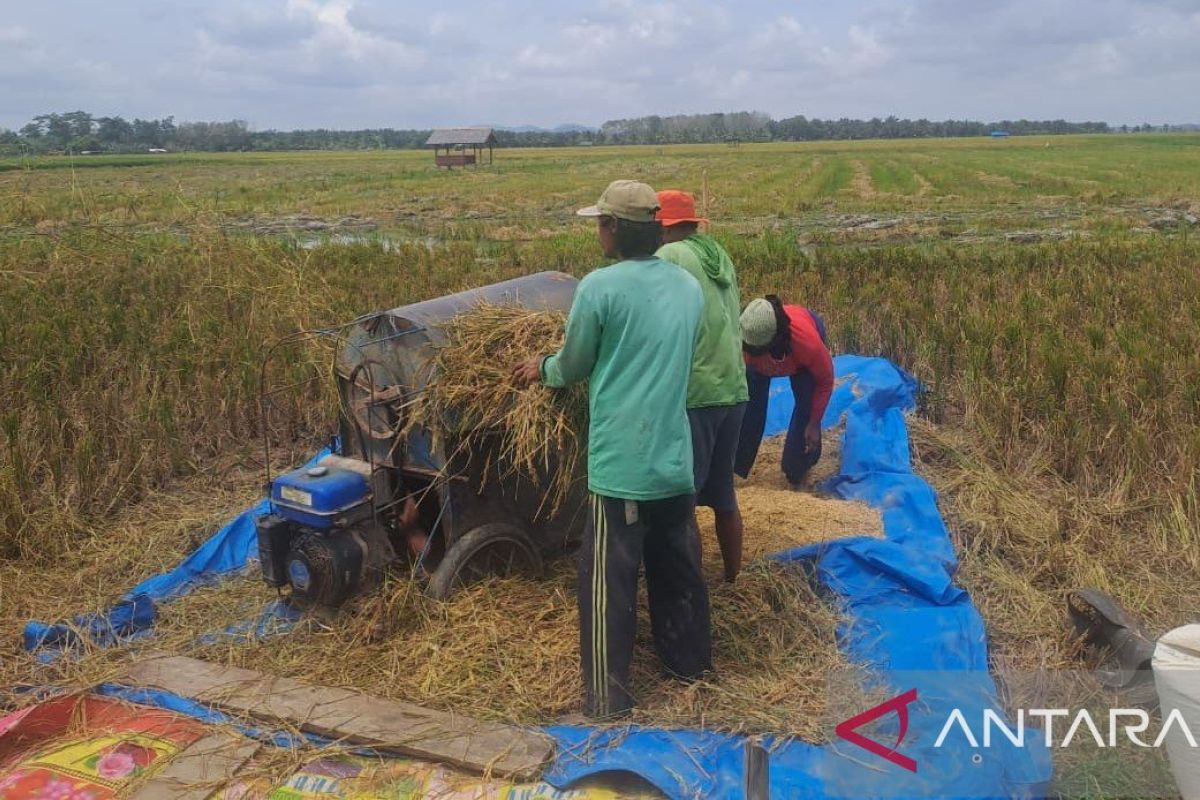
Pangkalpinang (ANTARA) - The Department of Agriculture and Food Security (DPKP) of the Bangka Belitung Islands Province stated that rice production by farmers in South Bangka Regency for 2025 is expected to reach 26,507 tonnes, creating a surplus to meet the local community’s rice consumption demand of 19,335 tonnes.
“Currently, South Bangka is the only region in the Bangka Belitung Islands to achieve a rice availability level of over 100 per cent, specifically at 137.09 per cent,” said the Head of DPKP for Bangka Belitung Islands, Kurniawan, in Pangkalpinang on Thursday.
He noted that rice production in South Bangka Regency for 2025 is recorded at 26,507 tonnes, equivalent to 29,483 tonnes of milled dried grain (GKG). This figure is significantly higher than the projected rice requirement for the South Bangka community in 2026, which is estimated at 19,335 tonnes, resulting in a production surplus.
“Alhamdulillah, rice production by farmers in South Bangka is high, resulting in a production surplus to meet the rice needs of the community in the regency,” he said.
He stated that this success in rice self-sufficiency in South Bangka aligns with the DPKP Bangka Belitung Islands Province programme to accelerate sustainable food self-sufficiency in order to improve the welfare of farmers in the region.
“South Bangka has successfully become a rice self-sufficient area due to adequate standard paddy field area (LBS), measuring 15,356 hectares, which is the largest among the other regencies in the Bangka Belitung Islands,” he added.
Furthermore, high agricultural productivity is reflected in the rice production (equivalent to GKG) reaching 29,483 tonnes, far exceeding annual consumption needs.
“The implementation of production increase strategies, such as the use of high-quality seeds, increasing the planting index, and improving harvest quality through post-harvest agricultural machinery, has been key,” he said.
He also mentioned that agricultural infrastructure support, including the rehabilitation of tertiary irrigation networks (RJIT) and farm roads that facilitate farmers’ production activities, has supported South Bangka’s status as a food self-sufficient region.
“South Bangka has successfully become a rice self-sufficient area due to the regional commitment to controlling land conversion, ensuring that the area of productive agricultural land remains preserved,” he concluded.