
DPD Urges Thorough Preparation of Election Regulations
Semarang (ANTARA) - The Regional Representative Council (DPD) of the Republic of Indonesia is urging the preparation of regulations for the conduct of the 2029 General Elections, in light of Constitutional Court Decision Number 135/PUU-XXII/2024.
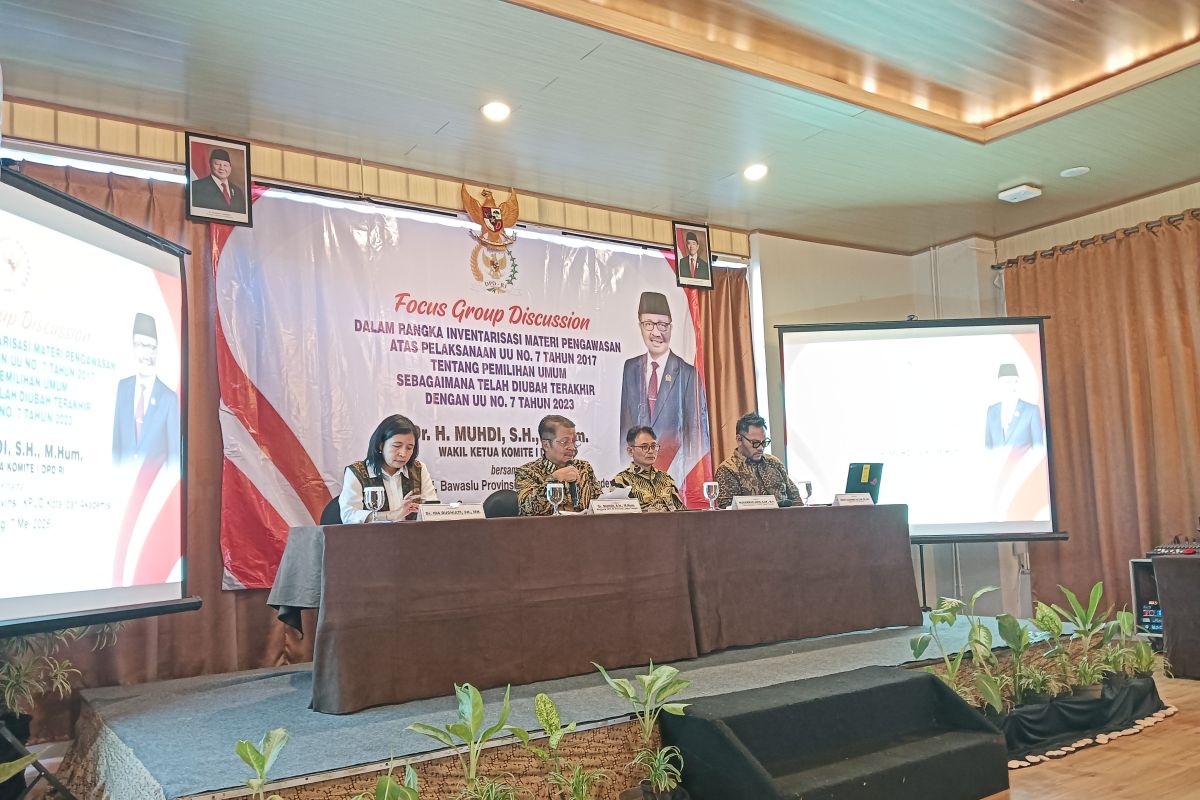
Deputy Chair of DPD Committee I, Muhdi, in Semarang on Thursday, explained that the MK decision number 135 will bring about very significant changes because elections must now be held separately between national and regional levels.
The MK decision separates the schedule for national elections (Presidential, DPR, DPD) and local/regional elections (governor, regent/mayor, DPRD) starting in 2029.
He conveyed this during a Focus Group Discussion (FGD) on Inventorying Oversight Materials for the Implementation of Law Number 7 of 2023 on General Elections.
The discussion also invited representatives from the leadership of the General Elections Commission (KPU) and the Election Supervisory Agency (Bawaslu) of Central Java Province and Semarang City.
“Today, we discussed a great deal, and there are several notes that I think could serve as solutions so that the separation of national and regional elections does not cause unfavourable effects for all of us,” he said.
“Whether the terms of DPRD members, then regents, mayors, and governors will be extended? Or perhaps with appointed officials to fill interim positions,” said the senator from Central Java.
In fact, he said, temporary officials appointed to fill governor/regent/mayor positions, based on previous experiences, are often used for political interests and their legitimacy is considered lacking.
Therefore, he stated that the DPD RI is inviting relevant stakeholders, including the KPU and Bawaslu, to prepare together for changes to the Election Law.
“Because this will have implications for preparations for the upcoming elections, which are not too far away. We hope that changes to the Election Law will be carried out soon so that preparations can be better,” he said.
With good regulatory preparation, he said, it is hoped that the 2029 General Elections can run smoothly and produce better leaders.
“We are still discussing and want further exploration. Today is actually acknowledged as a quite intense discussion, including on the idea of indirect elections,” he said.
He stated that indirect elections could occur, but asymmetrically, namely only in certain regions.
“We in the legislature are still trying to inventory and continue to seek patterns that are expected so that the formulation will truly bring benefits,” Muhdi concluded.