
DPD stresses the importance of integrated water management in Yogyakarta
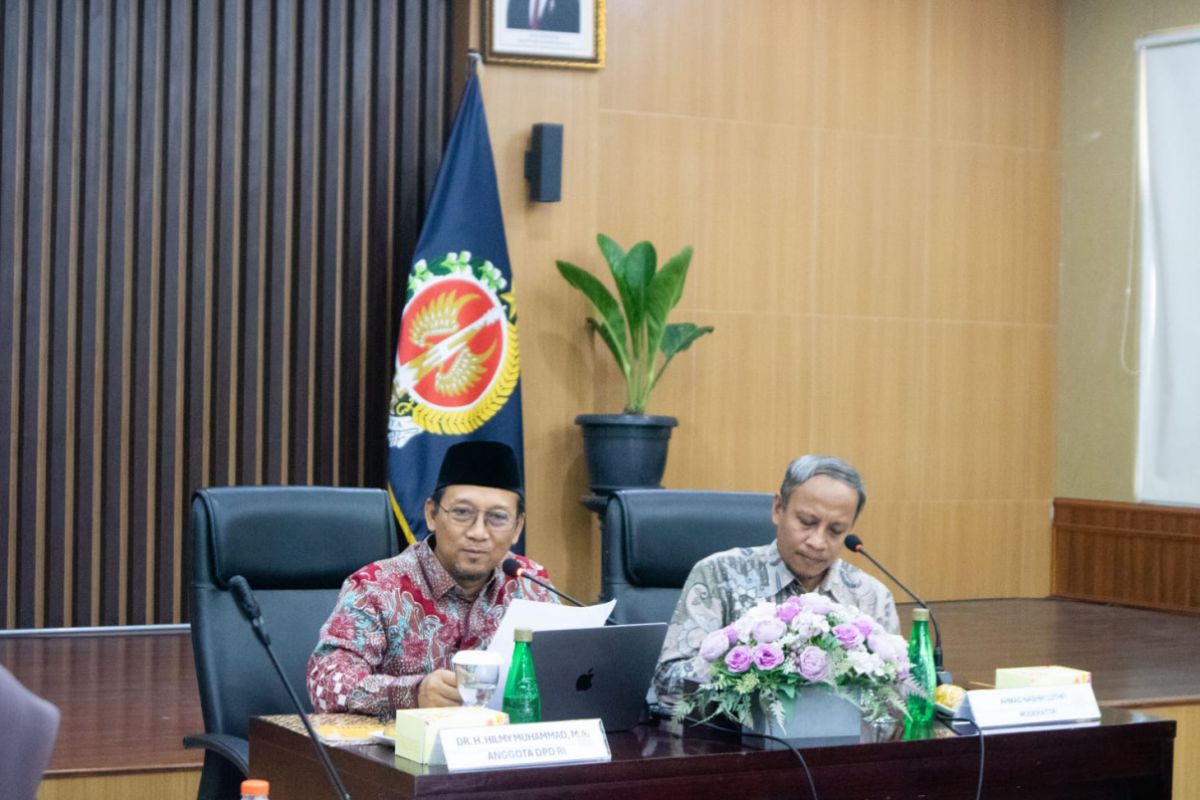
Yogyakarta (ANTARA) – Dr H. Hilmy Muhammad, a member of Indonesia’s Regional Representative Council (DPD), has stressed the importance of integrated water management in the Special Region of Yogyakarta (DIY) to achieve sustainable development.
Speaking in Yogyakarta on Tuesday, Hilmy said water security was a strategic issue for DIY, concerning people’s fundamental rights, food security, economic growth and environmental sustainability.
“Therefore, water management must be part of DIY’s development strategy, not merely a sectoral programme,” he said at a working meeting entitled “Water Security for Sustainable Development in DIY: Central-Regional Synergy to Ensure Water Availability, Food Security and Tourism, and Mitigate Flood and Drought Risks”.
Water, he said, was not only a technical and infrastructure issue, but also concerned people’s fundamental rights, food security, economic growth and environmental sustainability.
“We must not wait until people experience a water crisis before taking action. Water security must be built through planning, prevention and sustainable management,” he said.
Hilmy, a member of DPD Commission II, which among other matters oversees energy and mineral resources, highlighted drought in DIY after the governor declared a drought emergency alert from 20 July to 30 September 2026.
The regional government distributed 6.043 million litres of clean water in 1,117 tanker deliveries between 4 July and 31 August 2026 to areas in Gunungkidul, Bantul, Kulon Progo and Sleman regencies, with Gunungkidul among the most vulnerable areas.
“A long-term strategy is needed, including building water-storage facilities and boreholes, conserving springs, developing raw-water networks, and mapping villages that need clean-water assistance every year, so that responses can be planned before the dry season,” he said.
In addition to drought, Hilmy warned that seasonal flooding must be addressed comprehensively from upstream to downstream. Measures should include sediment control, adequate drainage capacity, spatial planning and scheduled river maintenance, supported by an early-warning system.
He added that the tourism sector’s growing demand for a reliable water supply must be aligned with environmental conservation and the protection of water sources, as illustrated by the case of the Payak archaeological site in Piyungan, Bantul.
“Water availability in DIY is also a crucial pillar of food security. The region has 67,027 hectares of established paddy fields and produced 547,510 tonnes of rice in 2025, making irrigation rehabilitation focused on tangible benefits essential to ensure water reaches farmers’ land,” he said.
Parlinggoman Simanungkalit, acting head of the Serayu-Opak River Basin Agency (BBWSO), said the budget allocated for water-resource management in DIY totalled Rp108.88 billion. It includes funding for construction of the Srandakan groundsill on the Progo River, flood-control projects around Yogyakarta International Airport (YIA), flood mitigation in Yogyakarta city, boreholes for groundwater irrigation networks in the Indonesian Air Force Academy (AAU) area of Sleman, and the Irrigation Water Use Improvement Acceleration Programme (P3-TGAI).
“Through strategic infrastructure measures, from flood control and irrigation-network rehabilitation to boreholes and river-basin management, we are committed to continuing to build the country and deliver practical solutions to safeguard water security and support sustainable development in DIY,” he said.
Sigit Swastono, head of the water-resources division at the Gunungkidul Public Works, Housing and Settlement Areas Agency (DPUPRKP), said 12 sub-districts could face drought during the 2026 dry season, with some areas particularly severely affected.
“Drought is concentrated in Tepus, Rongkop and Panggang. Panggang experiences recurring drought, while Purwosari is also vulnerable and requires clean-water assistance in Giripurwo and Giricahyo. The situation is compounded by around 359 ponds that are not functioning optimally,” he said.
He said the ponds should be dredged to increase their storage capacity, while boreholes or village drinking-water systems should be developed in areas not yet served by the regional water utility (PDAM).
“Drought response must be integrated with strategic cross-sector programmes to ensure a fair and even water supply throughout DIY,” he said.
“We want tourism to grow and the local economy to move forward, while people’s right to clean water remains protected,” Eling said.
Source: jawawa.id (https://jawawa.id/newsitem/dpd-stresses-the-importance-of-integrated-water-management-in-yogyakarta-1791892570)
Originally published by Antara (Indonesian) (https://www.antaranews.com/berita/5783841/dpd-tekankan-pentingnya-pengelolaan-air-terpadu-di-diy), translated from Indonesian