
DPD RI to Host 2026 Joint Session, Pushing for Regional Voices in National Policy
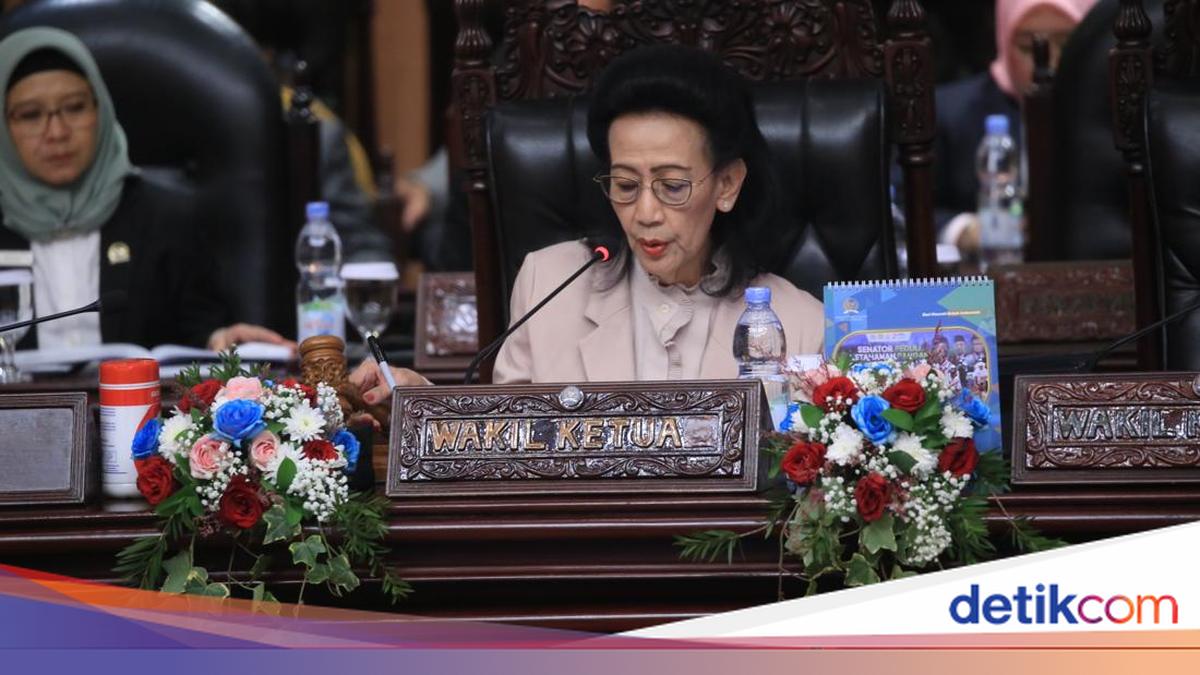
The Regional Representative Council of the Republic of Indonesia (DPD RI) has declared its readiness to host the Annual Session of the MPR and the Joint Session of the DPR RI and DPD RI (STSB 2026). This is being done in order to hear the State Address of the President of the Republic of Indonesia ahead of the 81st Anniversary of the Independence of the Republic of Indonesia on 14 August 2026.
In accordance with the mandate of Article 228 of the MD3 Law, the hosting of the Joint Session alternates between the DPR RI and the DPD RI, affirming the equality of the constitutional standing of the two parliamentary chambers within Indonesia’s state system.
According to the Deputy Speaker of the DPD RI for Regional Autonomy, Politics, and Law, Gusti Kanjeng Ratu Hemas, the trust placed in the DPD RI as host is not merely an administrative and protocol responsibility, but a symbol of the strengthening role of regional representation in the national democratic process.
“This year’s Joint Session is an important momentum to demonstrate that Indonesia’s development will only succeed if regional aspirations truly become part of the national policy direction. The DPD RI is present to ensure that regional voices do not stop at being reports, but become strategic considerations in state decision-making,” she said in a written statement on Tuesday (11/8/2026).
According to GKR Hemas, the DPD RI Joint Session is an important momentum to position regions as strategic partners, not merely implementers of central policy. Amid global challenges, state governance must be based on strengthening the centre-region relationship.
Through this forum, the DPD RI ensures that the President’s state address encompasses regional perspectives, addresses regional disparities, and safeguards regional autonomy so that it has a direct impact on public welfare.
Over the past year, the DPD RI has consistently carried out its constitutional functions through oversight of law implementation, absorption of public aspirations, and intensive consultation with various ministries and state institutions.
Through a series of working meetings, regional visits, and strategic dialogue forums, the DPD RI has succeeded in formulating various crucial recommendations ranging from strengthening regional autonomy, fiscal reform, to the development of border areas and natural resource management.
GKR Hemas explained that her side has intensified coordination forums with all DPD RI members over the past several months. This was done to ensure that regional issues are formulated comprehensively.
“Regional aspirations must not be formulated only from Jakarta. The DPD RI has 152 members representing 38 provinces, so our primary sources are the constituents and electoral districts of each member,” GKR Hemas asserted.
For the DPD RI, the state address delivered by the President plays an important role as a means to reflect on the nation’s challenges while outlining the direction of national development policy.
Therefore, the DPD RI hopes that the government’s performance report will not only demonstrate macro-level successes at the national level, but also reflect concrete steps in addressing development disparities.
The DPD RI views that challenges such as global economic uncertainty, geopolitical shifts, digital transformation, climate change, food and energy security, and the need to strengthen national security are matters that can directly affect regions.
In addition, the DPD RI is also giving special attention to the foundation of national development through the acceleration of regional autonomy. According to GKR Hemas, the essence of the relationship between the centre and regions needs to be sharpened through a more transparent distribution of authority.
This includes optimising regional fiscal independence, deregulating regulations, improving the quality of public services, and accelerating progress in underdeveloped, archipelagic, and border areas.
The DPD RI is strengthening inter-regional development justice by continuing to push for the acceleration of deliberation on the Bill on Archipelagic Regions. This is because many archipelagic provinces and regencies/cities still face disparities due to a development approach that is oriented solely towards land.
The presence of the Archipelagic Regions Law is a constitutional necessity to strengthen regional authority, accelerate development equity, and fiscal justice.
“Regions are not objects of development, but subjects of development. Therefore, Indonesia’s success cannot be measured only by national growth, but also by the ability of each region to develop according to its potential, characteristics, and the needs of its people. We want to show that the DPD RI is present as a bridge between national interests and the realities faced by communities in the regions,” GKR Hemas stated.
The DPD RI has also carried out various technical and protocol preparations together with the MPR RI, the DPR RI, the Secretariat General of the three institutions, the State Secretariat, the Presidential Security Force, and various related agencies in order to welcome the Joint Session.
The collaboration between the DPD RI, the DPR RI, and the MPR RI is considered to reflect the strong bond between legislative institutions in maintaining national political stability. While expressing great appreciation for the government’s achievements over the past year, the DPD RI recognises that future challenges will become increasingly complex.
Therefore, the DPD RI hopes that these achievements can serve as a foundation to accelerate development equity, optimise the competitiveness of each region, improve the quality of democracy, and strengthen state sovereignty amid changing global dynamics.
Concluding her statement, GKR Hemas invited all Indonesian people, especially those in the regions, to make the Joint Session a momentum to strengthen the spirit of nationhood.
“As an archipelagic nation, Indonesia cannot merely acknowledge its identity in the constitution. We must also bring it into policy. Therefore, the DPD RI will continue to fight for the birth of the Archipelagic Regions Law so that national development is truly just, provides affirmation for archipelagic regions, strengthens inter-island connectivity, and ensures that communities on small, outermost, and frontier islands have equal opportunities to progress,” she explained.
“Indonesia is built from thousands of islands, hundreds of cultures, and millions of aspirations of regional communities. The Joint Session is not merely a constitutional agenda, but also a reminder that the voices of all regions are an inseparable part of the nation’s journey towards an Indonesia that is increasingly advanced, just, and prosperous. The DPD RI will continue to stand with the regions and ensure that regional voices become an important part of Indonesia’s journey forward,” she concluded.