
DPD RI: Natural resource exploration in West Papua must benefit local human resources
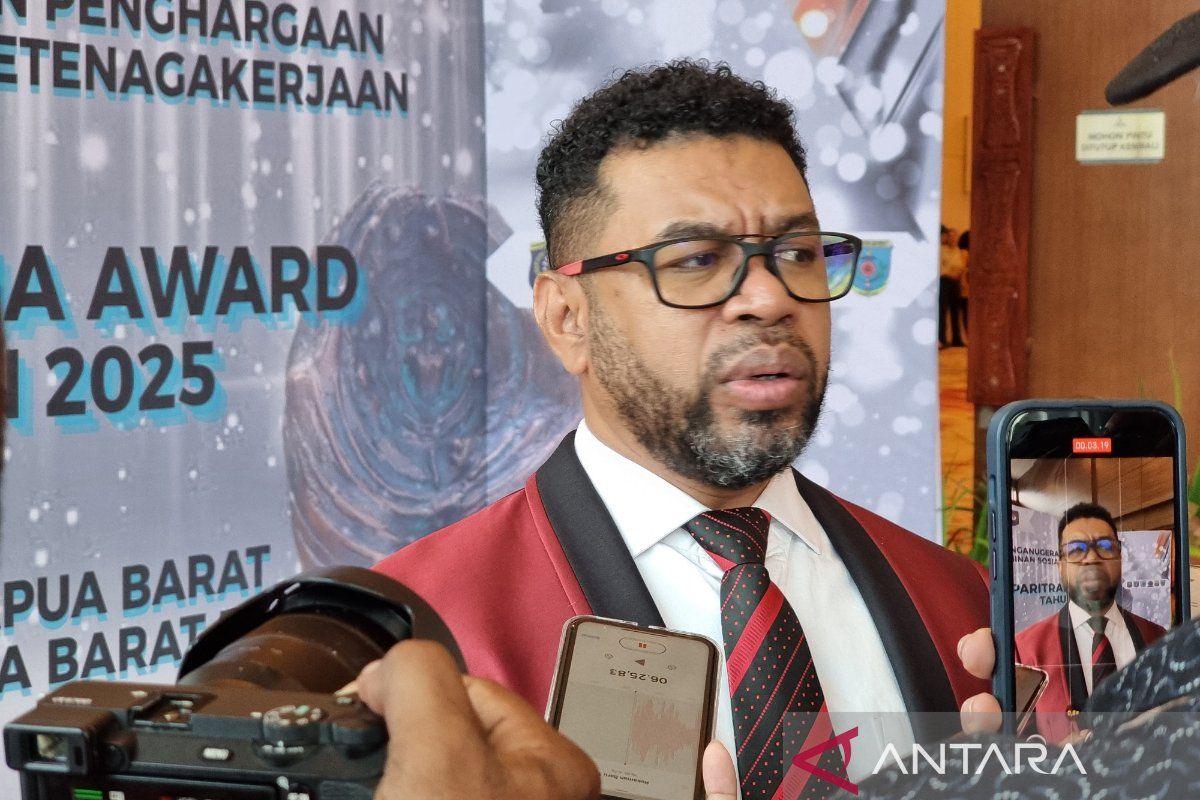
Manokwari (ANTARA) - Chairman of Committee III of the Regional Representative Council (DPD RI) Filep Wamafma has said that large-scale natural resource exploration in West Papua Province must be accompanied by investment in local human resource development.
The presence of extractive industry investment needs to be measured through its contribution to the economic conditions of local communities, the fulfilment of indigenous peoples’ rights, and improved access to and quality of education for the younger generation.
“So that the economic benefits do not stop at corporate activity, but are beneficial for human resource development,” Filep said in a statement received in Manokwari on Saturday.
He noted that West Papua possesses strategic natural resources, particularly oil and gas, such as the large-scale Tangguh LNG energy project in Teluk Bintuni Regency operated by BP Berau Ltd.
“For example, regarding the CSR contribution of companies carrying out natural resource exploration activities, is it already commensurate with the economic benefits for local communities,” he said.
He stressed that corporate social and environmental responsibility should not be positioned as a substitute for corporate obligations nor as an instrument in government development programmes.
This is stipulated in Article 74 of Law Number 40 of 2007, which requires companies operating in and/or related to natural resources to implement social and environmental responsibility (TJSL) programmes.
He urged the government to transparently disclose the cost recovery position in oil and gas cooperation contracts, particularly regarding the debate over charging certain social programme costs to operating cost mechanisms.
The matter should be clarified through document-based audits to ensure the funding sources of corporate social programmes and their impact on state revenue.
“If it is indeed a corporate obligation, it must be clear that the company bears the cost. If it is an operating cost that can be charged to the oil and gas contract, there must be a legal basis and transparency,” he said.
“What we need is a formula that is fair, transparent and auditable. Do not let each company determine its own CSR based on generosity. We are talking about community rights and development sustainability,” he said.
In the context of Papua’s Special Autonomy (Otsus), Filep stressed that Otsus funds and corporate TJSL are two different instruments that cannot be interchanged to address education issues in the West Papua region.
Statistics Indonesia (BPS) recorded that school participation rates in West Papua based on the March 2025 Susenas were still high for ages 7-12, but declined in the 19-23 age group, which relates to higher education.
According to him, Papua as a whole requires additional quality teachers, scholarships, boarding schools, laboratories, educational technology, vocational education, higher education, research, and improved teacher quality.
He proposed seven TJSL education priorities: sustainable scholarships for indigenous Papuans, revitalisation of schools in areas affected by company operations, and equitable improvement of teacher competence.
Other priorities include the construction of laboratories and digitalisation of education, vocational education connected to industry needs, scholarships in strategic fields, and absorption of Papuan graduates into the workforce.
“If companies need quality workers, then companies must also help build the schools and universities that produce those workers,” he said.