
DPD RI: DTSEN accuracy key to targeting PIP in West Papua
The inaccuracy of the database has the potential to cause the government’s affirmative policies to miss their targets, including the distribution of education assistance for students from families classified as underprivileged.
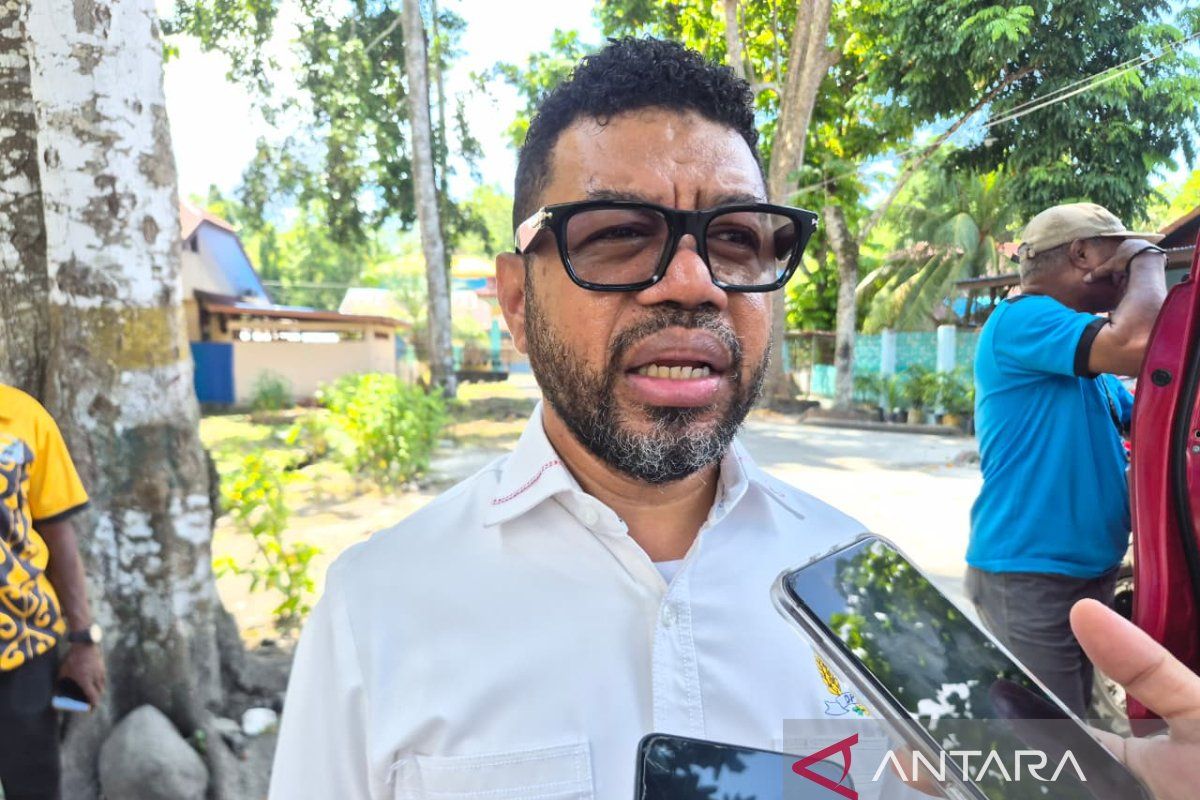
Manokwari (ANTARA) - Chairman of Committee III of the Regional Representative Council (DPD) of the Republic of Indonesia, Filep Wamafma, considers the accuracy of the National Single Social and Economic Data (DTSEN) to be key in ensuring that the distribution of the Indonesia Pintar Programme (PIP) in West Papua Province is properly targeted.
Based on provisional data from the Ministry of Primary and Secondary Education (Kemendikdasmen), PIP distribution in the West Papua region in 2026 has reached 5,452 students with a value of approximately IDR 2.49 billion.
“We specifically highlight the DTSEN data collection process. Updating and verification must be transparent, accurate, and comprehensive because this data serves as the reference for PIP distribution,” said Filep in a statement received in Manokwari on Wednesday.
According to him, the accuracy of PIP distribution does not depend solely on the government budget, but is also related to data quality, validation of beneficiaries, the capacity of operators at each school, account activation, and ease of access to banking services.
The results of DTSEN need to be effectively integrated with educational institution data, such as the Basic Education Data (Dapodik), population identification numbers (NIK), national student identification numbers (NISN), as well as data from every education unit in West Papua.
“Data integration is important so that the process of identifying PIP recipient students can be carried out quickly, accurately, transparently, and accountably,” said Filep.
He explained that DTSEN is not merely an administrative database, but must reflect real conditions, especially the level of geographical, social, and demographic difficulty of each region, which has different characteristics.
The inaccuracy of the database has the potential to cause the government’s affirmative policies to miss their targets, including the distribution of education assistance for students from families classified as underprivileged.
“We also assess that not all schools have an adequate number of operators and technical capacity. This condition is also a factor affecting the quality of PIP distribution,” he said.
Therefore, Kemendikdasmen, the provincial government, district governments, education offices, the Central Statistics Agency (BPS), the population and civil registration office (Disdukcapil), and others should strengthen coordination in managing DTSEN.
The government is expected to develop a mapping that includes students according to the recipient criteria, recorded in DTSEN and Dapodik, and listed in the award decree, in order to support maximum PIP distribution.
“Let no child from a family that needs economic assistance go unrecorded as a PIP recipient,” said Filep.