
DPD RI: Archipelagic Regions Bill to Accommodate Regional Aspirations
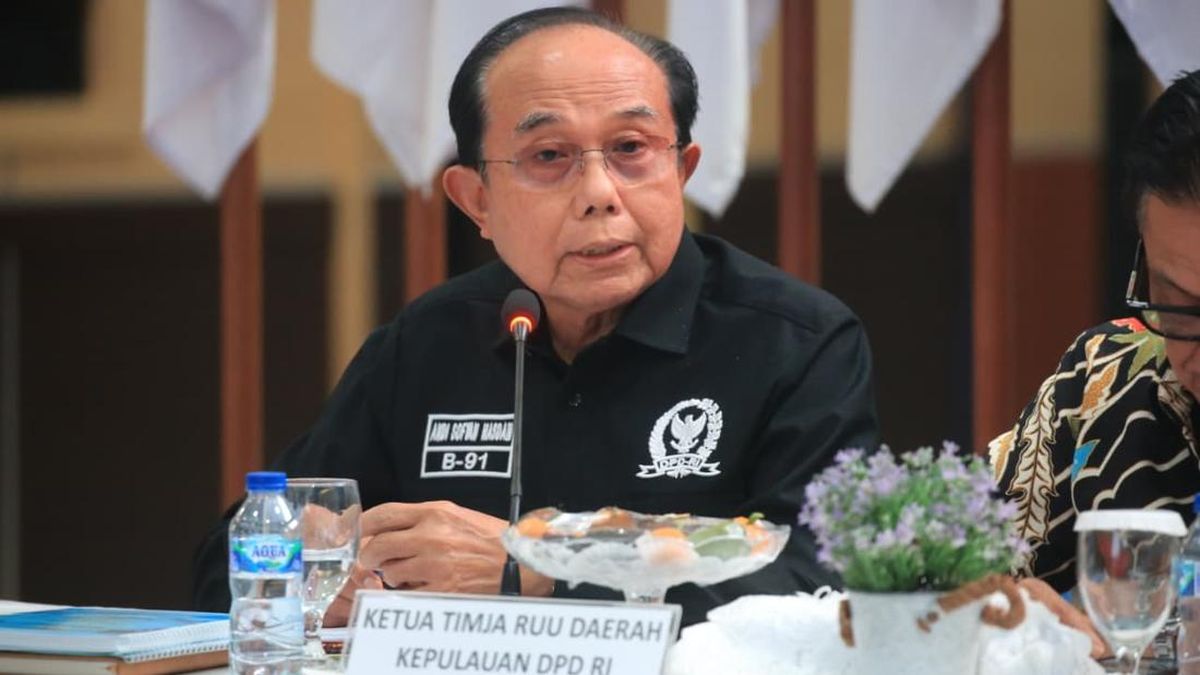
The Regional Representative Council (DPD RI) has confirmed that the aspirations of archipelagic regions are an important part of drafting the Archipelagic Regions Bill (RUU Daerah Kepulauan).
This was stated by the Chair of the DPD RI Archipelagic Regions Bill Working Team, Andi Sofyan Hasdam, on Monday (20/7).
According to a written statement from the DPD, fiscal justice, strengthened regional authority, the management of coastal areas and small islands, and accelerated equitable development have been formulated as the bill’s main substances.
These substances continue to be enriched through working visits by the House of Representatives (DPR RI) Special Committee on the Archipelagic Regions Bill alongside the DPD RI Working Team, held at the Batam City Government Building in the Riau Islands today.
Andi said one of the important substances continually fought for by the DPD RI is the introduction of special arrangements for archipelagic regions.
He expressed hope that development policy would no longer treat these regions the same as land-based areas, including in the formulation of national fiscal policy, which has so far failed to account for the characteristics of maritime areas as part of the regions’ development burden.
“We hope the Archipelagic Regions Bill becomes a lex specialis. We hope for symmetrical regional autonomy — of course not identical, but with special provisions for archipelagic regions compared to land areas. When we formulate the General Allocation Fund (DAU), the sea should also be measured, not only land,” said Andi.
According to him, all eight factions in the DPR RI have expressed agreement to deliberate the bill, whilst the government has in principle also given its support.
“Up to the latest meeting, the government raised no firm objection, only requesting harmonisation because there are conflicting laws. But notably, Bappenas has in fact been strongly encouraging us to realise this bill soon,” said the senator from East Kalimantan.
Andi explained that the drafting of the Archipelagic Regions Bill was from the outset based on an inventory of the various problems faced by archipelagic regions and input from numerous stakeholders. For this reason, every stage of deliberation with both central and regional governments has been directed at ensuring the regulation can answer the real needs of communities whilst strengthening the implementation of fairer regional autonomy.
Meanwhile, Riau Islands Governor Ansar Ahmad said the province faces challenges ranging from budget constraints, inter-regional connectivity and strengthening border areas, to access to basic services — demonstrating the need for policies that provide affirmative action for archipelagic regions.
Similarly, Batam Mayor Amsakar Achmad assessed fiscal justice as one of the main challenges facing archipelagic regions.
Urgency of deliberation
Meanwhile, at a meeting with the Maluku Provincial Government, Deputy Chair of the DPD Archipelagic Regions Bill Working Team, Graal Taliawo, said special regulation for archipelagic regions has been pursued since 2017. According to him, the process has now entered an important stage in national legislation.
“The struggle to bring about the Archipelagic Regions Law has been a long journey. After nine years of effort, its deliberation has now entered a crucial stage with the DPR RI Special Committee and the Government. But most importantly, this bill must remain grounded in the real needs of archipelagic regions and the communities living there,” said Graal in his address in Ambon, Maluku, on Monday (20/7).
According to him, visits to the regions are an important means of ensuring the bill’s substance can address the various problems long faced by archipelagic communities, such as inter-island connectivity, basic services and the management of maritime potential.
Meanwhile, Maluku Governor Hendrik Lewerissa expressed hope that the Archipelagic Regions Bill would produce policies more favourable to archipelagic regions.
“Our challenges differ from land-based regions, from connectivity and transport costs to public services reaching many islands. Therefore, we hope this bill can deliver fairer policies that truly answer the needs of archipelagic communities,” said Hendrik.