
DPD RI and Riau Islands Provincial Government Move to Strengthen Disaster-Response Regulations
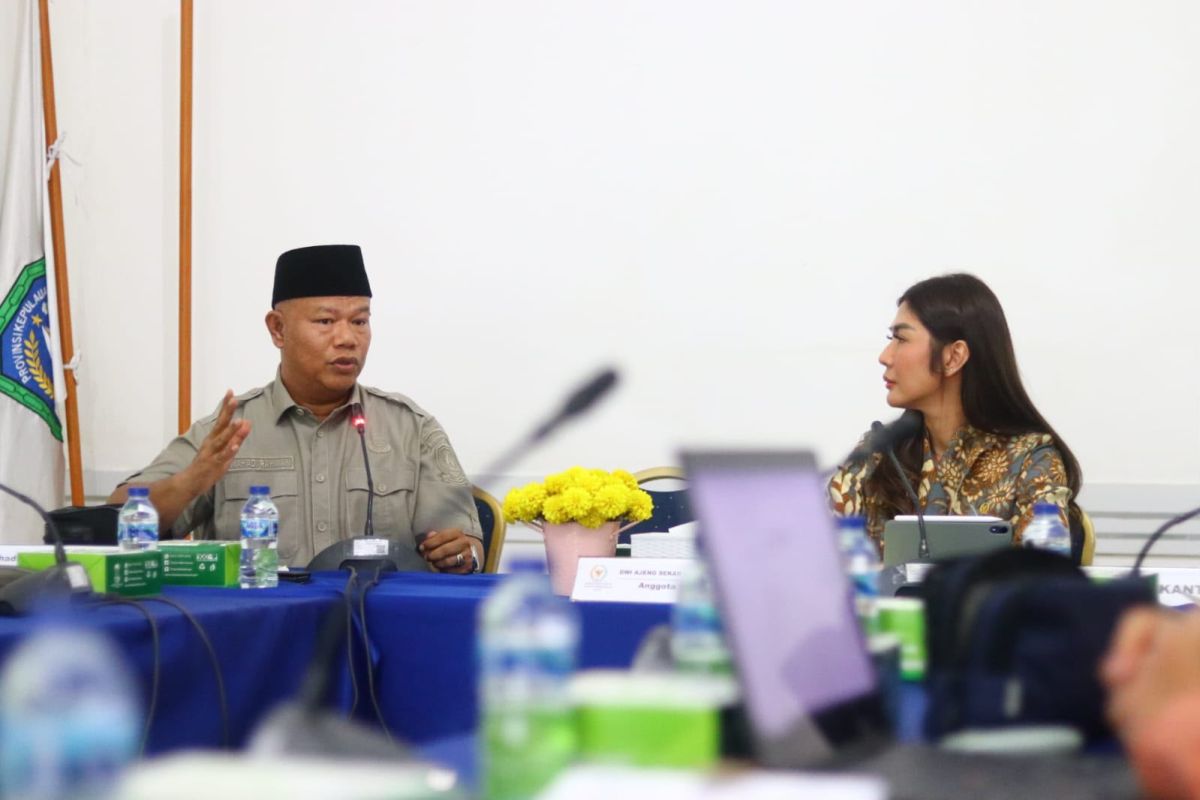
Tanjungpinang (ANTARA) – The Regional Representative Council (DPD RI) and the Riau Islands Provincial Government, through the provincial Social Affairs Office, are pushing for stronger regulations and disaster-management governance that better respond to the characteristics of an archipelagic region.
Dwi Ajeng Sekar Respaty, a DPD RI member representing the Riau Islands and a member of the council’s Regional Legislation Affairs Board (BULD), said regional regulations must not stop at setting out general rules, but should also bridge the gap between communities’ needs and government support during emergencies.
“Disaster-management regulations must safeguard public safety and must not be hampered by ineffective coordination, limited logistics or protracted administrative processes,” Dwi Ajeng said at a working meeting with the Riau Islands Social Affairs Office in Batam on Friday.
She said the province’s geography, dominated by sea, limited inter-island transport access and diverse disaster risks, required logistical preparedness, coordination across agencies and funding mechanisms that would allow aid to be delivered on time.
Dwi Ajeng said she hoped the working meeting would inform efforts to strengthen local disaster-management regulations and governance, including improving fiscal preparedness, human-resource capacity and aid-distribution systems suited to the characteristics of the Riau Islands.
“With stronger regulations and inter-agency cooperation, disaster response in the Riau Islands is expected to be faster, more equitable, measurable and accountable, ensuring optimal protection for affected communities,” she said.
Riau Islands Social Affairs Office head Mahadi Rahman said disaster response in the province was supported by Disaster Preparedness Youth (TAGANA) personnel, logistics management, communal kitchens and social assistance, subject to the office’s authority and available budget.
He stressed the importance of central and regional government cooperation to ensure effective social protection for disaster victims.
In an archipelagic province such as the Riau Islands, he said, logistical support, clear divisions of responsibility, integrated data and adequate funding were essential to ensure aid reached those in need in a targeted and accountable manner.
In addition to response during emergencies, the meeting highlighted the need to strengthen protection for vulnerable groups, including children, women, older people, people with disabilities and low-income communities.
The review also covered the continuity of assistance after an emergency ends, particularly the restoration of families’ social circumstances, economic support and psychosocial assistance for affected communities.
Implementation of Riau Islands Provincial Regulation No. 5 of 2024 on Regional Disaster Management was also a focus of the regulatory discussion.
“Through this working meeting, we are evaluating the harmonisation of sectoral rules, the division of responsibilities among agencies and the development of more integrated disaster-response operating procedures,” Mahadi said.