
DPD RI: 3T Regions Need Special Weighting in Determining Sekolah Rakyat Locations
Poor children in cities must not be overlooked, but neither should poor children in remote villages be neglected simply because their numbers are smaller.
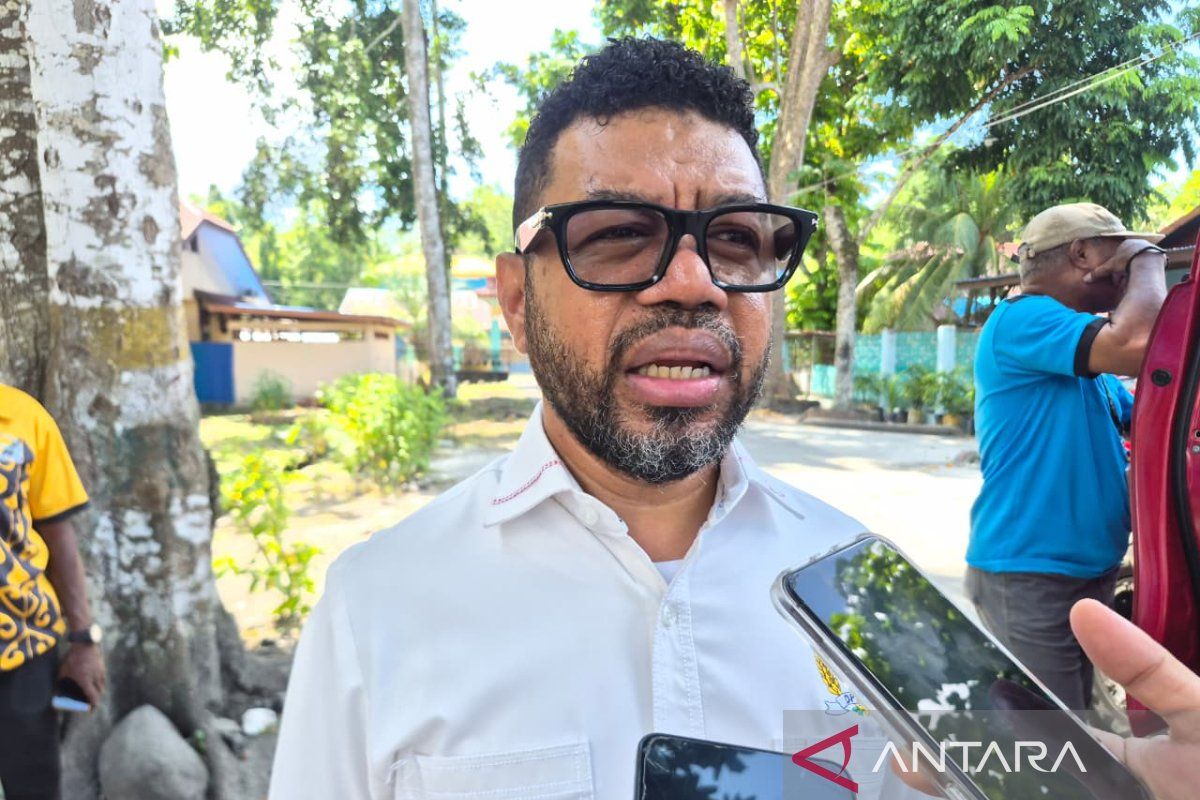
Manokwari (ANTARA) — Filep Wamafma, Chair of Committee III of the DPD RI, believes that determining the locations of Sekolah Rakyat should not be based solely on the number of poor residents, but must also accommodate affirmative weighting for disadvantaged, frontier and outermost (3T) regions.
According to him, an approach based purely on absolute poverty figures risks creating an imbalance in government attention towards 3T regions, which face far more complex obstacles to education.
“Poor children in cities must not be overlooked, but neither should poor children in remote villages be neglected simply because their numbers are smaller,” Filep said in Manokwari, West Papua, on Tuesday.
He noted that the complexities facing 3T regions go beyond poverty: geographical difficulties and the lack of basic infrastructure make the cost of education far higher than in urban areas.
“The state must be present precisely in the places where the cost of accessing education is highest and the obstacles are greatest, especially in the eastern regions of Indonesia,” Filep said.
Furthermore, he said, the success of Sekolah Rakyat also depends on the availability of professional teaching staff, guidance and counselling teachers, dormitory supervisors, health workers and psychosocial support workers with competencies suited to students’ needs.
He added that the Ministry of Social Affairs (Kemensos) must carry out reference studies and comparisons of various successful boarding-based education models, both at home and abroad, to serve as references for implementing the Sekolah Rakyat system.
“Teachers must have certainty of status, welfare, a reasonable workload, training and protection in carrying out their duties,” he said.
“Sekolah Rakyat must become an education policy laboratory that continuously learns, is tested and is improved based on results in the field,” he said.
Filep proposed five steps to ensure Sekolah Rakyat runs effectively and reaches the right targets. First, evaluate the national distribution of Sekolah Rakyat by integrating data from BPS (Statistics Indonesia), DTSEN Deciles 1–2, out-of-school children figures, and 3T indicators.
Second, establish a transparent allocation formula with special affirmative weighting for 3T regions. Third, ensure the availability of permanent teachers, teacher welfare, dormitory supervisors, counselling teachers and support staff.
Fourth, conduct reference studies and periodic evaluations of the Sekolah Rakyat curriculum. Fifth, build a child monitoring and protection system integrated across central government, regional governments and oversight institutions.