
DPD Member Suggests Seven Steps Regarding Alleged Confinement Case
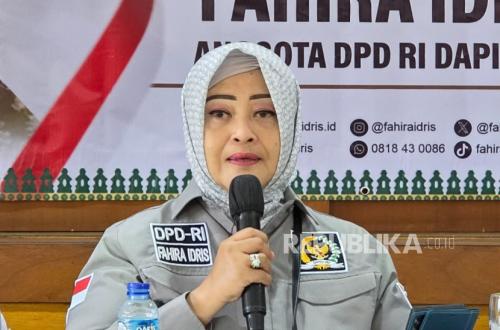
Member of the Regional Representative Council (DPD RI) from Jakarta, Fahira Idris, has strongly condemned the alleged confinement, torture, and severe abuse experienced by a woman in Bandung, West Java. She described the case as a very serious crime that must be handled swiftly, thoroughly, and with a victim-centred perspective.
“This case is heinous, inhumane, and must serve as a loud alarm for all of us. The main focus now is to rescue and rehabilitate the victim, arrest the suspected perpetrator, uncover all dimensions of the crime, and ensure the legal process runs optimally,” Fahira said at the Parliament Complex, Senayan, Jakarta, Tuesday (23/6/2026).
She stressed that the perpetrator must be sentenced as severely as possible in accordance with applicable laws. According to Fahira, handling this case requires the involvement of various parties, from the central government and law enforcement officials to human rights protection agencies.
Therefore, Fahira outlined seven urgent steps that must be taken immediately to ensure justice for the victim while preventing similar cases from recurring.
The first step, she said, is the immediate arrest of the suspected perpetrator. Fahira urged the police to prioritise the arrest because a perpetrator who remains at large could potentially destroy evidence, influence witnesses, and threaten the safety of the victim and her family.
Second, investigators are asked to apply layered charges and investigate all possible aspects of the crime. According to Fahira, the investigation must not stop at the element of abuse alone but must also delve into suspected deprivation of liberty, confinement, torture, seizure of the victim’s documents, threats, and the possibility of sexual violence if indications point in that direction.
“If elements of sexual violence are found, the Sexual Violence Crime Law must be applied. If other elements are proven, all must be included. This case must be uncovered in its entirety,” she said.
The third step is case oversight by the prosecutor’s office from the initial investigation stage. Fahira believes intensive coordination between prosecutors and investigators is necessary so that the case construction is robust and the indictment can be drafted comprehensively.
She also requested that prosecutors demand the maximum penalty for the perpetrator. In her view, in cases of extreme violence against women, the law must side with the victim and provide a strong deterrent effect.
As a fourth step, Fahira emphasised the importance of a victim-centred judicial process. She reminded that the victim must not experience further psychological pressure during the trial.
“The legal process must not become a second trauma for the victim. The court must be a space for seeking justice, not a space that re-injures the victim,” she said.
Beyond the legal process, Fahira also highlighted the importance of victim recovery. In the fifth step, she requested that the Ministry of Health and hospitals ensure the victim receives comprehensive and continuous medical services.
She stated that recovery should not be limited to emergency treatment but must also include long-term rehabilitation, such as follow-up medical procedures, eye care services, therapy, nutritional support, and regular health monitoring.
For the sixth step, Fahira asked the Ministry of Women’s Empowerment and Child Protection (PPPA), the Witness and Victim Protection Agency (LPSK), and local governments to provide comprehensive protection and assistance to the victim.
She believes the victim is entitled to legal assistance, psychological services, social aid, recovery of civil registration documents, access to health insurance, and economic support for the accompanying family.
“The victim must receive all her rights. The state must ensure the victim does not face the trauma, legal process, recovery costs, and her future life alone,” Fahira said.
The seventh step is independent monitoring by the Ministry of Human Rights, the National Commission on Human Rights (Komnas HAM), and other relevant institutions. According to Fahira, this monitoring is essential to ensure that the legal process and victim recovery are conducted transparently, accountably, and in accordance with human rights principles.
She expressed hope that this case would serve as material for a national evaluation of efforts to prevent extreme violence against women, including violence occurring in private spaces.
“The victim must be rehabilitated. The suspected perpetrator must be arrested. The legal process must be maximised. And the state must ensure such heinous violence does not recur. Justice for the victim is the measure of whether the state is truly present to protect its citizens,” Fahira said.