
DPD Considered to Have Found Its Strategic Role, Becoming a Bridge Between Regional Interests and the National Development Agenda
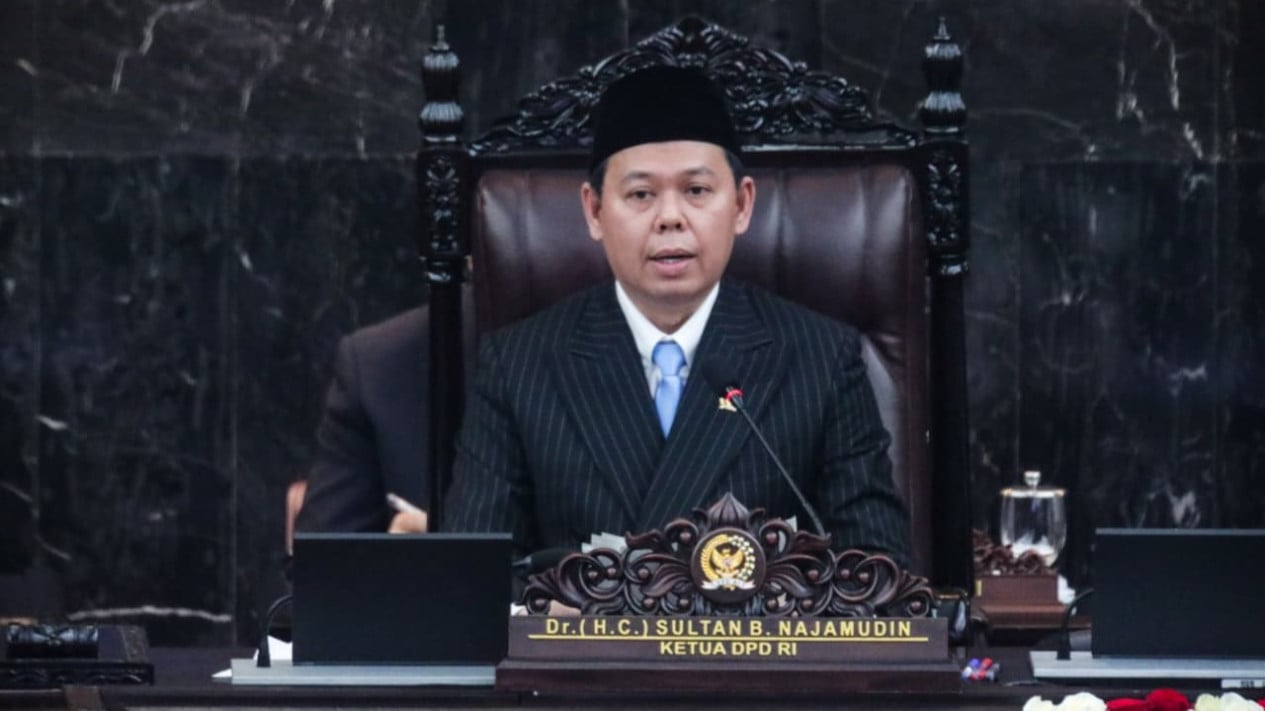
Political observer Lucius Karus has assessed that the speech by DPD RI Speaker Sultan B. Najamudin during the Joint Session of the DPR and DPD RI signals a new direction in the institutional role of the DPD as a representative of regional interests.
According to him, the speech did not stop at conveying aspirations, but began to show how regional interests are being pushed to become part of the national policy agenda.
“In my view, the DPD is beginning to find its strategic role. The DPD is not merely voicing regional interests, but is trying to bridge regional interests with the national development agenda,” said Lucius.
He assessed that the approach used by Sultan was also quite constructive because it did not position the central and regional governments as two opposing interests. In his speech, Sultan instead emphasised that the centre and the regions are a single entity in building Indonesia.
“This is an approach that I consider positive. The DPD carries out its function of regional representation, but not by pitting the regions against the centre. What is being built instead is synergy so that national policies truly reach and are felt by communities in the regions,” he said.
According to Lucius, one of the most concrete pieces of evidence of this direction is the DPD RI’s advocacy for the Archipelagic Regions Bill. The bill has been championed by the DPD since 2017 and has now entered the 2026 Priority National Legislation Programme, and is beginning to gain support to be deliberated together with the government and the DPR RI.
“The Archipelagic Regions Bill is an example of how aspirations that are consistently championed eventually enter the national legislative agenda. When the government also gives a positive response, this shows that there is a political process that produces something for the regions,” said Lucius.
Lucius assessed that this momentum is important because the Archipelagic Regions Bill does not only concern the interests of a number of regions, but relates to how the state manages development based on Indonesia’s character as an archipelagic nation.
“If this regulation is eventually enacted and provides appropriate affirmation for archipelagic regions, then it could become an important legacy. There we can see that the DPD’s advocacy has a concrete impact,” he said.
Lucius also assessed that Sultan’s speech demonstrated the DPD’s efforts to expand its regional representation function through legislative agendas, oversight, and monitoring of government policies in the regions. In his speech, the DPD affirmed its commitment to ensuring that the national development agenda does not stop at the central level, but is implemented down to provinces, regencies, cities, sub-districts, villages, and the outermost regions.