
DPD Committee I Opens Pre-Deliberations for Transmigration Law Update
Regional aspirations regarding land issues, area development, central-regional relations, and local community involvement are being considered key factors in the update of the Transmigration Law. The government also recognises the need for regulations that can encourage the formation of new economic growth centres.
The Ministry of Transmigration has expressed appreciation to the DPD RI Committee I for opening a space for pre-deliberations regarding the amendment of Law Number 15 of 1997, which was previously amended by Law Number 29 of 2009 concerning Transmigration.
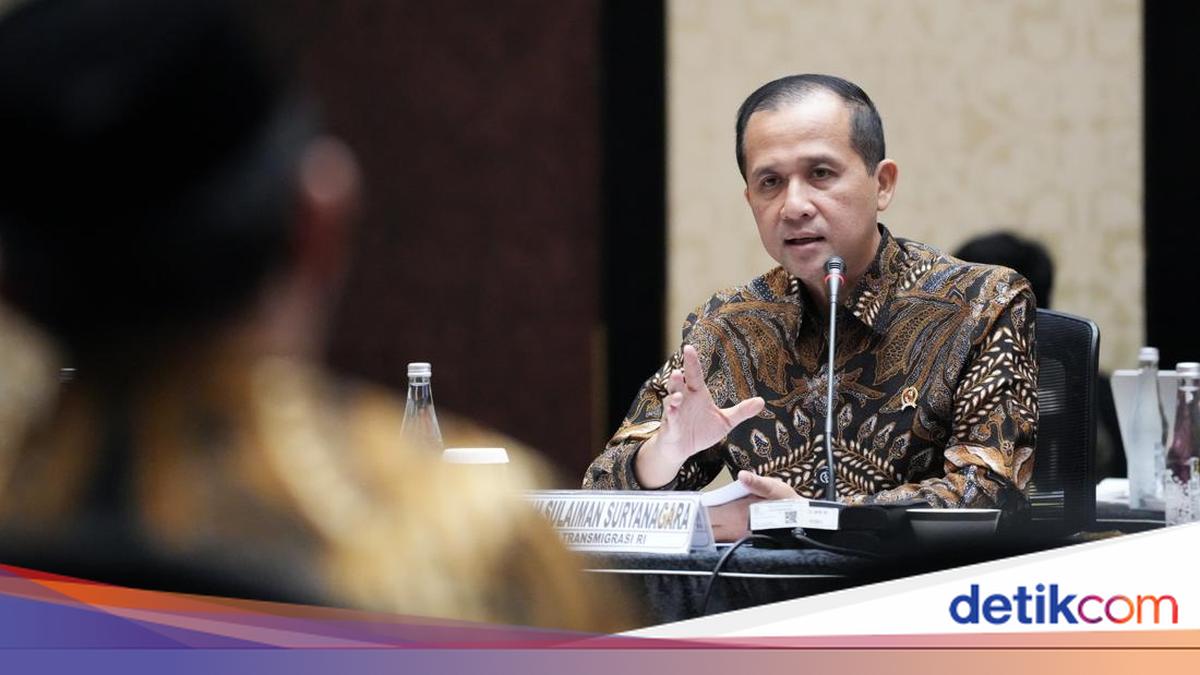
Minister of Transmigration M. Iftitah Sulaiman Suryanagara stated that regulatory updates must stem from the real issues faced by communities and local governments, rather than solely from the ministry’s needs. “The DPD represents the regions. Many transmigration issues are felt directly in the regions, ranging from land and spatial planning to central-regional relations, and how local communities benefit from area development. Therefore, we highly appreciate the DPD RI Committee I for opening a space to discuss this from the early stages,” Iftitah said in a statement on Tuesday (6/10/2026).
This was conveyed during a Working Meeting with the DPD RI Committee I on Monday (5/10/2026). According to Iftitah, the current Transmigration Law has not failed; the regulation has brought significant changes by shifting transmigration from a population movement approach towards area development and growth centres.
However, changes in economic structures, the need for job creation, industrialisation and downstreaming, investment, land issues, asset management, and the demand for equitable economic benefits necessitate a legal framework that can adapt to new challenges. “Indonesia is changing, challenges are changing, and transmigration must also be able to respond to those changes. Transmigration can no longer be interpreted merely as moving people. What we must build is jobs, productivity, income, and new economic growth centres,” said Iftitah.
He emphasised that the law update will not abandon the rights of transmigrants who previously participated in government programmes. On the contrary, ensuring the certainty of existing rights is a primary agenda through the resolution of land issues and asset legalisation. “We must provide certainty for the rights that already belong to the community. The state must not deny what has been promised to previous transmigrants. They are an important part of the nation’s development history,” he asserted.
On the other hand, Iftitah believes that the future model of transmigration needs to be more flexible. In his view, not all patterns must always take the form of landed houses and freehold certificates. For industrial-based areas, Iftitah stated that patterns could be developed through job certainty, decent housing, competency enhancement, and labour protection. He emphasised that this model is not intended to turn transmigration into a mere supplier of industrial labour.
“Industry is not the goal of transmigration. Industry is one of the economic engines. The ultimate goal remains the same: jobs, income, productivity, and the welfare of the area’s community. Local communities must be the primary actors and receive the first opportunity from the growth that is created,” he stressed.
The regulatory update is also aimed at strengthening Community Cooperatives as a shared economic vehicle, while individual rights remain protected. Simultaneously, production activities, value chains, access to finance, and market power can be strengthened collectively.
The Ministry of Transmigration is also encouraging a change in the area development approach through the ‘Economic Engine First’ principle. Under this approach, the placement of people is no longer the starting point. Instead, the government will first ensure the existence of economic potential, markets or off-takers, investment, business activities, human resource needs, housing, and infrastructure.
“We do not want to move people to an area and then hope the economy grows. We want to ensure the economic engine grows first, so that the people who arrive have jobs, businesses, and a future,” said Iftitah.
Furthermore, the Ministry of Transmigration has proposed that area assistance should not be determined solely by a five-year time limit, but should also consider the level of area maturity. “We do not hand over an area simply because it has reached five years. We hand over an area when it is capable of growing,” he explained.
Iftitah hopes the law update can strengthen the governance of transmigration land and assets. Land should not be viewed merely administratively but can be managed productively in accordance with legal functions and provisions to support public services, economic activities, investment, and state revenue.
To address cross-sectoral issues, the Ministry of Transmigration has also proposed the revival of the Transmigration Advisory Council with a stronger institutional framework. It is proposed that the Council be led by the President of the Republic of Indonesia, with the Minister of Transmigration serving as Secretary.
“Transmigration issues involve land, forest areas, infrastructure, industry, investment, energy, labour, and local governments. The Ministry of Transmigration cannot work alone. What we need is a mechanism so that all these authorities move in the same strategic direction,” he said.
Iftitah also emphasised that the measure of future transmigration success cannot be seen solely through the number of families placed, houses built, land area, or the number of certificates issued. “What we must measure is how many jobs are created, how much income increases, how many MSMEs and cooperatives grow, how much investment enters, and whether the area is truly capable of becoming a new, sustainable growth centre,” he concluded.