
DPD Approves 2027 State Budget Considerations, Proposes IDR 760 Trillion Regional Transfer
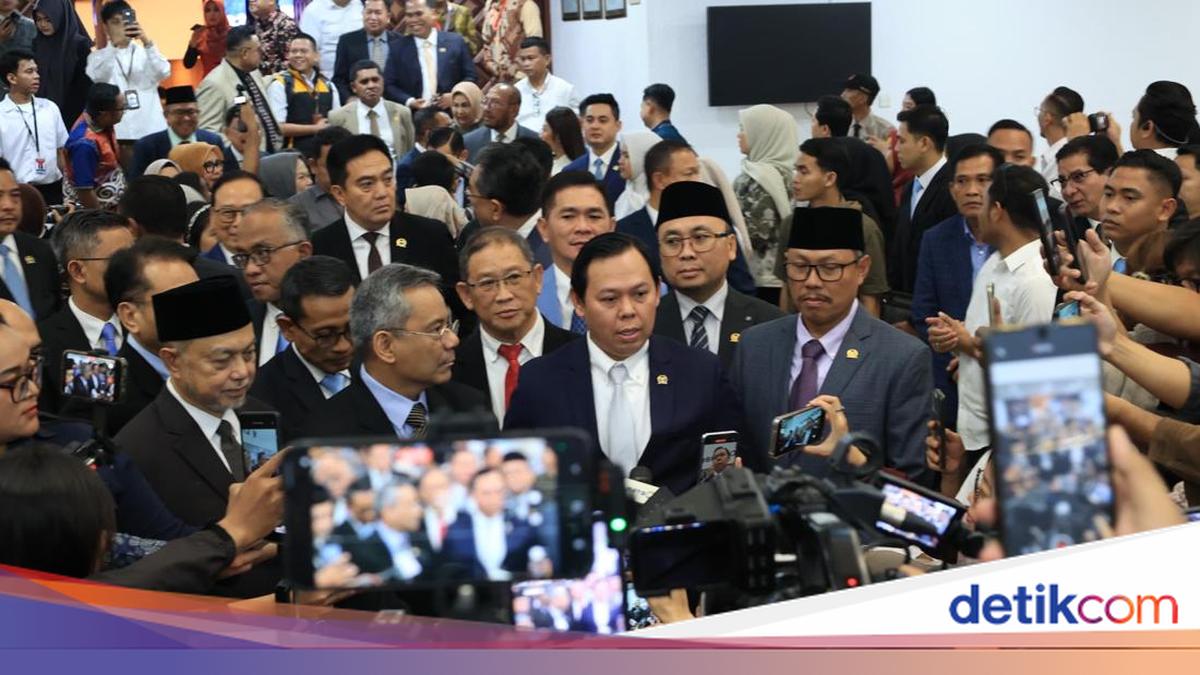
The Regional Representative Council (DPD) of the Republic of Indonesia has ratified its considerations regarding the 2027 State Budget Bill (RUU APBN). In its proposal, the DPD has recommended increasing the Regional Transfer (TKD) allocation from IDR 735 trillion to IDR 760 trillion.
This increase is intended to strengthen regional fiscal capacity and accelerate equitable development. The ratification took place during an Extraordinary Plenary Session at the Parliament Complex in Senayan, Jakarta.
DPD Chairman Sultan B. Najamuddin stated that providing considerations for the State Budget Bill is an exercise of the DPD’s constitutional authority as regulated under Article 23, paragraph (2) of the 1945 Constitution of the Republic of Indonesia. This mandate requires that the State Budget Bill submitted by the President to the House of Representatives (DPR) must take the DPD’s considerations into account.
“The DPD’s considerations regarding the State Budget Bill are part of a constitutional mandate to ensure that regional interests are considered in the formulation of national budget policies,” Sultan said in a written statement on Wednesday (16/09/2026).
The proposal to increase the TKD refers to the upper limit of the TKD allocation relative to Gross Domestic Product (GDP) within the 2027 Government Work Plan (RKP), set at 2.79%.
The DPD noted that an increase in the TKD allocation is necessary due to the declining proportion of transfers, which dropped from 28.24% in the 2023 State Budget to 17.5% in the 2027 Draft State Budget (RAPBN).
This trend is viewed as a concern, as it has the potential to narrow the fiscal space available to regions for financing development and maintaining economic stability.
Sultan emphasised that budget policies must be formulated in a responsive, adaptive, and sustainable manner to face global economic challenges, geopolitical pressures, and the requirements of both national and regional development.
Following its ratification, these considerations will be submitted to the DPR as part of the DPD’s constitutional duties.
“These considerations are expected to support the acceleration of regional development, poverty alleviation, infrastructure equality, the strengthening of the people’s economy, and the improvement of public welfare towards ‘Indonesia Emas 2045’,” said Sultan.
Chairman of DPD Committee IV, Nawardi, stated that TKD allocations must consider regional characteristics, fiscal capacity, poverty levels, human resource quality, geographical conditions, and the burden of basic services.
“The change in the proportion of TKD needs careful scrutiny because it could narrow the fiscal space for regions to finance development and maintain economic stability,” added Nawardi.
Committee IV of the DPD generally accepts the 2027 Draft State Budget with several notes. The Committee appreciated the reduction in the deficit ratio from 2.60% of GDP in the 2026 Budget to 2.40% in the 2027 Draft Budget, the recovery of village fund transfers to IDR 77 trillion (a 39.72% increase), and the refinement of the National Priority Work Program (PKPN) architecture through eight clusters comprising 60 work programmes and additional development target indicators.
In addition to the allocation increase, the DPD emphasised the importance of synchronising TKD, ministry/agency spending, and national priority programmes with the RKP, Regional Government Work Plans (RKPD), and Regional Budgets (APBD).
This synchronisation must include clarity regarding authority, funding sources, target data, performance indicators, and implementation coordination.
Through such synchronisation, national programmes are expected not to increase the burden on regional budgets, but rather to strengthen local economies, basic services, employment opportunities, and poverty alleviation efforts.
In its considerations, the DPD positions the regions as both subjects and partners in national development.
Budget policies must ensure that economic growth provides more equitable benefits for the people across all regions of Indonesia.
These considerations were formulated through studies by Committee IV alongside DPD members from all provinces, working visits to various regions, and hearing sessions with local governments and relevant stakeholders.
Further in-depth analysis was also conducted alongside the government and Bank Indonesia (BI) regarding macroeconomic assumptions, fiscal policy, and regional development.