
Dozens of Wooden Mosques in Georgia’s Adjara Region Face Extinction, a Forgotten Ottoman Heritage
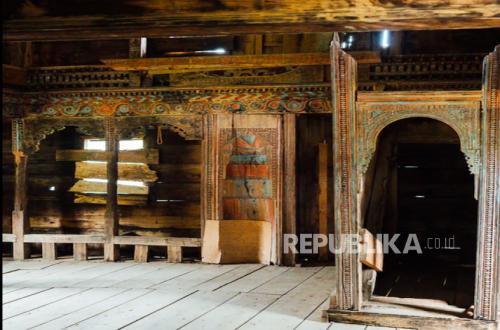
TBILISI — Historic wooden mosques in Georgia’s Adjara region are at risk of damage and disappearance. These buildings, an important part of the history of Georgia’s Muslim community, are increasingly being worn down by age, weather, inadequate maintenance and limited resources.
One mosque in a particularly poor condition is Gulebi. Bats still fly through the building, while its floorboards are beginning to rot. Nevertheless, traces of the mosque’s architectural beauty remain visible in the faded red and blue interior decorations and intricate carvings on the minbar.
Lia Dekanadze, a young activist from Adjara, said she was worried to see the mosque gradually lose its original form. She fears the historic building may not survive into her generation’s future.
“My heart breaks to think that even during my lifetime I might witness this mosque disappearing,” Dekanadze said, as quoted by The New Arab on Thursday (8 October 2026).
Gulebi is one of more than 50 historic wooden mosques scattered across Upper Adjara. They were built between 1817 and 1926. Some are maintained and remain in use as places of worship, while others need major repairs or have been abandoned.
The mosques’ existence is inseparable from the history of Islam in Adjara. While most of Georgia’s population is Orthodox Christian, Adjara has a distinct character. Islam arrived in the region around four centuries ago, during the Ottoman Empire. Today, about a third of Adjara’s population is Muslim.