
Dozens of Tonnes of Farmed Fish Die in Muaro Jambi, Allegedly Due to Batanghari River Pollution
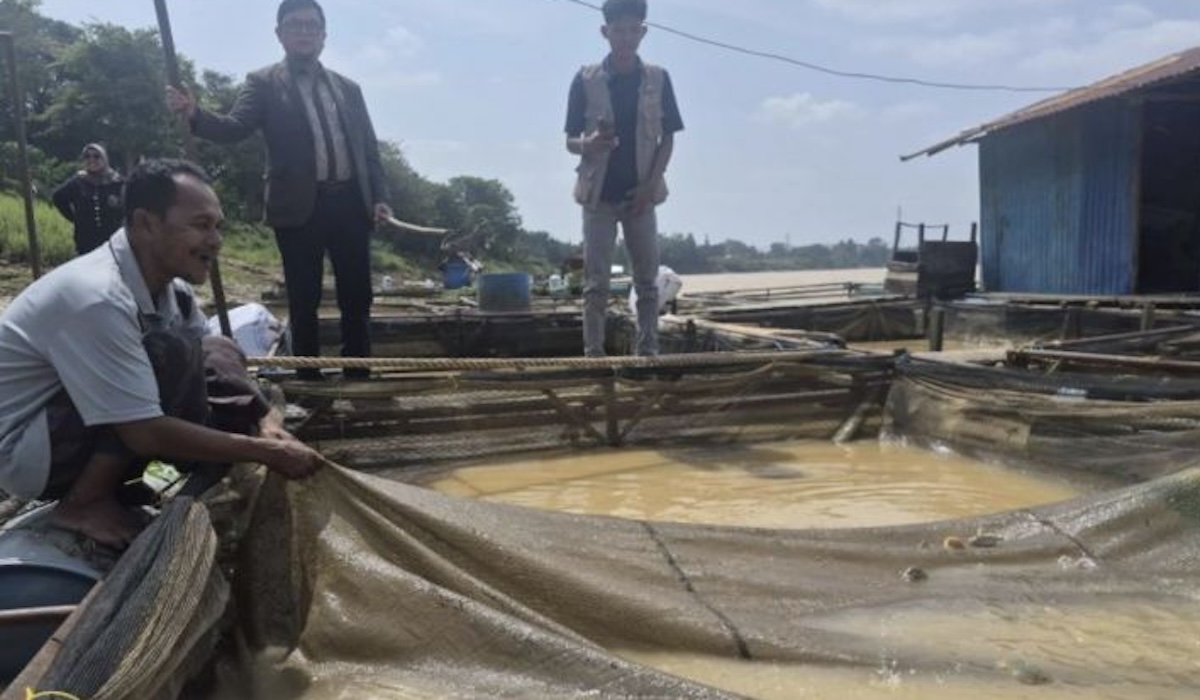
Dozens of tonnes of fish belonging to cage farmers in five villages in Jambi Luar Kota District, Muaro Jambi Regency, have died en masse, an event strongly suspected to be caused by pollution in the Batanghari River. The phenomenon has reportedly worsened over the past three months as water levels have receded due to the dry season.
Musa Yusuf, a cage farmer in Sarang Burung Village, revealed that the mortality rate reached 90 per cent of the total fingerlings stocked. “Only about 10 per cent survived, the rest died. For one cage containing 8,000 fish, perhaps only 800 to 900 survived,” Musa said, as reported by Antara on Sunday (9/8).
According to the farmers, in addition to the drop in water levels, the deaths of the common carp (Cyprinus carpio) and tilapia (Oreochromis niloticus) were triggered by toxic mercury waste from illegal gold mining activities upstream. The affected areas include Sungai Duren, Sarang Burung, Mendalo Laut, and Pematang Jering villages, which are centres of freshwater fish production in Jambi.
Jambi Provincial Legislative Council (DPRD) member Ivan Wirata highlighted the increasingly alarming condition of the raw water. Based on reports from the regional water company (PDAM), the turbidity level (NTU) of the Batanghari River has surged to 1,400 NTU, nearly four times the normal limit of 250-300 NTU. He assessed that this condition is an accumulation of illegal mining, industrial waste, household rubbish, and abrasion.
“The dead fish in the cages are just a surface symptom. The real problem is the destruction of the upstream ecosystem. We urge that the Batanghari River Basin (DAS) be included as a National Strategic Project (PSN) so the central government can intervene,” Ivan stressed.
Echoing this concern, fish researcher Tedjo Sukmono from the University of Jambi stated that illegal mining activities have severely threatened aquatic biota. Data shows a drastic decline in biodiversity; from around 300 fish species recorded between 1986 and 1994, only about 135 species remain based on research conducted in 2023. This situation has prompted calls for the government to take immediate cross-sectoral strategic action. Farmers and academics hope for a social movement and an integrated management plan to save the Batanghari River from deeper ecological destruction.
Source: jawawa.id (https://jawawa.id/newsitem/dozens-of-tonnes-of-farmed-fish-die-in-muaro-jambi-allegedly-due-to-batanghari-river-pollution-1786265432)
Originally published by Media Indonesia (https://mediaindonesia.com/nusantara/919875/puluhan-ton-ikan-keramba-di-muaro-jambi-mati-diduga-akibat-pencemaran-sungai-batanghari), translated from Indonesian