
Dozens of Nagekeo NTT Displaced Persons Still Endure Without Proper Tents or Blankets
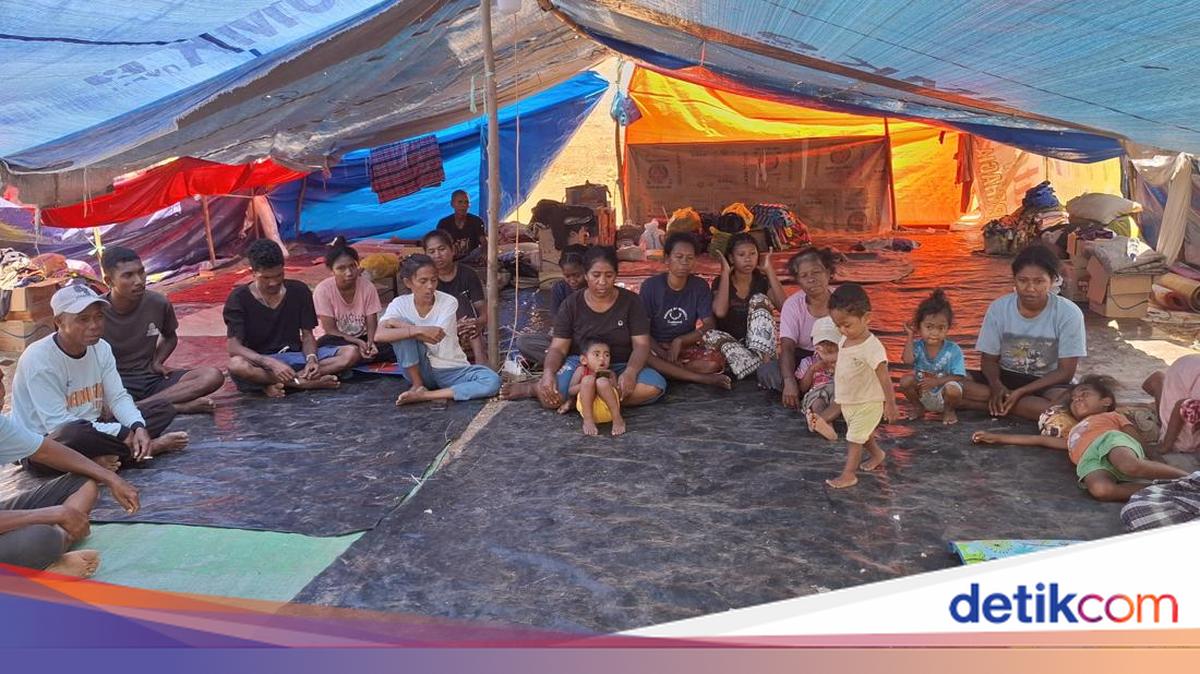
Dozens of residents from Waekokak Village, Aesesa District, Nagekeo, East Nusa Tenggara (NTT), are still enduring life in the forest without proper tents or other essential needs. This situation has persisted for two weeks.
“We have been here for two weeks, but there are no proper tents, sleeping mats, or blankets. As a result, pregnant women, infants, and toddlers are sleeping here,” said one of the displaced persons, Marsiana Harga (63), when met at the local evacuation post on Sunday (30/08/2026).
Harga explained that various basic necessities, such as rice, medicine, cooking oil, nappies, drinking water, clean water, and milk for infants and toddlers, are indeed being met. These supplies are provided by volunteers and sympathisers.
“For the time being, these are sufficient. However, regarding clean water, we lack water storage tanks. Health services from the diocese and the government are also available,” Harga explained.
Meanwhile, a teacher from SDN Towak Mboaloing, Aloysius Mberong, revealed that the number of residents still staying at the evacuation post is 15 households, comprising 61 individuals. The group includes two kindergarten students, five primary school students, two junior high school students, and three senior high school students, as well as several pregnant women, infants, toddlers, and the elderly.
According to Aloysius, they have been displaced to the location since the initial M 7.7 earthquake on Saturday (15/08/2026). At the site, they have independently set up a post using tarpaulins.
“In the beginning, we brought our own tarpaulins, mats, pillows, and water containers. Thankfully, starting from 17 August 2026, basic food aid began arriving from humanitarian volunteers and the Nagekeo Regional Government,” Aloysius explained.
However, to this day, they have not received proper tents. This makes it difficult for pregnant women, infants, toddlers, and children to sleep due to excessive dust and inadequate bedding.
“What we hope for right now is proper tents because there are pregnant women, sick elderly people, and children here. These current tents are not adequate to guarantee health, especially the bedding. Furthermore, regarding sanitation, we are still defecating freely in the forest,” Aloysius explained.
On the other hand, primary school students staying at the post have received mental health support through activities such as dancing, sports, singing, and playing. Teachers also frequently visit each post to check on the students’ condition and their learning progress.