
Dozens of Hectares of Rice Fields in Bantul Flooded Due to High Tides
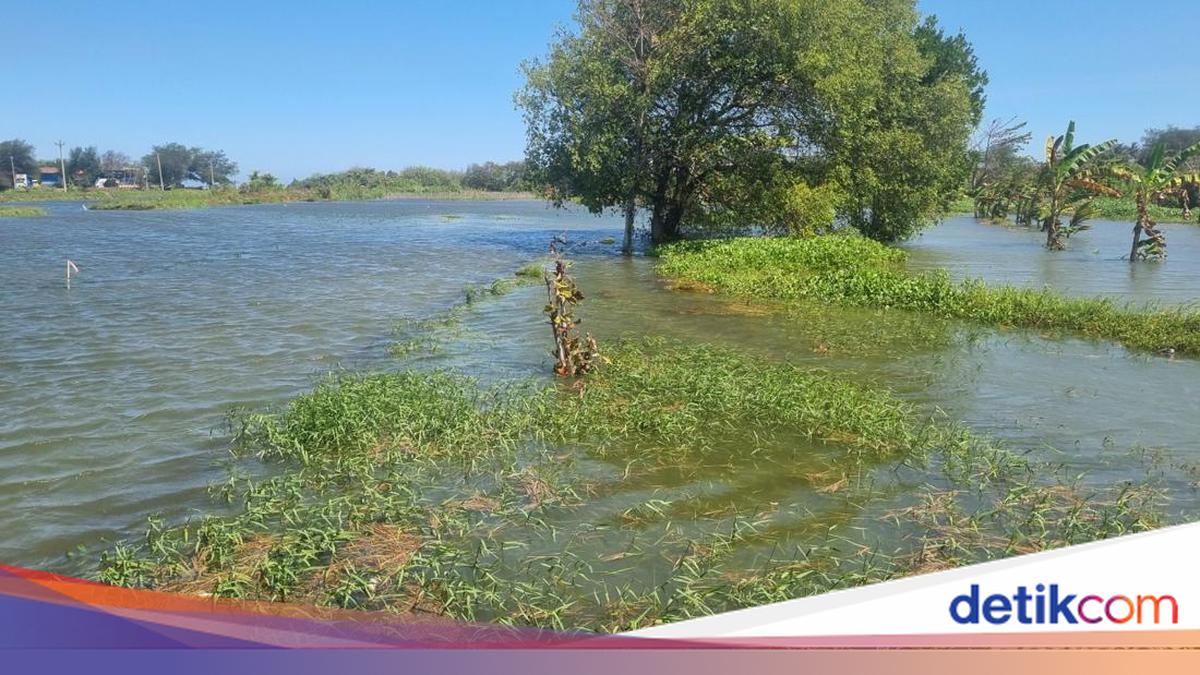
Dozens of hectares of agricultural land in Srigading, Sanden, and Tirtohargo, Kretek, Bantul, have been submerged due to a blockage at the Opak River estuary caused by high tides. The Bantul Food Security and Agriculture Agency (DKPP) is working to clear the obstruction.
Observations on Wednesday (12/8/2026) showed rice and shallot fields along the edge of the southern cross road (JJLS) underwater. A farmer was seen pumping out water using a diesel engine.
One farmer in Srigading, Darman (70), said his rice field had been flooded since Tuesday (11/8) morning. The cause was high waves that led to water overflowing from the Opak River estuary into the agricultural land.
“It is like this (the land is submerged), it has been since yesterday during the high tide. So, it is flooded because the flow at the Opak (river) estuary is clogged,” Darman said when met at the JJLS, Srigading, Sanden, Bantul, this afternoon.
As the water had not yet receded, Darman was pumping it out independently using a diesel-powered machine. “I have just started pumping the water, from morning until this afternoon it is still not finished. I have already used five litres of fuel,” he said.
Darman hopes the water will recede soon and the flow to the Opak River estuary can be restored quickly. “Hopefully the water can recede soon so the crops can be harvested,” he said.
Head of the Bantul DKPP, Joko Waluyo, confirmed he had monitored the flooded agricultural land. According to him, the land is located in two sub-districts. “I have been there, so 20 hectares of rice fields in Srigading are submerged. Then in Tirtohargo, 30 hectares of rice fields and five hectares of shallot fields,” Joko said when contacted today.
Joko stated that flooding of agricultural land on the south coast is an annual occurrence. The flow towards the Opak River estuary becomes blocked and eventually overflows into residents’ farmland. “Actually, it is routine every year, high tides and blockages, so the water cannot flow into the Opak River estuary,” he said.
Therefore, the DKPP is currently attempting to open the blocked waterway, even using heavy equipment to accelerate the process. “We are currently waiting for a backhoe to open the water flow,” he said.
Joko also added that the submerged crops are likely still salvageable, considering rice is a plant that requires a lot of water. “For rice plants, they are clearly safe, but hopefully the water recedes quickly. For the shallot plants, actually if they are not submerged for too long, it is also fine,” he said.
Source: jawawa.id (https://jawawa.id/newsitem/dozens-of-hectares-of-rice-fields-in-bantul-flooded-due-to-high-tides-1786528260)
Originally published by detikJogja (https://www.detik.com/jogja/berita/d-8615517/puluhan-hektare-sawah-di-bantul-kebanjiran-imbas-gelombang-laut-tinggi), translated from Indonesian