
Dozens of Ancient Graves Emerge as Reservoir Water Levels Recede in Wonogiri
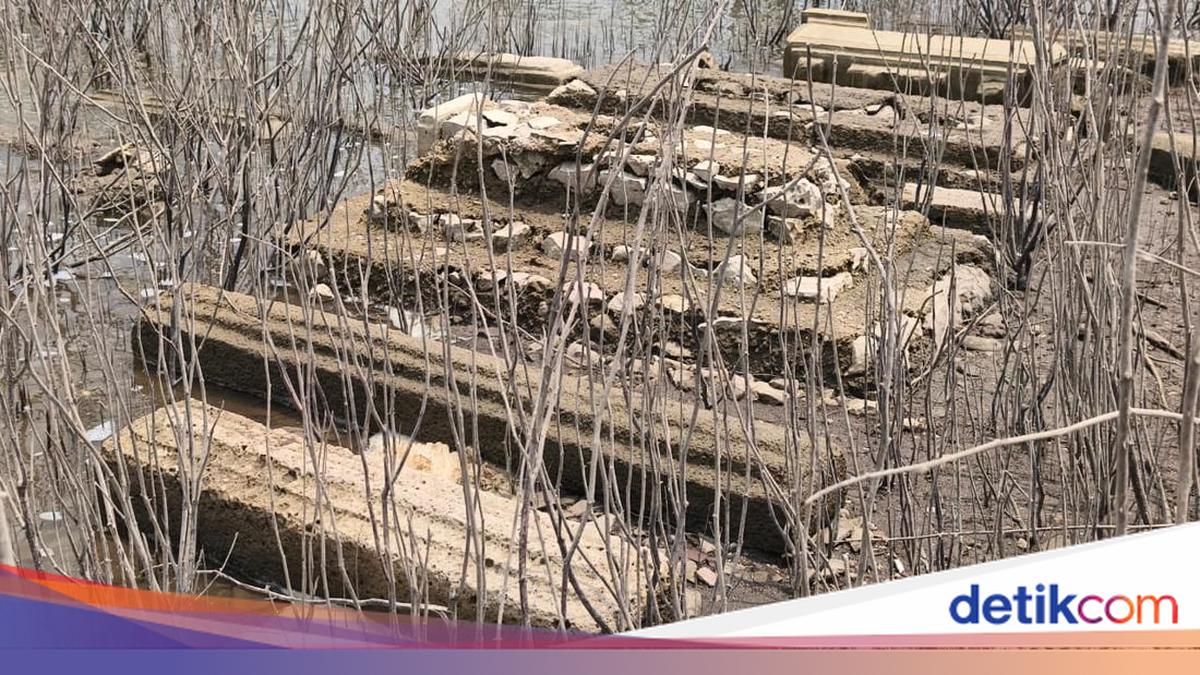
Dozens of ancient graves have emerged in the Gajah Mungkur Reservoir, Wonogiri, Central Java, due to the receding water levels during the dry season.
“They have been visible for several days now because the water is receding. However, they are not all visible yet; only a portion can be seen, as many remain submerged,” said Karni, a resident of Wuryantormo Village, Wuryantoro District, Wonogiri.
Observations show that dozens of graves are clearly visible, while others remain underwater. The graves appear to be made of a type of limestone. Some graves remain intact, while others have been eroded. There are carvings and inscriptions on several graves, though they are now difficult to read.
The Head of Wuryantoro District, Soemardjono Fadjari, stated that the appearance of these ancient graves in the Gajah Mungkur Reservoir is an annual phenomenon during the dry season. “Every dry season, these graves usually begin to appear. But this is only a partial view, as the water level is still quite high,” said Soemardjono.
He added that these ancient graves typically begin to appear as early as August, but during this year’s dry season, they only became visible in September.
For context, the construction of the Gajah Mungkur Reservoir submerged 51 villages across seven districts in the Wonogiri Regency. The location of the currently visible ancient graves was formerly a public cemetery.
Source: jawawa.id (https://jawawa.id/newsitem/dozens-of-ancient-graves-emerge-as-reservoir-water-levels-recede-in-wonogiri-1788990753)
Originally published by detikcom (https://news.detik.com/berita/d-8656252/puluhan-makam-kuno-muncul-usai-air-waduk-di-wonogiri-surut), translated from Indonesian