
Downstreaming Policy Requires More Than Just Investment; Central-Regional Synchronisation is Key
The Centre of Reform on Economics (CORE) believes that accelerating mineral downstreaming in Indonesia cannot rely solely on investment and increased industrial capacity. Synchronising policies between the central and regional governments is a vital factor to ensure that downstreaming can provide optimal economic, social, and environmental benefits within the country.
CORE Executive Director Mohammad Faisal stated that the challenges of downstreaming are not merely related to technical industrial aspects, but also to policy governance involving numerous stakeholders. Several issues on the ground fall outside the control of corporations, necessitating coordination between the central government, regional governments, and business actors.
“MIND ID works in collaboration with both the central and regional governments. This cannot be done alone, as there are matters that can be resolved at the corporate level, but there are others that exist at the policy level,” Faisal said during the MediaMHD 2026 discussion in Jakarta recently.
According to CORE, central and regional coordination needs to be strengthened so that issues arising in downstreaming areas can be responded to more quickly. Regional governments play a crucial role as they possess a better understanding of the social, environmental, and community needs within their respective territories.
However, the capacity of regional governments remains a challenge in supporting the acceleration of downstreaming. Limited authority and budgets mean that regions are not yet fully capable of anticipating the impacts arising from industrial activities, including pressures on the environment and the social lives of the community.
Faisal assessed that these impacts must be accounted for from the outset of investment planning. Environmental degradation or disruptions to community economic activities are externalities that must be anticipated to prevent them from becoming a burden on the public and regional governments.
Strengthening regional fiscal capacity is also one of the instruments that can support the management of downstreaming impacts. Faisal cited several regions in Central Sulawesi, including Morowali, which are currently striving to increase revenue sharing funds (DBH) to support development in areas affected by downstreaming activities.
“Fortunately, some regions currently working to increase DBH in Central Sulawesi, such as Morowali, are making efforts to ensure there is additional funding from revenue sharing,” he noted.
Based on government data, Central Sulawesi Province received a Transfer to Regions (TKD) allocation of IDR 2.13 trillion in 2026, with revenue sharing contributions reaching IDR 272.95 billion. The natural resources sector remains one of the primary contributors to this revenue, particularly from mineral and coal royalties.
Downstreaming synchronisation also needs to be extended to local businesses so that industrial growth delivers a greater economic impact for surrounding communities. Out of approximately 5,600 MSMEs in Morowali, only about 30 have been integrated into the industrial supply chain.
Regarding employment, regional governments also need to prepare human resources that meet industrial needs through the development of vocational education and polytechnics based on regional requirements. Such steps are necessary to ensure that the growth of downstream industries is accompanied by increased local labour participation.
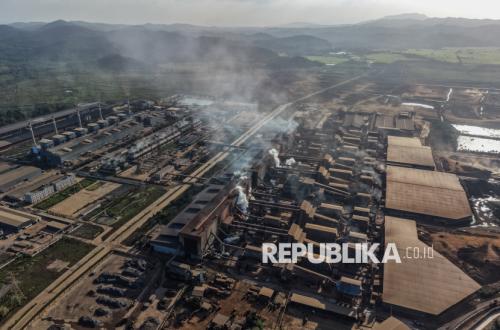
As one of the primary nickel downstreaming hubs, Morowali has become a centre for mineral processing industry growth, including through the Indonesia Morowali Industrial Park (IMIP). Several nickel processing projects continue to be developed to strengthen the domestic mineral industry value chain.
In this context, the mining industry holding company MIND ID, through PT Vale Indonesia Tbk, is developing integrated downstream projects in Sulawesi. The Indonesia Growth Project (IGP) includes the construction of processing facilities in several locations, including Pomalaa, Morowali, and Sorowako.
Faisal emphasised that the success of downstreaming is ultimately not determined solely by the scale of investment or production capacity. Downstreaming must be supported by integrated policies so that economic, social, and environmental benefits can be felt by the community sustainably.
Source: jawawa.id (https://jawawa.id/newsitem/downstreaming-policy-requires-more-than-just-investment-central-regional-synchronisation-is-key-1790157766)
Originally published by Republika (https://ekonomi.republika.co.id/berita/tlt7f0522/hilirisasi-dinilai-tak-cukup-andalkan-investasi-sinkronisasi-pusatdaerah-jadi-kunci), translated from Indonesian