
Downstreaming of Non-Food Products in Sukabumi Needs to be Encouraged
The Ministry of Marine Affairs and Dis Fisheries (KKP) is encouraging the development of micro and small-scale non-food product diversification industries based on local potential in Sukabumi, West Java. This step is key to increasing the added value of fishery products while strengthening the circular economy at the local level.
“Diversification industries also support the implementation of the blue economy, which emphasises the principle of ecological sustainability,” explained the Acting Director General of Strengthening the Competitiveness of Marine and Fisheries Products (PDSPKP), Erwin Dwiyana, in Jakarta on Friday (10/2/2026).
Erwin noted that the volume of by-products from landing, handling, and fish processing activities—such as heads, bones, skin, scales, and viscera—at the Palabuhanratu National Fisheries Port (PPN) in Sukabumi, which reaches 50-100 kg per day, represents significant potential for producing value-added products like fish meal.
Conversely, this potential could lead to pollution if not managed properly. “This is not merely about managing fishery production waste, but about opening business opportunities for non-food products and increasing labour absorption,” he added.
As a non-food product, fish meal is required as a raw material for feed. Therefore, through the strengthening of cross-sector roles—including PPN managers, local governments, fishery entrepreneurs, the Sukabumi Freshwater Aquaculture Centre (BBAT) as an off-taker, and certified CPPIB (Good Fish Feed Manufacturing Practices) independent feed units—Erwin is optimistic that a new economic ecosystem can be designed in an integrated manner to provide market certainty.
“This processing also supports national programmes such as the Red and White Fisherman Village (KNMP) and Thematic Aquaculture,” Erwin explained.
Representing BBAT Sukabumi, Susi Rosellia emphasised the importance of local fish meal production to support the resilience of the national feed industry. High-quality local fish meal with protein content meeting SNI 2715:2013 standards is essential to reduce feed production costs and support the sustainability of the aquaculture industry in the country.
“Dependence on feed and imported raw materials such as fish meal remains quite high, and processing industrial waste is a solution for aquaculture independence,” said Susi.
Meanwhile, the Head of the Sukabumi Regency Fisheries Office, Sri Padmoko, welcomed the KKP’s initiative to utilise non-food products in the region. He noted that the potential waste from fish fillet processing in Sukabumi could reach 500 kg per day, or approximately 10 tonnes per month.
“This potential is proven to be high-value if managed structurally through clear partnerships between stakeholders,” he concluded.
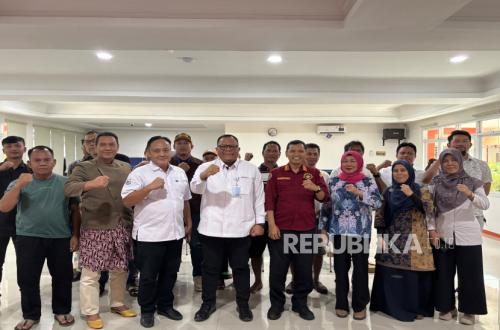
As an initial step, the KKP held a Socialisation of Diversification and Added Value of Non-Food Fishery Products on 10 September 2026, in Palabuhanratu. The event involved PPN Palabuhanratu, BBAT Sukabumi, the Sukabumi Fisheries Office, and academics, particularly from the IPB Vocational School.
Previously, the Minister of Marine Affairs and Fisheries, Sakti Wahyu Trenggono, emphasised that the Red and White Fisherman Village (KNMP) programme is a strategic step to strengthen fishery downstreaming. The programme also aims to improve the welfare of fishermen in various regions.