
Downstreaming of Citronella Oil Encouraged to Increase Value
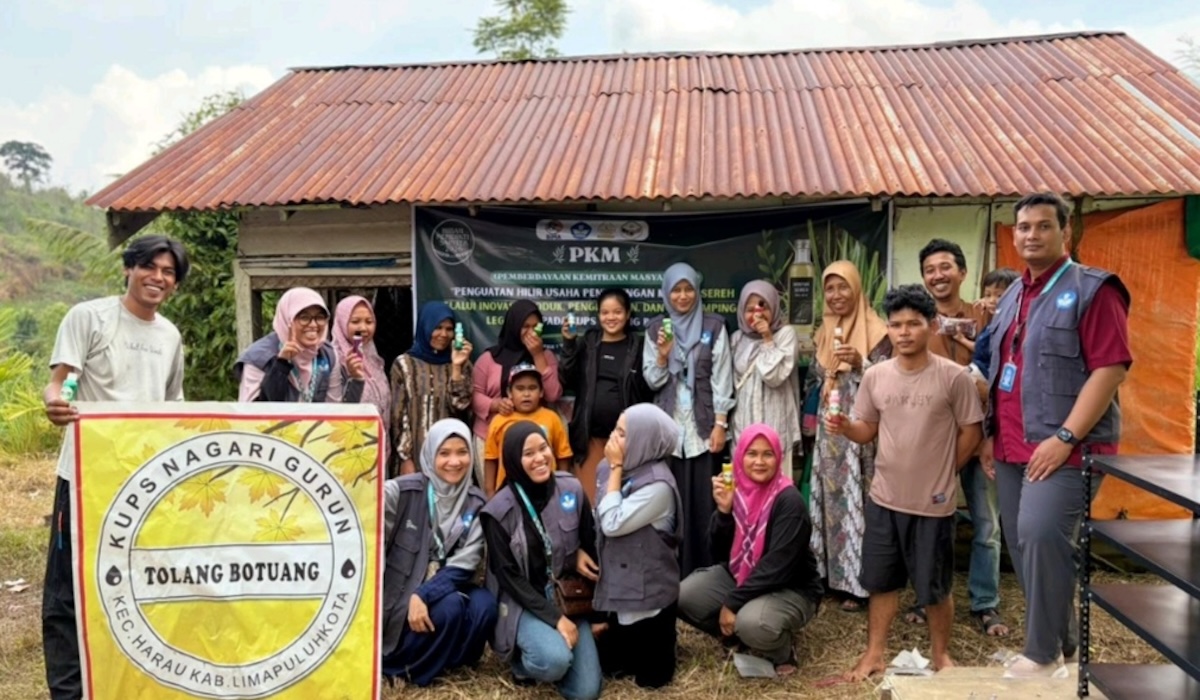
The development of herbal products based on local resources continues to be encouraged through community service programmes. A team from the Dwi Farma College of Science in Bukittinggi recently held an activity titled ‘Strengthening the Downstream Citronella Oil Distillation Business through Product Innovation, Packaging, and Legality Assistance’ at the Tolang Botuang KUPS in Kanagarian Gurun, West Sumatra. The programme was made possible by a grant from the Directorate of Research and Community Service through the Directorate General of Research and Development of the Ministry of Higher Education, Science, and Technology under the 2026 Community Partnership Empowerment scheme. The activity focused on increasing the added value of citronella oil through the development of derivative products, strengthening marketing strategies, and providing assistance in fulfilling business legality aspects. Team leader Trie Yuni Elfasyari said that citronella oil has mostly been marketed as a raw material. However, this commodity has significant opportunities to be developed into various products with higher economic value. ‘We want to encourage the community not only to sell raw essential oil but also to be able to produce derivative products that have added value, competitiveness, and better business sustainability,’ she said. During the activity, participants received training on formulation and the practice of making liquid hand soap based on fragrant citronella oil. The material was delivered by Ahdi Dinil Haq and Neri Fadjria, who provided guidance on formulation preparation, product safety aspects, and the application of good manufacturing practices. In addition to product development, participants were also equipped with knowledge about packaging and marketing. The assistance included designing more attractive packaging, creating labels according to regulations, and marketing strategies to strengthen product competitiveness. Product legality was also a focus of the programme. Education and assistance regarding the process of obtaining UMOT (Micro Traditional Medicine Business) legality were provided to increase consumer confidence and expand marketing opportunities. The Chairperson of KUPS Tolang Botuang, Febri Nugraha, assessed that the activity is an important step to support the development of the citronella oil distillation business run by the local community. ‘We hope this activity can help our group produce more innovative citronella oil derivative products, with attractive packaging, and meet legality aspects so they can compete in the market,’ he said. Through collaboration between universities, the government, and community business groups, this programme is expected to become an example of empowerment based on regional potential. The downstreaming of fragrant citronella oil is hoped to increase the added value of local commodities, drive the community’s economy, and strengthen the competitiveness of Indonesian herbal products.