
Downstreaming of 28 Indonesian Commodities Aimed at Attracting USD618 Billion in Investment
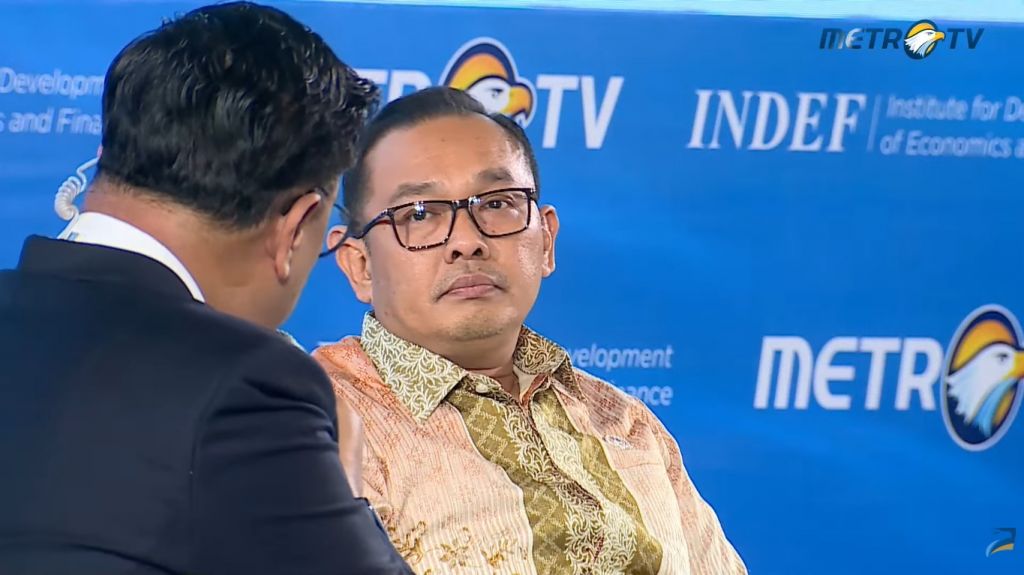
The Ministry of Investment and Downstreaming is preparing a downstream roadmap for 28 strategic commodities up to 2045. This programme has a potential investment value of reaching USD618 billion.
Deputy Minister of Investment and Downstreaming, Todotua Pasaribu, stated that the roadmap was designed to optimise Indonesia’s natural resources, ranging from oil and gas to minerals, marine resources, and plantations. The government is encouraging the domestic processing of commodities to generate greater added value.
“There are 28 commodities within the umbrella plan of our programme up to 2040-2045. The consolidation of this, if we push investment in the downstream sector, amounts to approximately USD618 billion. To be more focused, within our Medium-Term Development Plan (RPJM), we will narrow this down to 15 commodities,” said Todotua during the ‘Sarasehan 100 Ekonom Indonesia’ event at the Kempinski Grand Ballroom, Jakarta, on Thursday, 3 September 2026.
According to Todotua, the downstream roadmap does not only account for Indonesia’s reserves and its position in the global market. The government is also mapping the distribution of supporting industries across the five major islands of Indonesia.
This mapping is being conducted to create a more balanced economic structure. Currently, national consumption remains heavily concentrated on Java, whereas raw material sources are scattered across various regions outside of Java.
The government is also focusing the implementation of downstreaming on the development of supply chains from upstream to downstream. This step is expected to reduce dependence on imported goods while simultaneously increasing the competitiveness of Indonesian products in export markets.
Promoting the local industrial ecosystem
Todotua noted that Indonesia’s natural resources have long been processed abroad, meaning the added value is also enjoyed overseas. Through downstreaming, the government aims to build an industrial ecosystem and supply chain within the country.
“The natural resources we possess have largely been processed abroad, and the added value is realised abroad. We hope that by encouraging downstreaming, the entire supply chain ecosystem can take place within our country, thereby increasing exports and strengthening our position,” Todotua emphasised.
The government hopes that the mapping of regional potential and the integration of supply chains will make downstream investment more targeted. This policy is also intended to expand the contribution of investment to national economic growth.