
Downstreaming Is Not a Promise
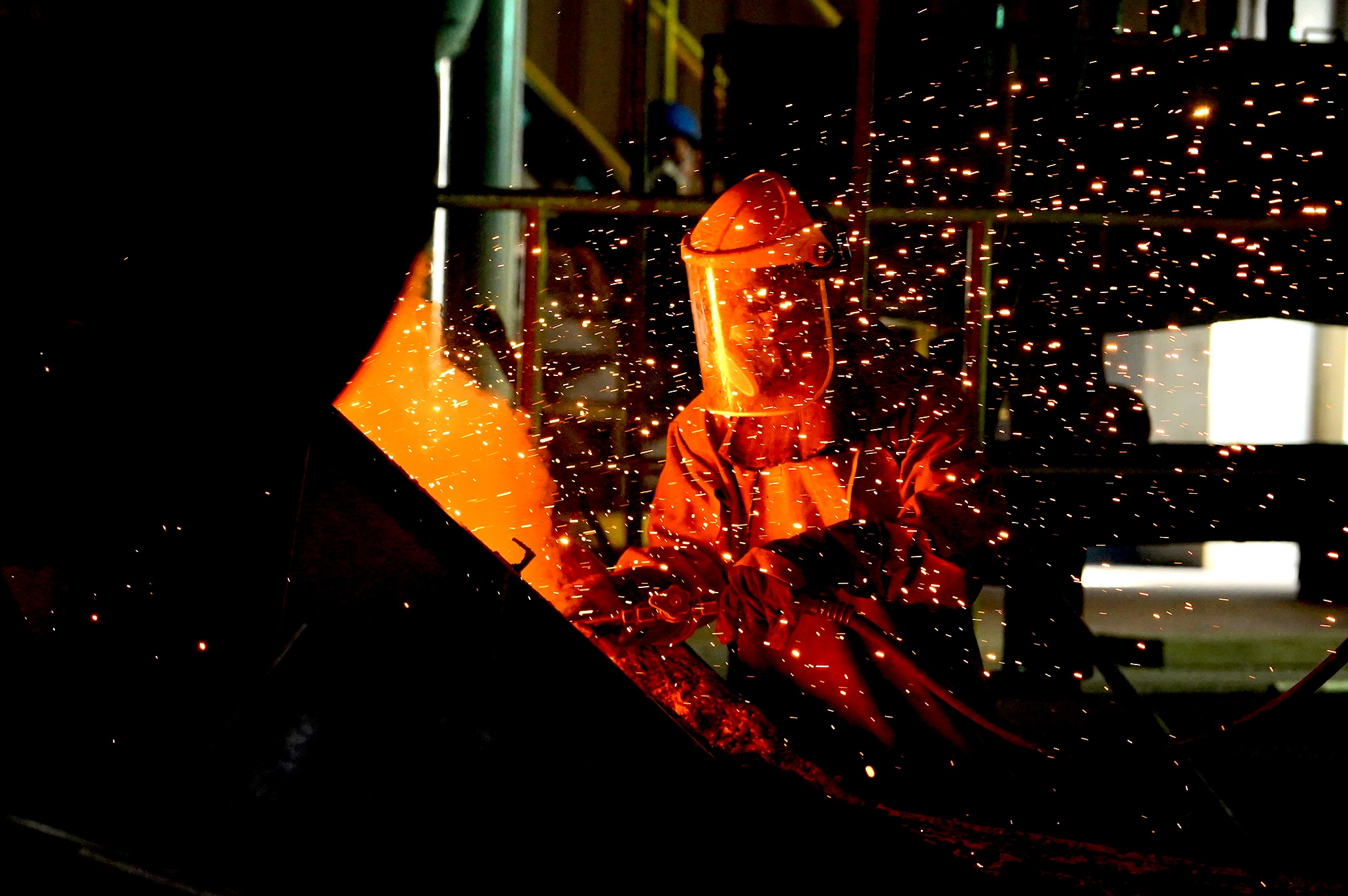
Once doubted, ignored, and underestimated, the natural resource downstreaming programme has finally borne fruit. Impressively, downstreaming no longer relies solely on nickel, but has expanded to bauxite, copper, tin, and other strategic commodities.
According to data from the Ministry of Investment and Downstreaming/Investment Coordinating Board (BKPM), downstreaming investment realisation reached Rp152.7 trillion in Q2 2026, growing 5.7% compared to the same period in 2025 (year-on-year) and contributing nearly 30% of total national investment.
Remarkably, bauxite investment surged 193% to Rp40.1 trillion compared to the previous quarter (quarter-to-quarter). This means that, for the first time, bauxite investment surpassed nickel at Rp29.4 trillion, copper at Rp16.7 trillion, and iron and steel at Rp13.2 trillion.
“Bauxite is now number one. This is a sign that downstreaming is beginning to grow more evenly,” said Minister of Investment and Downstreaming/Head of BKPM, Rosan Perkasa Roeslani.
In terms of employment, downstreaming has also produced concrete results. From January to June 2026, downstreaming investment absorbed 1,448,862 workers, up around 15% year-on-year. In Q2 2026 alone, downstreaming employed 742,263 workers, up 5.1% year-on-year.
Nickel is the most dramatic downstreaming story. When Indonesia was still exporting raw ore (2010–2019), the country only earned an average revenue of US$710 million per year, with export value in 2017–2018 at just US$3.3 billion.
The ban on raw nickel ore exports in 2020 forced investors to build smelters. As a result, total exports from the nickel downstreaming sector — including ferronickel, nickel matte, and stainless steel — reached US$35–40 billion in 2023–2024, an increase of more than tenfold from 2017–2018.
The impact has certainly reached nickel-producing regions. North Maluku’s economy grew 19.64% in Q1 2026 year-on-year, the highest in Indonesia for 22 consecutive quarters. North Maluku’s economy is supported by the processing industry, particularly nickel, which surged 37.09%.
Bauxite is even more astonishing. Over two decades (2006–2025), the average price of raw bauxite ore was only around US$38 per tonne. However, when processed into pure aluminium metal, the price soars to US$2,154 per tonne — a 59-fold increase.
In 2024, raw bauxite prices were around US$59 per tonne. Once it enters a domestic smelter and is processed into a white powder called alumina, the price immediately jumps to US$478 per tonne.
Bauxite processing projects continue to develop. On 6 February 2026, Inalum held a groundbreaking for the second phase of an integrated bauxite–alumina–aluminium facility in Mempawah worth Rp104.55 trillion. This facility will boost national alumina capacity to 2 million tonnes per year, so that Indonesia, which is still a net importer of aluminium, is targeted to become a net exporter of the commodity.
The copper story is no less extreme. Since commencing operations in 2024, Freeport’s smelter in Gresik has processed copper into cathodes with 175% added value compared to raw concentrate. If processed into electrical cables, the added value is 71 times greater, with export potential of US$282 million and 253,583 new jobs.
The downstreaming transition is also reflected in export data. Since the ban on copper concentrate and anode slime exports took effect on 1 January 2025, export value from January to November 2025 plunged 40.5% year-on-year to US$4.55 billion, despite Amman Mineral receiving limited export relaxation (October 2025–April 2026).
Crude palm oil (CPO) has a similar story. Previously, most CPO was exported in raw form at US$800–1,000 per tonne. After being processed into biodiesel and oleochemicals, its value soared 5–10 times.
After successfully implementing the B40 programme (40% CPO blend in diesel) with realisation of nearly 14.9 million kilolitres, the government raised the blend to 50% (B50) starting 1 July 2026, making Indonesia the first country in the world with a B50 mandate. This policy will reduce fossil fuel imports while stabilising the domestic market.
Tin is not left behind. Indonesia has disbursed Rp1.2 trillion for tin chemical and tin solder plants in Batam. Construction began in early 2025, and the plants are targeted to operate by mid-2026. Indonesia has an ambitious target: to become the world’s second-largest downstream tin production hub after China.
However, downstreaming is facing a severe test. The national manufacturing industry in general is not in good shape. Unfavourable manufacturing conditions could spill over into downstreaming projects.
Indonesia’s Manufacturing Purchasing Managers’ Index (PMI) plunged to 46.9, falling into contraction territory in June 2026, down from 50.0 (expansion zone) the previous month.
The contraction occurred because demand weakened, factories reduced production, production costs soared, and global uncertainty increased. Manufacturing companies cut back on raw material purchases and investment, and some reduced hiring and operating hours.
Fortunately, Indonesia’s Manufacturing PMI in July 2026 rose back into expansion territory at 50.2. This was the highest level since February 2026. The PMI increase was driven by a return to growth in production activity after four consecutive months of decline.
However, in August 2026, Indonesia’s Manufacturing PMI fell back into contraction territory, dropping to 49.8. The decline was triggered by weakening production output and reduced labour absorption due to sluggish demand and intense competition.
Indonesian manufacturing has also been hit by the weakening rupiah. The Garuda currency has now slumped to Rp18,000 per US dollar, far below the 2026 state budget assumption of Rp16,500 per US dollar. The rupiah’s depreciation has an immediate impact because around 70% of national industrial raw materials are still imported.
It does not stop there. The manufacturing industry must also face pressure from the policies of US President Donald Trump. The US has just imposed new tariffs of 10–12.5% on 60 trading partner countries, including Indonesia.
There is also the geopolitical problem in the Middle East, triggered by Iran’s war against the US and Israel. Besides causing oil price volatility, the war in the Middle East threatens supply chain continuity.
“We are experiencing externally driven cost pressure. The strongest pressure is felt by subsectors with high dependence on imported raw materials and energy,” said Chairwoman of the Indonesian Employers Association (Apindo), Shinta Widjaja Kamdani.
Beyond external pressures, downstreaming also has a number of homework items. It turns out that downstreaming currently often stops at semi-finished products. Yet the greatest added value lies in downstream industries. In fact, Indonesia still imports high-technology materials such as aluminium alloy, copper foil, silicon wafers, and semiconductor chips.
“These components should be able to be built from minerals that have been processed domestically,” said Executive Director of the Centre for Energy and Mining Law Studies (Pushep), Bisman Bhaktiar.
Despite being battered from all directions, downstreaming is still believed to be a game changer for the national economy. “As long as Indonesia remains an investment destination and its market continues to grow, the industry will certainly develop,” said Chairman of the Indonesian Chamber of Commerce and Industry (Kadin), Anindya Novyan Bakrie.
For that reason, Anindya is pushing for the expansion of downstreaming to agriculture, plantations, livestock, fisheries, marine affairs, and the data-based economy.
The government itself is determined to accelerate downstreaming to drive 8% economic growth. “Downstreaming is a strategy to transform Indonesia from a raw material exporter into an industrial country, with added value, technology transfer, jobs, and control in the hands of the nation itself,” asserted Minister of Energy and Mineral Resources, Bahlil Lahadalia.
The government has taken a number of strategic steps. To reduce manufacturing production costs, the government extended the certain natural gas price (HGBT) policy and cut industrial liquefied natural gas (LNG) prices to US$13 per MMBTU until the end of 2026.
To improve the investment climate in the mining sector, the government established the Task Force for Accelerating Government Programmes to Support Economic Growth (Satgas P3M-PPE) through Presidential Decree Number 4 of 2026.
In addition, the government has disbursed investment incentives, technology facilities, and simplified licensing for downstreaming industries, while establishing PT Perusahaan Mineral Nasional (Perminas), a new state-owned enterprise tasked with leading downstream mineral industrialisation, particularly critical minerals.
The government even plans to establish a national mineral and strategic commodity exchange to strengthen Indonesia’s position in the global commodity market. The mineral exchange is scheduled to begin operations on 1 January 2027.
The government’s persistence in pushing downstreaming is truly reassuring. These various efforts further strengthen the confidence of the business community and the public that the downstreaming programme is not merely a promise. The downstreaming programme will not wither before it develops, despite facing a steep and winding road.
President Prabowo Subianto has repeatedly affirmed his commitment to making downstreaming a vehicle to bring Indonesia to become a developed country.
By processing natural resource commodities domestically, Indonesia is projected to become an industrial country with per capita income above US$33,000 by 2045, from around US$5,000 today. That means that when celebrating 100 years of independence, the Indonesian nation will already be a developed and prosperous nation. Hopefully!