
Downstreaming Elevates Indonesia's Processed Nickel Production to Global Levels
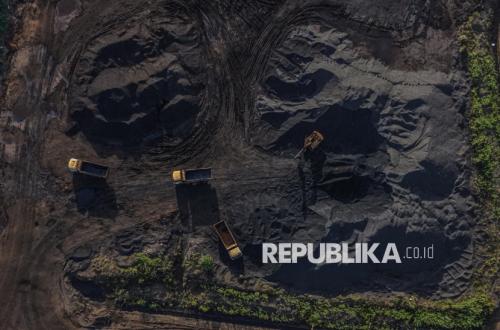
The downstream policy is transforming Indonesia’s position in the global nickel industry. National processed nickel production has surged more than 60-fold over a decade, contributing approximately 41 per cent of total global processed nickel production in 2023.
Data from Our World in Data, sourced from the British Geological Survey, shows that Indonesia’s processed nickel production increased from around 22,000 tonnes in 2014 to over 1.4 million tonnes in 2023. Indonesia has also surpassed China as the world’s largest producer of processed nickel since 2021.
Yusuf Rendy Manilet, an economist at the Centre of Reform on Economics (CORE) Indonesia, noted that this development demonstrates a structural change in Indonesia’s nickel industry following the government’s push for domestic commodity processing. “Indonesia has also transitioned from an ore exporter to a processing hub,” Yusuf stated on Monday (28/9/2026).
According to Yusuf, the increase in processed nickel production indicates that the ban on nickel ore exports has encouraged the construction of processing facilities and increased domestic industrial capacity. This shift, he added, provides Indonesia with greater bargaining power in the global nickel supply chain. However, such a large production share must be accompanied by policies capable of maintaining a balance between raw material supply, smelter capacity, commodity prices, and state revenue.
Consequently, Yusuf believes that production management through the Work Plan and Budget (RKAB) is a vital instrument. Production control can help maintain market balance, but its implementation must consider the raw material needs of the domestic processing industry. “Reducing volume can increase state revenue if it can drive up prices, but quotas must not be so tight that smelters face raw material shortages,” he remarked.
Yusuf added that the benefits of downstreaming are not limited to increased processed nickel production. Investment, exports of processed products, state revenue, and job creation are all significant impacts that must be addressed. He noted that Indonesia’s position as a major player in the global nickel industry serves as capital to deepen the industrial structure. However, this strengthening requires technological support, market expansion, and an increase in the proportion of value-added benefits enjoyed domestically.
“A 41 per cent share is significant bargaining power, but it only becomes an economic force if Indonesia masters the technology, expands its buyer base, maintains prices, and retains more value-added domestically,” Yusuf said.
Ronny P. Sasmita, a senior analyst at the Indonesia Strategic and Economics Action Institution, also noted that the development in processed nickel production indicates a structural change in the national industry. Referring to the British Geological Survey data, Ronny stated that Indonesia’s share of global processed nickel production rose from approximately 1 per cent to 41 per cent.
“If the parameter is the ability to transform ore into processed products domestically, downstreaming has clearly produced a structural transformation,” said Ronny.
From an investment perspective, the downstream sector is a major contributor to national investment realisation. The Ministry of Investment and Downstreaming/BKPM recorded that investment in the downstream sector reached Rp300.1 trillion in the first semester of 2026, representing approximately 29.7 per cent of total national investment realisation. This value grew by 6.9 per cent compared to the same period the previous year.
Of the total Rp206.5 trillion investment in the mineral downstream sector during that period, investment in the nickel commodity reached Rp71 trillion. Ronny stated that this influx of investment has the potential to expand industrial capacity, create jobs, increase processed product exports, and deepen the national manufacturing base.
However, he noted that achievements in nickel production must be followed by the development of industries with higher added value. The development of technologies such as High Pressure Acid Leach (HPAL), nickel sulphate, precursors, cathode active materials, and even the recycling and battery industries are crucial stages in deepening the industrial structure.
“The influx of investment creates a multiplier effect in the form of industrial capacity building, job creation, increased export value, and a deeper national manufacturing base. Moving forward, these benefits can be maximised through technology transfer, increased involvement of domestic suppliers, strengthening the quality of the workforce, and increasing state revenue,” he said.
Ronny assessed that Indonesia’s position as the world’s largest producer of processed nickel provides the foundation for entering the stage of deep industrialisation. The challenge is no longer merely increasing production volume, but ensuring that this increase is accompanied by technological mastery and greater domestic value addition.
“The title of ‘nickel king’ is only the first chapter. The second chapter is far more important: whether Indonesia will merely be the country with the largest nickel production, or truly become the country that most benefits from the economic value, technology, and industrial strength of its nickel,” concluded Ronny.
Source: jawawa.id (https://jawawa.id/newsitem/downstreaming-elevates-indonesias-processed-nickel-production-to-global-levels-1790589689)
Originally published by Republika (https://ekonomi.republika.co.id/berita/tm2i9c522/hilirisasi-angkat-produksi-nikel-olahan-indonesia-ke-level-dunia), translated from Indonesian