
Downstreaming Dompu's Tobacco: Building an Industry from the Village
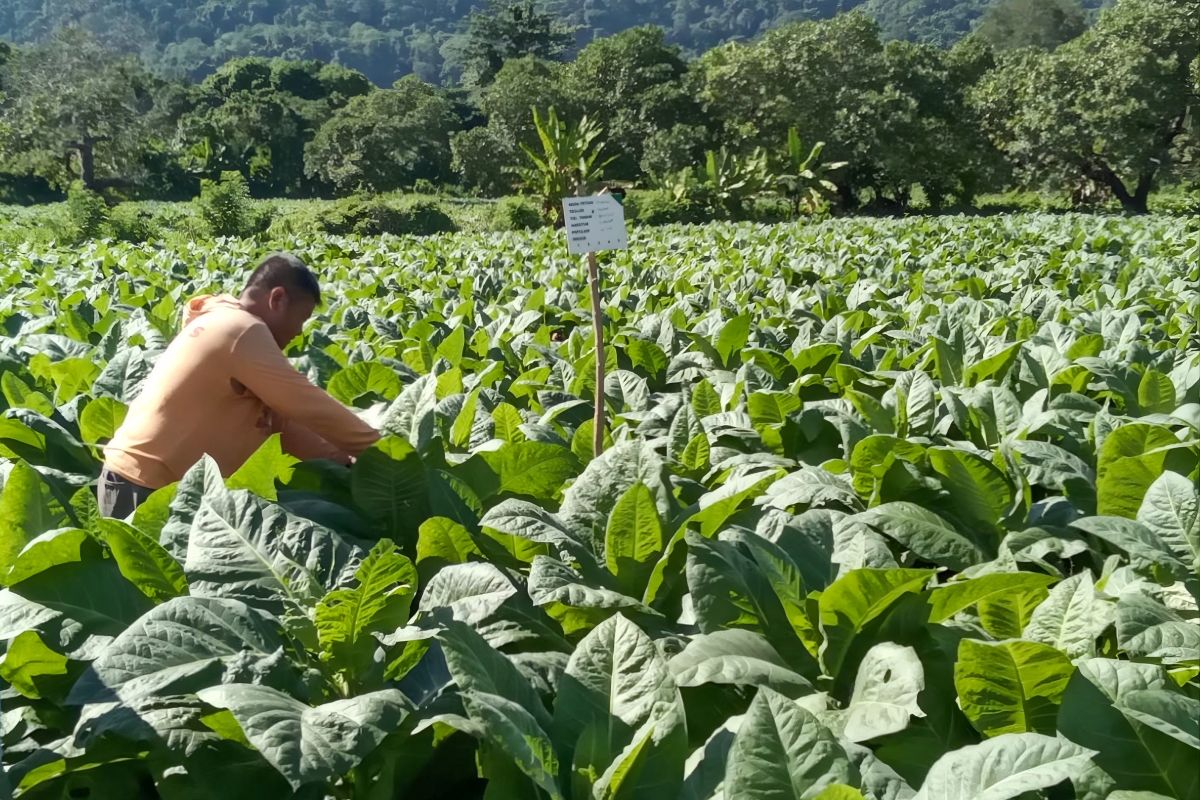
Muhammad Junaidi has spent more than a decade working with the plant scientifically named Nicotiana tabacum, which thrives in Dompu Regency, West Nusa Tenggara. His fingers, blackened from exposure to tobacco sap, are a marker of his long life as a traditional tobacco farmer at the foot of Mount Tambora. A fragrant aroma wafts from the brownish cut tobacco leaves laid out on woven bamboo slats, baked by the sun for days. The 41-year-old says that so far, most Dompu tobacco has been marketed as raw material for industries outside the region, meaning the economic benefits received locally have been relatively limited. Tobacco-producing regions do receive the Tobacco Products Excise Revenue Sharing Fund (DBHCHT), but the shared amount is only a fraction compared to if the tobacco products were processed and marketed directly from their region of origin. He sees that if processed into finished products, including cut tobacco, the economic turnover and excise returns to the region could be much greater. Tobacco downstreaming is a major hope for traditional farmers, aiming to increase the added value of the commodity while simultaneously boosting regional revenue from the tobacco excise sector. Junaidi previously partnered with a tobacco processing company until 2019, before deciding to independently develop his own tobacco processing business. The partnership system required farmers to package, pack, and sort tobacco leaves based on nine quality grades determined by the company. In contrast, under an independent system, farmers can sell their harvests more simply, without complex packing processes, as prices are sometimes averaged out based on the overall quality of the harvest. In one planting season, Junaidi manages up to 20,000 tobacco plants, equivalent to one hectare of land. Production from that area reaches 1.8 to 2 tonnes of dry tobacco with an average price of Rp30,000 per kilogram, providing a turnover of around Rp60 million per planting season. Since 2025, he has pioneered a tobacco production house that processes various types of raw materials into cut tobacco products and small-scale kretek cigarettes. The processing industry employs 18 people, consisting of 14 milling workers and 4 packaging workers. The production capacity of the business reaches 1,000 to 1,500 packs per production period, with marketing still focused on the local market of Dompu Regency and surrounding areas. The approximately 6,000 tobacco farmers now hold high hopes for the growth of the local-scale tobacco processing industry. They want the government to continue encouraging the development of this sector so that the economic value of tobacco does not stop at the cultivation level but also flows to the downstream sector. Dompu Regency has strong capital to develop the tobacco industry because its tobacco planting area reaches 600 hectares with production exceeding 1,100 tonnes per year. Pekat District is one of the main centres, with a planting area of 192 hectares and total production of over 346 tonnes in 2025. An economic structure solely reliant on the sale of raw materials means the economic value created is relatively limited. From an economic development perspective, regions that can process commodities into value-added products actually gain far greater benefits compared to regions that merely sell raw materials.