
Downstreaming Creates Economic Value-Add for Indonesia, CORE Researcher Reveals Obstacles
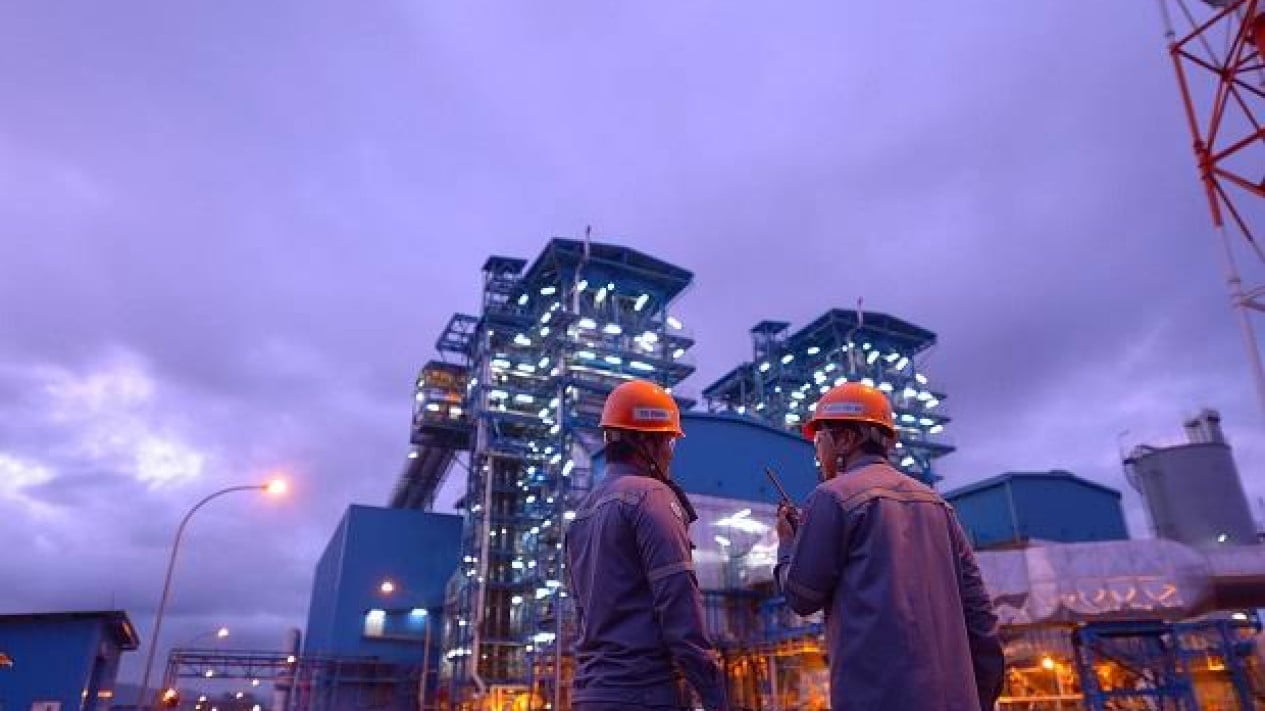
Yusuf Rendy Manilet, a researcher at the Centre of Reform on Economics (CORE) Indonesia, stated that downstreaming creates added value for the Indonesian economy. However, he noted that most of the process is still halted at intermediate products, such as nickel pig iron (NPI) and ferronickel, which are used in the stainless steel industry.
“This (downstreaming) is the foundation of industrialisation, but it is not yet the ultimate goal,” he said on Monday (5/10/2026).
The next stage, he added, involves extending the production chain to include precursors, cathodes, battery cells, and final manufacturing, which would involve more domestic suppliers.
One form of this downstreaming is evident in several projects being developed by Vale Indonesia, under the Indonesian mining holding company, MIND ID. These projects have been designated as National Strategic Projects (PSN) based on the Coordinating Minister for Economic Affairs’ regulation, meaning they receive full support from all parties as they will serve as the foundation for developing Indonesia’s electric vehicle ecosystem.
Furthermore, he explained that PT Vale Indonesia Tbk is developing several nickel-based HPAL (High Pressure Acid Leach) downstreaming projects in Pomalaa, Morowali, and Sorowako.
“These three projects have a combined production capacity of approximately 240,000 tonnes of MHP (Mixed Hydroxide Precipitate) per year, while PT Vale has stated that its strategic investment programme in Indonesia reaches around US$7.2 billion,” he said.
In Pomalaa, he noted, the HPAL project is being developed alongside Ford Motor Co. and Zhejiang Huayou Cobalt through PT Kolaka Nickel Indonesia, with an investment of US$4.5 billion. The capacity includes up to 120,000 tonnes of nickel contained within MHP per year.
In this regard, he assessed that Vale’s projects are significant because they offer a different downstreaming pathway compared to nickel processing for stainless steel needs. High Pressure Acid Leach (HPAL) technology, he said, allows low-grade limonite ore to be processed into class 1 nickel raw materials for electric vehicle batteries.
“In addition to expanding resource utilisation, these projects also open access to more diverse global supply chains. However, MHP remains an intermediate product. The impact of these projects on industrialisation will be greater if MHP is further processed in Indonesia into precursors, cathodes, and battery cells,” he explained.